What are C.Vs and Resumes
How to compose a great one, an outline of their standard structure
C.Vs and Resumes
C.Vs and resumes are documents that outline your work history, education, qualifications, and other highly relevant skills and experience in an orderly and structured way. These documents are normally the first contact you’ll have with employers, and as such, they are vital, particularly during the application stages, playing a massive role in helping you progress onto the later stages of the candidate selection process. For this reason they should be concise, visually appealing, and most important of all, contain factually accurate information regarding your work history, qualifications, and other noteworthy accomplishments
There are different ways to structure these documents as we will explore next. However, creating a well-prepared C.V or resume is not as daunting a task as you might think. Indeed, as a document that outlines your professional background and achievements, composing one can not only be fun, but it can also be a valuable learning experience too, giving you a level of insight into your own background and qualifications that you might not have even realised you had before!

What is the difference between a CV and a resume?
The words C.V and resume are often used interchangeably, even on a site like this, but there is in fact a difference between them…
A resume is a much shorter document than a C.V; as such its layout is slightly different, being comprised of fewer sections. Resumes are designed to outline your work history, skills, and qualifications over one or two pages at the most, although like a C.V, it can also contain optional sections too
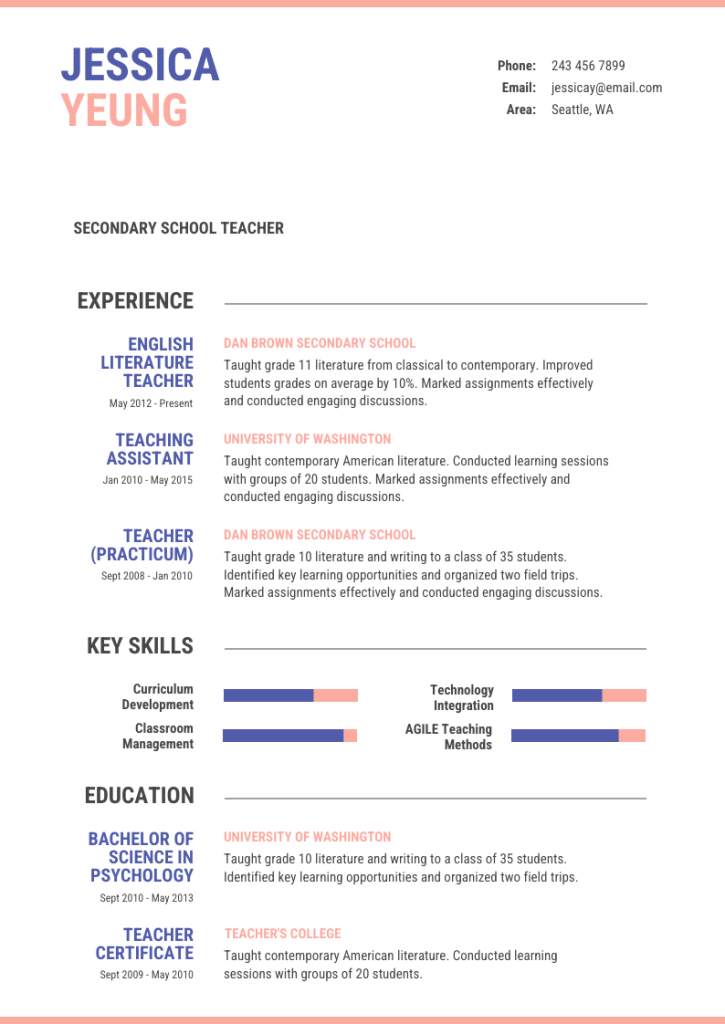
A curriculum vitae (referred to as a C.V) is a more comprehensive document. It not only outlines your qualifications and work history, but also provides a more in-depth overview of your background in that it may also contain many other types of optional sections too – such sections will outline additional skills and accomplishments you possess in a way that compliments your work history and can be added at your own discretion. The most common types of additional sections typically include things like languages, training courses, certifications, projects, conferences, professional associations, publications, personal interests, and volunteer work. As such, it means that while a C.V will sometimes be a comparative length to a resume, other times it will be much longer – sometimes running into several pages depending on the extent of your professional background and accomplishments
HOW TO GO ABOUT COMPOSING A GREAT C.V OR RESUME
There are many simple and straightforward things you can do that will make all the difference when it comes to composing the perfect C.V or resume. To begin with, before you even start to begin compiling one, sit down and think about what you’re going to put on it. Do this by asking yourself questions like this:
Have you properly researched the field or industry you are applying for?
This will help you determine what skills and experience you should be emphasising most…
You may want to check out our section on researching a prospective employer to help you with this

Consider the personal and career experience you have

What did you do? How did you achieve it? How can you best relate your experiences and accomplishments to the role you’re applying for?
Why did you choose that specific job field in the first place?

Why do you want to work in that job or in that specific industry? How well can you verbalise this if asked? Can you do so succinctly within a short concise paragraph?
What are your 5 best qualities?
Why did you choose them? How can you practically apply them in the workplace? How might you highlight them on a C.V or resume?
What are your 5 most relevant skills?
Why did you choose them? How can you practically apply them in the workplace? How might you highlight them on a C.V or resume?
What are your 3 proudest accomplishments?

Why did you choose them? How can you practically apply them in the workplace? How might you highlight them on a C.V or resume?
What value can you add for an employer?

What sets you apart from other candidates? What is it about you that makes you unique? What can you bring to an organisation? After reviewing the job description can you effectively verbalise these things within a short paragraph?

How to structure a Standard C.V or resume
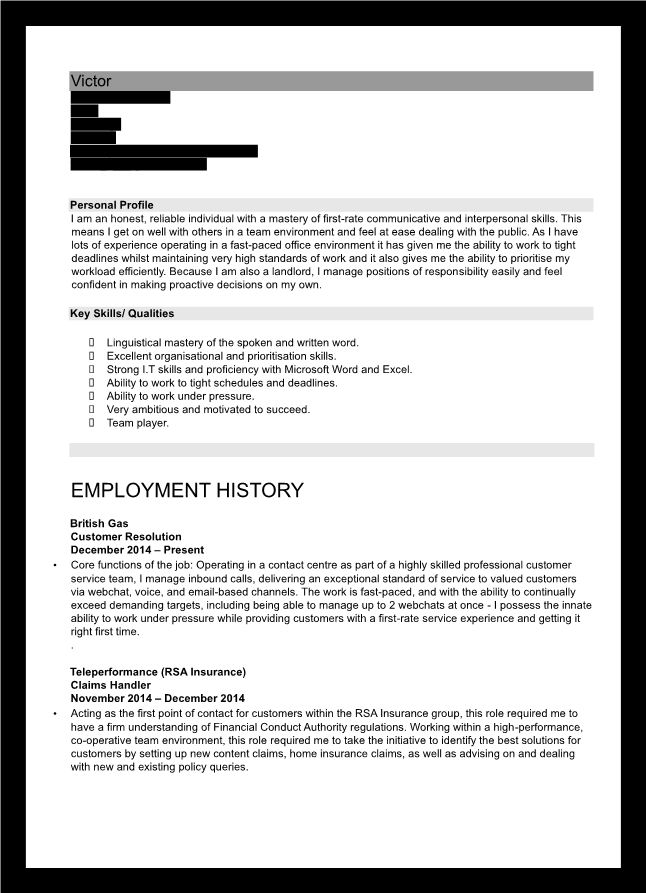
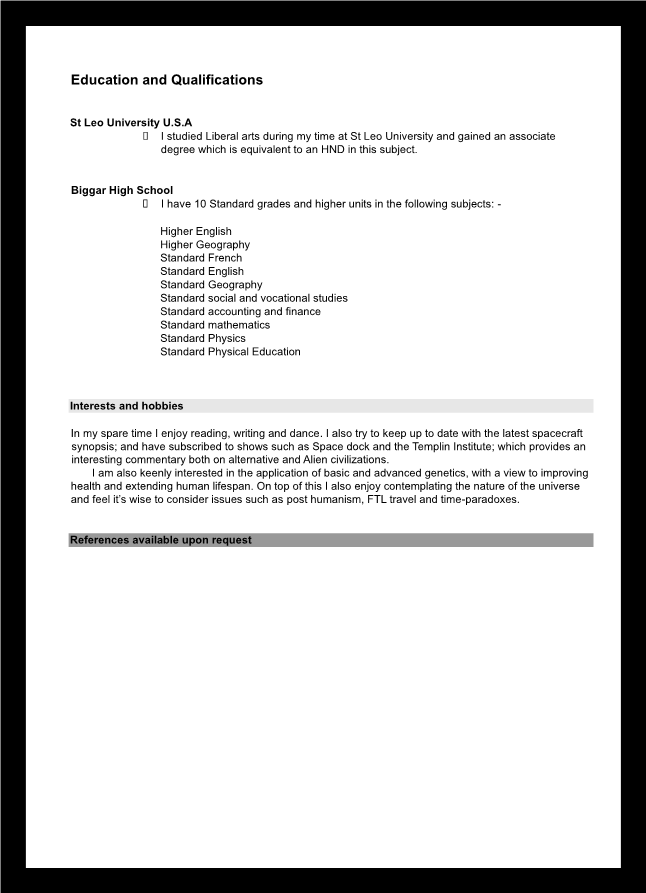
Outlined below is the typical structure of a C.V or resume. You may find slight variances in some of the titles outlined in the standard sections depicted here based on the templates you use. You may also find variances in the placement of some of these sections as they are outlined here too, although the overall structure will remain very similar
Notes
- It is advised you list the last 10 years of your employment history on your C.V or resume. There would only be a few instances where you ignore this rule, for example, if your present job has lasted longer than 10 years, or if your present job has lasted less than 10 years but the previous job before it takes you over the 10 year threshold
- It is important to remember that each page on a C.V or resume should be one sided only
- Other sections than the ones shown here may also be added too, these are referred to as additional sections, and will be explored further down below
These are the standard sections on a CV or resume, anything else is considered an optional section
Contact details
Profile statement – Career statement, personal statement, or resume objective
Employment History
Education
Skills