The Warehousing Industry
There are numerous types of warehouses, all of varying degrees and sizes, that you can work potentially in. If you have a clear idea of which type of warehousing environment you’d prefer, it will help greatly when applying for roles. The fact that you have a preference will convey to the interviewer that you not only have a genuine desire for warehousing itself, but that you’re serious about this line of work, and it will also give the impression that you are driven and knowledgeable about the industry as a whole
Because of the differences and variations in the industry, it means some warehouses will have different types of specialisations that will affect the types of roles available. Along with the size of the warehousing operation and the particular industry in question, each warehousing operation could have different roles available to you – and each will have its own challenges and benefits, some of which we will explore below
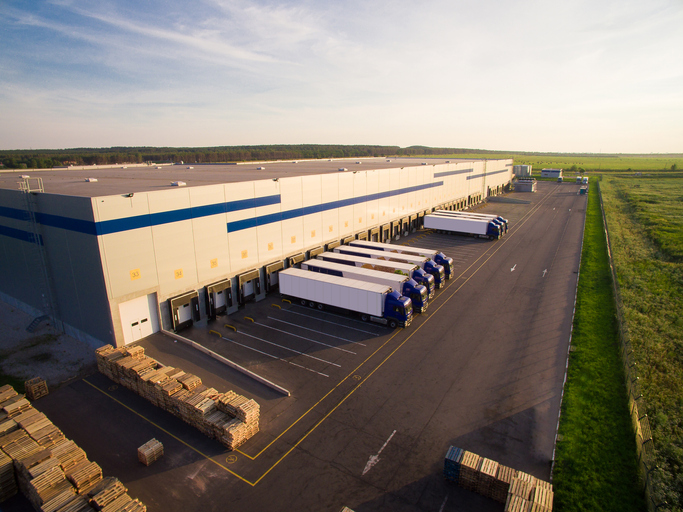
Private warehouses – These are warehouses owned by one singular business or store chain, for instance B and Q, Homebase, Argos, etc. They are used solely for the storage and distribution purposes of that private commercial entity, who in turn will need trained and reliable staff to operate them so that their merchandise can be efficiently stored and distributed. As such, the pay in such warehouses is normally quite competitive and the working conditions quite favourable when compared to some other types of warehousing facilities
Public warehouses – Public warehouses are warehouses in which the space can be leased to various companies and business enterprises. In these types of warehouses, you may have two or more different companies working alongside each other in a warehousing space used for different purposes. People who find themselves in this type of warehousing environment may sometimes find that the pay is a little bit poorer. The reason being is that the work that goes on in these types of warehouses is more varied, and a good majority of it is seasonal. Because these types of warehouses are leased out, the companies leasing them are less likely to take on permanent staff, meaning many of the jobs in this type of warehousing environment are filled through temp agencies
Special Commodity warehouses – Special commodity warehouses are warehouses where only a single sort of commodity is stored there at any one time. Many of these commodities are dangerous or volatile, although they are also usually important and expensive as well. Many times, specialised training and specialised equipment is needed for the storage of such nomenclature. For example, hazmat and chemical services for chemical products, pressurized tanks, and sealed storage containers to store compressed gas or fuels such as petrol, as well as proper containment and storage methods for things like livestock, cotton, barley, precious metals, etc. Most positions in specialised warehouses will require some sort of advanced qualification or degree in the field of warehousing, although the pay in such warehouses is normally well above average, with good job security too
Bonded Warehouses – Bonded warehouses are always situated in or around ports and occasionally other types of transportation hubs, and they are normally always guarded and involve some sort of secure access. They are either run directly by government authorities or through privately contracted companies on behalf of the government. Bonded warehouses are warehouses where imported goods are taken away when the customs duty on these goods hasn’t been paid, and they operate under tight government regulations at all times. A bonded warehouse can perform functions such as branding, packaging, canning, grading, and labelling, on the goods stored there if they are requested to do so. This includes everything from electronics, jewellery, toys, household fittings, furniture, and everything in between. In this type of warehousing environment employees will usually be required to undergo an extensive background check, and will also require some basic security clearance to gain access to the warehouse itself, such as an identity badge
Cold storage or refrigerated warehouses – These warehouses specialize in storing what are known as perishable commodities; things like milk, cream, yoghurts, cheese, eggs, meat, seafood, and poultry, etc. As the name implies, workers in such warehouses normally operate in an internally cold controlled environment, which means this work can be more hazardous than ordinary warehousing roles because of the fact there are areas in these warehouses where goods are sealed off and stored at very low temperatures. Employers in this type of warehousing environment are often looking for workers with a higher degree of aptitude and experience than is usually required in other types of warehousing roles
Institutional warehouses – An institutional warehouse is a reference to a warehouse or warehouses owned by a specific corporate entity or institutionalized body. To be more exact, the term ‘institutional warehouse’ is used to denote any field to which such an entity or institutional body may belong. The concept is very similar to that of a private warehouse. For instance, healthcare companies, transportation (such as bus or rail companies), delivery companies, (as they perform a supplemental function for national mail services), defence contractors, these are all examples of companies operating in institutionalized areas, and thus any warehousing facilities owned by them are thusly categorized as ‘institutionalized warehouses’. Those interested in this particular warehousing sector will be pleased to know that the pay and benefits for employees in institutionalized warehouses is usually very competitive indeed, with the companies who own them taking good care of their employees in the form of good pay, generous healthcare benefits, employee assistance, company well-being programs, and more…
There are many different types of roles you can perform within the warehousing industry itself. Every one of these roles is different, each with its own skill requirements and challenges. Here we will briefly examine some of the main ones you can expect to find within a warehousing environment by providing a short overview of each
Loader – This is normally regarded as the lowest ranking position in a warehouse as no skill is required other than physical fitness and a willingness to work hard. Although it’s probably the position where you’ll have to physically exert yourself the most – it’s usually also the position in a warehouse that will pay the least, particularly in temporary roles. Reliability, good timekeeping, and a can-do attitude are also tools that will serve you well in this role too
Packer – Another menial role within a warehousing environment. Depending on the role itself, you may be periodically required to perform packing duties in addition to the other functions you’re assigned within the warehouse. The primary task for any packager is to minimise the damage that could occur after an item has left the storage area by making sure the item is securely packaged (normally on a crate), this in turn will maximise the ease at which the product can be loaded and moved. The main traits a packer needs to have is the ability to work hard, be reliable, (the work is repetitive and will get tiring), and to also possess a good attention to detail.
Order picking – Order picking is one of the primary functions in any warehousing environment. It involves quickly locating goods stored within the warehouse and then moving them to a staging area so they can be loaded and shipped to the customer. This is usually one of the most heavily targeted jobs as far as metrics within a warehouse go. While only minimal qualifications are normally needed, often times you’ll be required to operate some type of order picking machinery and any prior experience you have to this effect will be a big asset when applying for such roles. There are several different methods of order picking that may be performed in an order picking role, these include:
single order picking (where you locate separate items in your warehouse on single individual ticket orders), batch picking (where you collect items for multiple orders on different tickets), zone picking (where each order picker collects items from an assigned ‘zone’ within the warehouse), and wave picking (a variation on batch and zone order picking). The skills most important in this role are attention to detail, physical fitness (as you will constantly be moving around the warehouse gathering goods, some of which may be heavy and require manual lifting), along with the skill and experience to operate basic machinery
Forklift operator – A forklift operator is generally considered to be one of the more skilled positions on the warehouse floor. The role mainly consists of loading heavier goods onto trucks or bringing them to the staging area where they can be loaded for transportation. The other primary function of a forklift operator is to stock items within the warehouse so they can be properly stored until they are shipped out
Often times you’ll find a forklift driver has mild authority over their colleagues on the warehouse floor, and they will periodically need to issue instructions as to what they need their colleagues to do and where they need them to position things. Note that it may also be necessary for a forklift operator to have to perform both loading and packer duties themselves from time to time
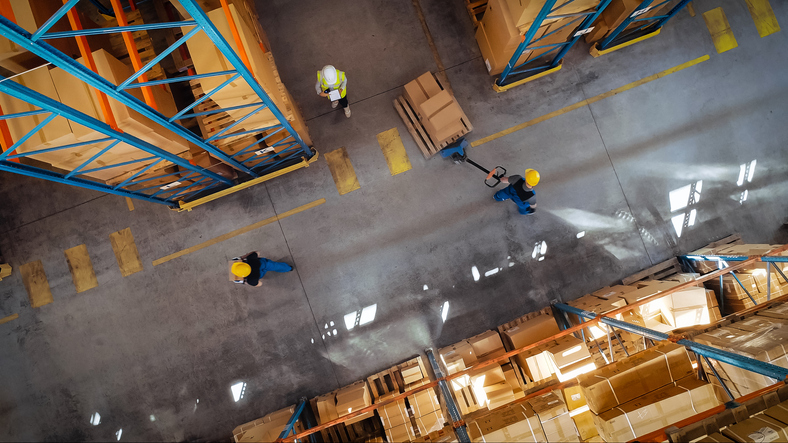
Warehousing assistant – A warehouse assistant is a more generalized role within a warehousing environment, although it can encompass some or all of the other roles mentioned above. In generalised terms, a warehouse assistant is responsible for helping maintain the flow of stock within a warehouse, and for keeping track of the goods coming in and out of it through logging and record keeping. The role can also include other things like health and safety responsibilities, fire safety responsibilities, or other ad-hoc administrative responsibilities as required. As the particular duties you’re assigned can vary from employer to employer, this role can be less target driven than other positions within the warehouse itself. Additionally, due to the fact that you may still be involved in many aspects of the day-to-day functions within the warehouse in a very hands-on way, you could also be required to take additional courses and training on things like health and safety, fire safety, warehousing and storage certification, and forklift training to name but a few. On top of this, you’ll a good degree of physical fitness as you may still be required to lift and load items, as well as being frequently required to move around the warehouse itself. Some prerequisites may require you to have experience in areas such as forklift driving or other warehouse machinery, as well as a technical knowledge in areas such as health and safety, computer operating systems, and word processing packages like Microsoft Office
Management and Team leader roles – These positions are necessary to facilitate the smooth running of operations within a warehousing facility itself, and as such are normally very demanding. That’s because warehousing is a highly target driven industry, which not only means will you normally have a large number of metrics to achieve within your own respective role, but you’ll also need to be able to motivate the staff you’re responsible for on the warehouse floor to do the same. Other functions you may be required to perform in such roles include health and safety and fire safety compliance, pre-defined administrative duties, and staff management oversight.
When applying for team leader roles, being able to show a proven track record of leading and motivating staff will be crucial in the interview. Where applying for other higher level managerial positions, graduate, or undergraduate degrees in areas such as logistics and transportation, or warehouse management, are normally required by most employers before as a pre-requisite before you’ll be eligible to be considered for such roles