The Best Guide to Enhancing Interview Performance on the Planet – Courtesy of Interview Professional
Imagery
Imagery is another great technique you can use that will help enhance interview performance and reduce nerves both at the same time. In sports in particular, and in psychology in general, it is another method utilised extensively by people to get the best results
Imagery can be defined as the process of using the senses to either recreate a past experience, or of creating an entirely brand new one in the mind. The best time to practice imagery is right after an event – therefore, when we consider how best to employ this technique when it comes to enhancing our interview performance, the best time to use imagery is right after we’ve spent time practicing for an interview





- In psychological parlance, imagery can be defined as a cognitive practice where an individual imagines themselves being successful in performing a given task or action. When it comes to interviewing, this means things like conducting yourself calmly and confidently in an interview setting, building a great rapport with your interviewer, as well as giving strong answers to each of the questions you are presented with
Imagery – A Cognitive Process
Imagery plays a significant role in psychology and is used within this discipline in a multitude of different ways, being employed extensively both as a therapeutic as well as a performance enhancement technique. The premise behind it is simple. It involves creating vivid mental pictures and sensory experiences in the mind. (This is done solely through the use of cognitive mental processes – in short, through one’s imagination, which is where the word, imagery, derives its name)
Because imagination is a basic cognitive process that everyone performs it sounds straightforward, but there are several aspects to consider if you want to employ it as an effective method to enhance your interview performance and beat any lingering nerves
Remember that when we consider imagery as a cognitive process, we are really talking about using our imagination, and how we can apply it purposefully in the form of an effective cognitive tool

Treatment of Phobias, Reframing Negative Thoughts, Stress and Anxiety Management, Pain Management, Trauma Therapy, Skill Acquisition and Learning, Motivation and Goal-Setting, Performance Enhancement (Sports Psychology), are just some of the areas where imagery is used as far as therapy and coaching is concerned
Example


In this scenario, try and picture your success in the interview. Start from the point that you first meet the interviewer, your smile and your great handshake, all the confidence and enthusiasm you exude here.
Following on from this, switch to a point where you’re in the interview now.
Picture the great conversation you’re having with your interviewer at the time. Imagine the calmness and composure you exude as you go about answering each one of their questions, the great rapport you’re building, and picture in your head how you’ll go about conveying the most striking points about yourself to them here too
To improve the controllability you have over your imagery here there are several simple mental exercises you can perform. Like any skill, imagery improves with practice. That’s why if you choose to employ imagery before the interview, you should dedicate time to engage in daily visualization exercises.
In this case, you will be looking to visualise your success in the interview. Do this by breaking the imagery you practice into steps. The specific steps themselves are up to you. For example, 4 basic steps you might practice when visualizing success in the interview could go like this:
- Visualize the confident demeanour you’ll have as you step into the interview room for the first-time
- Visualize overcoming your nerves by calmly answering any challenging questions that are posed to you with strong answers that draw on the preparation you’ve done in the lead up to your interview
- Picture the great rapport you’ll build with your interviewer over the course of your interview and imagine all the great things you plan to bring up in this conversation with them
- Imagine your poignant farewell with the interviewer after a great interview performance
Other useful methods that can help improve your imagery
Using External Cues or Guides

Follow guided imagery scripts or audio recordings that prompt specific visualizations. These provide a framework that can make it easier for you to practice controlling your imagery
Combine imagery with Physical Movement
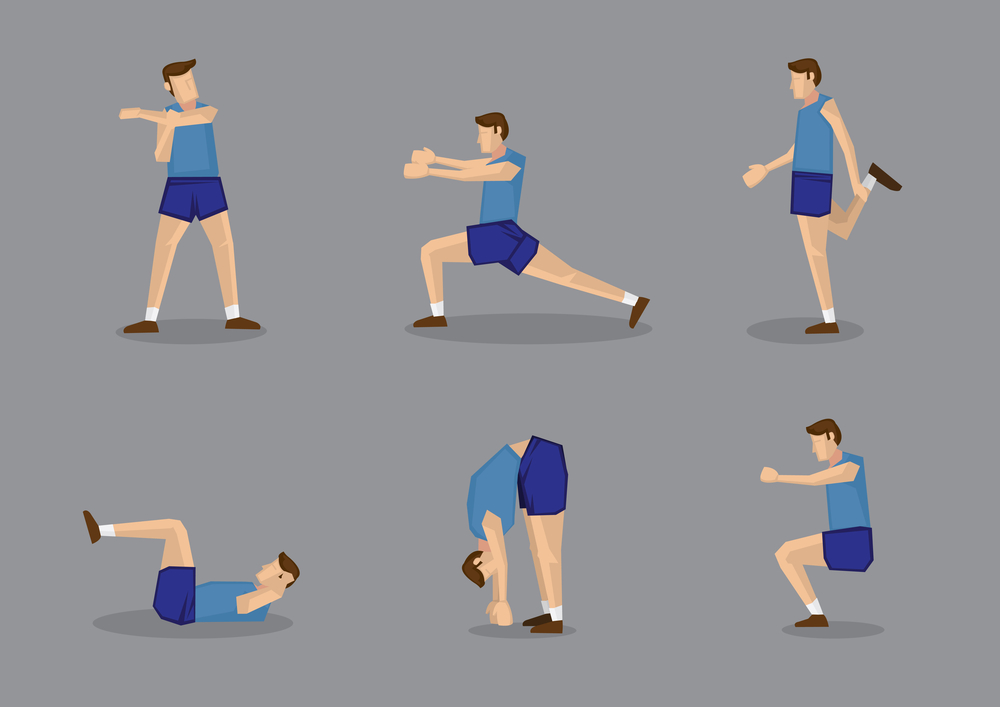
Combining imagery with real life physical movements to make the imagery feel more dynamic and grounded has been proven to work really well.
(Example. If you were imagining throwing a ball, mimic the arm movement)
This is recommended by psychologists as it reinforces control over your imagery).
In an interview scenario this could be something very basic like practicing your imagery techniques while sitting in a formally seated position
Start your imagery off with familiar scenarios


An interview is not an everyday thing. So, if you’re having trouble visualizing your success, a great technique to use is to start off trying to visualise more familiar scenarios. This could be something like conversing well with friends and family, or other things like situations you’ve handled well at home, in school/ college/ or work. From there, you can try and visualise more challenging situations like applying your imagery to an interviewing scenario
Consider focusing on visualizing the following when going for an interview to maximise the effectiveness of your imagery

- Visualize a successful introduction
- Visualize an engaging conversation and building a strong rapport with your interviewer
- Visualize answering difficult questions with ease and handling unexpected questions smoothly
- Visualize discussing your achievements in a well memorized and thought-out way
- Visualize closing the interview well
- Visualize conducting yourself with confidence and calmness throughout the entire day
Even more importantly
Visualize Success Beyond the Interview – Visualise being contacted a few days after the interview has concluded. Picture the discussion here as the interviewer tells you that they thought the interview went really well. They tell you they were impressed with what you told them, and this conversation culminates in them extending the formal job offer to you…



(Picturing receiving an email or call telling you the position is yours is an important part of any imagery you employ in this situation. It can give you a massive boost psychologically which is the whole purpose of employing this technique in the first place! Remember, if you make it as far as the interview you definitely have what it takes, the rest is up to you!..That’s why you shouldn’t hesitate to use whatever means you have at your disposal in the form of things like imagery to bolster your confidence and help you achieve your goals)
Make use of Mental Cues
This is something that sounds a lot more complicated than it actually is – because it really is something that anyone can do. Moreover, this is also a very common technique in psychology where imagery is concerned.
It basically involves memorising specific cues that are used to trigger a set image you want to recall
For instance, when shaking someone’s hand you might practice recalling an image you can think of where you’ve made a smooth introduction. Another example would be to associate an action like sitting down with a mental image of calmness. (This could signify the start of the interview and your mental disposition at the time in preparation for the questions you are about to answer in the interview itself)

When making use of mental cues, the thing to remember is that it is a polysensory technique, meaning that you don’t necessary just need to employ physical actions to trigger them – rather, you can also involve all of the other relevant senses as well including:
Visual – What you see around you, like an office building.
Perhaps used to trigger a memory of a place you’ve been before where you had another similarly great interview, much like the one you’re about to have today
Auditory – Such as hearing the sound of a telephone ringing.
You could perhaps use this to trigger a mental image of a time where you had a striking telephone conversation (work-related or otherwise).
Olfactory – Refers to smell, such as a scented fragrance worn by a co-worker, or a place you have visited that had a distinctive smell in the air.
Use such recollections to evoke memories of times where you’ve successfully achieved an outcome, or you’ve dealt with a challenging situation, in the way that you’d hoped
Tactile – Is the sensory input of touch, such as the grip of a handle when opening a door, or the firm grasp of another person’s hand (like how you would shake your interviewer’s hand when meeting them for the first time)
Use such sensations to evoke mental images of times where you’ve accomplished a task you’ve set out to achieve, or dealt with a challenging interaction in a way that enabled you to achieve the outcome you were looking for
Gustatory – Refers to the sense of taste, such as tasting refreshing cool water from a water cooler on a hot day. Or perhaps like a time you were on a sports team and you’ve led that team to triumph in a particularly challenging game
If you can remember such a time or situation, again, by all means use it as a mental trigger to evoke a similar image of how you intend to approach the situation on the day of your interview
Kinesthetic – Is the feeling or sensation of the body as it moves into different positions – such as how you may feel when making your way into the interview room in a fresh new suit and tie!
Evoking such mental images can help you feel calmer and more composed as you begin your interview
Make use of Cognitive Anchoring

Cognitive anchoring is a technique that psychologists use where imagery is concerned, and much like the use of mental cues, it really is a very easy thing that anyone can do.
This is essentially a method that enables you to hone the image you want to recollect by helping to make it more vivid so you can focus on it more clearly. It can be a really useful technique to stop the mind wandering onto other things, and in this respect, is also often used by people to help them maintain their calmness and composure in high pressure situations.
Cognitive Anchoring involves making use of the visual aspects in your environment at the time. For example, you could be sitting in the reception of a building waiting to go into the interview room. It could be an ornament or a piece of artwork at the other side of the room, it could be the view outside of the window, or it could even be the briefcase or portfolio sitting at your feet. Whatever the thing is, by focusing on that object, you can use it as a ‘cognitive anchor’, enabling you to focus more clearly on the image you want to recall
It’s a great technique to use if you find your focus wondering, or find yourself getting so nervous that you begin thinking about other things, and by using the visual elements in your environment, (for instance, the view outside of the office window), it can help you to channel your thoughts more clearly onto the image you were initially thinking about. (For instance, that great time you had in college where you took control and helped your team triumph in a sports game).
Note. Be wary of using this technique in the actual interview itself though. Cognitive anchoring is a method that requires visual contact with the object you are using as an anchor. While it can be great for calming raging nerves and maintaining focus on the things you want to visualize in the run up to the actual interview, once inside the interview room, you’ll need to maintain proper eye contact with your interviewer at all times. As such, it makes this method less effective (unless you are able to use the interviewer themselves as an effective anchor!)
Consider keeping a Journal

If you get serious about using imagery as a cognitive enhancement technique, whether or not this is to improve on interview performance, or whether it’s for any other reason, consider a keeping a journal to document your imagery experiences
Keeping A Journal
Where keeping a journal, do the following:
- Write down what you visualized
- Consider how vivid or controllable the image was
- Think about what adjustments (if any) you made to the things you tried to visualise
- What was the result once you did this? (Did it help you internalise feelings of greater confidence? Was there a particular facet of the interview you started to internalise more? /The beginning of the interview/ the end of the interview/ calmly responding to challenging questions/ having a great conversation and building rapport with the interviewer, etc?)
This may seem like quite a lot, but keeping a journal like this can help you hone the imagery you are practicing even further. In doing so, it will ensure you get the greatest psychological benefits possible from the things you are trying to visualise
Leading on from the principle of conducting an analysis of your imagery sessions, is the practice of repeatedly trying to refine the images you are visualising
Image Refinement



For those who engage in the practice of imagery, image refinement is also another very important area that will help you get the most from all the images you are trying to visualise.
It is also a practice that psychologists would recommend if you’re having trouble visualizing exactly the type of things that you want to, or are having trouble evoking the types of emotional responses that you’re seeking to attain
Imagery refinement is a very simple cognitive technique where you can hone your imagery by returning to the same mental image multiple times, making incremental changes to it
As an example, for imagery involving building a great rapport with your interviewer, you could refine your imagery in the following ways:
- First, visualise the fantastic conversation you’re having
- Then, build on this by picturing the most striking responses you want to incorporate after having practiced for some of the most challenging questions you’ve envisioned being asked
- Build on this further by adding in anecdotal lines, jokes, or other pre-rehearsed things about your skills and qualities when practising your visualization
Remember that while everything is unlikely to go exactly the way you imagined it on the actual day of your interview, as a technique, imagery can still be incredibly useful and is regarded as a highly effective way to help you get into the right frame of mind ahead of the interview itself.
In doing so, this can have a huge impact on your performance on the day
Overall, imagery is recommended by psychologists as one of the most effective performance enhancement techniques you can utilise due to strong evidence within the field of psychology that it helps to increase confidence and alleviate nerves going into high pressure situations (like interviews). As such, utilising effective imagery beforehand can increase your confidence and help you to feel a lot more calmer and composed than you otherwise would be – in turn enabling you to bolster your confidence and deliver a much better performance on the day