THE BEST GUIDE FOR DEALING WITH INTERVIEW NERVES ON THE PLANET – COURTESY OF INTERVIEW PROFESSIONAL
The same techniques that can be used to enhance your performance can also be used to alleviate interview nerves too, and these have been discussed on the last page. However, there are plenty of other techniques that can also be employed where looking to your alleviate nerves and anxiety when it comes to interviewing, and we will look at these next
Here are other techniques you should consider employing before the start of the big day
Breathing Exercises
Breathing exercises are one of the most commonly recommended relaxation techniques and are frequently used not only in many types of different therapeutic regimens, but are also commonly used as effective tools for relieving stress and anxiety too. This is especially true when it comes to alleviating nerves both before and during the interview
Effective breathing exercises can vary – it’s all about finding one that works best for you. Here are a few of the more common ones you can practice before an interview to relax your mind and calm your nerves:
Box Breathing (Square Breathing)

This is recommended if you want to regulate your breathing as a means of controlling your feelings and temperament so you can calm yourself down, which can sometimes be useful both before and during an interview situation
Instructions
Inhale through your nose for 4 seconds
Then hold your breath for 4 seconds
Next, exhale slowly through your mouth for 4 seconds
Hold your breath again for another 4 seconds
Then repeat this cycle another 3–5 times until you feel calmer

Alternate Nostril Breathing

This is recommended where trying to relax so you can create a sense of calmness around you
Instructions
Sit comfortably and close your eyes, then close your right nostril with your thumb
Inhale deeply through your left nostril
Close your left nostril with your ring finger and release your thumb from your right nostril
Exhale through your right nostril
Inhale through your right nostril, close it, and exhale through the left
Repeat for 1–2 minutes
Resonant Breathing

This is recommended for synchronizing your breath with your heart rate, which is also highly useful where trying to promote a state of calmness and tranquillity around you
Instructions
Inhale for 5 seconds
Exhale for 5 seconds
Continue this even, steady breathing for 5–10 minutes until you feel relaxed
These are just a few examples of the breathing exercises you can perform, there are many more techniques and variations that you can choose from. Again, it’s about trying them for yourself and finding one that works best for you, because in doing so, it can give you with another tool at your disposal to help you attenuate your thinking and regulate your emotions so that you can perform at your best on the day of the interview
Meditation

Meditation is a mental practice that involves a person focusing their thoughts intensely on feelings and emotions, and will often involve directing them onto either very abject areas like (personal well-being or the direction taken in life) or onto other very important areas, (like family, relationships, career, or personal pursuits, etc)
Meditation can also involve doing the opposite and clearing your mind of your thoughts in very conscious and deliberate ways. This is a type of meditation that focuses less on contemplation of the things in the world around you, and focuses more on introspection and gaining a better sense of connection with the inner self
All in all, meditation is not only considered to be a great way of achieving a heightened sense of self awareness and emotional balance, but of also achieving a heightened state of personal introspection and relaxation too, which can sometimes be exactly what you need before your next upcoming interview
How does meditation work?
That part is simple. While meditation can take many forms, just do any of the following to have a great meditation session

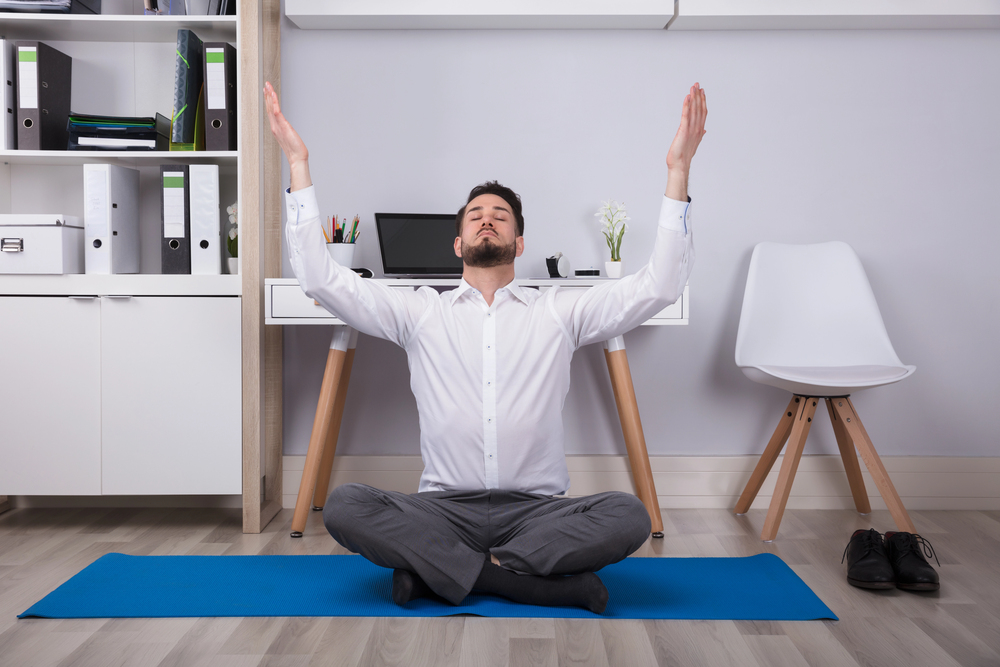
Get into a position that affords you a proper degree of comfort, while at the same time enabling you to focus your attention fully – sitting cross legged is one of the most common positions people adopt to achieve this…from there, meditation is the simple act of contemplation (thinking), either intensely on a specific area or subject, or in a more abject sense, letting your mind go blank in an attempt to gain a higher level of personal introspection or greater awareness of the inner self
Other meditation methods include focusing on your present-moment awareness, often using your breathing as an anchor, which can either be used to effectuate deeper levels of contemplation or achieve greater levels of tranquillity from within. Participating in guided meditation led by a teacher or recording is also another popular method, often providing visual and auditory instructions that can help you direct your thoughts and enable you to achieve effective levels of composure and tranquillity
Listen to Soothing Music

Music is generally considered to be a great way to relax and unwind, and during tense and high-pressure situations, these therapeutic properties are enhanced even further. As such, music is considered a great tool to use to alleviate nerves before an interview. This is particularly true on the day, (and particularly where you need to travel to a physical location for the interview itself)
Remember it doesn’t necessarily need to be great music you listen to. When employing this technique, it could be a podcast, audible recording, or anything else that inspires you and helps to take you to a place of calmness and tranquillity
Relaxation

Working hard towards a goal or objective can take a heavy toll, with more anxiety building up the closer you get to it. As such, when it comes to interviewing, employing relaxation techniques can be a highly beneficial strategy that can help you alleviate nerves and leave you feeling refreshed before your next upcoming interview
While choosing a relaxation technique that best suits your needs can be quite a subjective thing that can vary greatly from individual to individual, here are some suggested methods and the best times to use them in the lead up to the actual interview itself
There are several suggested times when it’s best to utilise relaxation techniques ahead of the actual interview, and these have been outlined for you below
When
The night before the interview

Suggested relaxation methods
Introspective modes of relaxation tend to work well the night before the big day; these include:

Meditating or doing Yoga
Visualization or Guided Imagery
Deep Breathing Exercises
Listening to Calming Music or Sounds
Going for a walk
These methods of relaxation are recommended because they can not only help you disconnect from your impending situation long enough to enjoy a genuine moment of relaxation, but at the same time, they also afford you the scope to think and contemplate about your situation in ways that enable you to gain introspection and perspective on the challenges ahead – and this can often help to get you in the right mindset ahead of the big day

Important! No matter what method of relaxation you choose, ensure you go to bed early so you can get a good night’s sleep and are ready and prepared for the day ahead
When
The Morning of the Interview
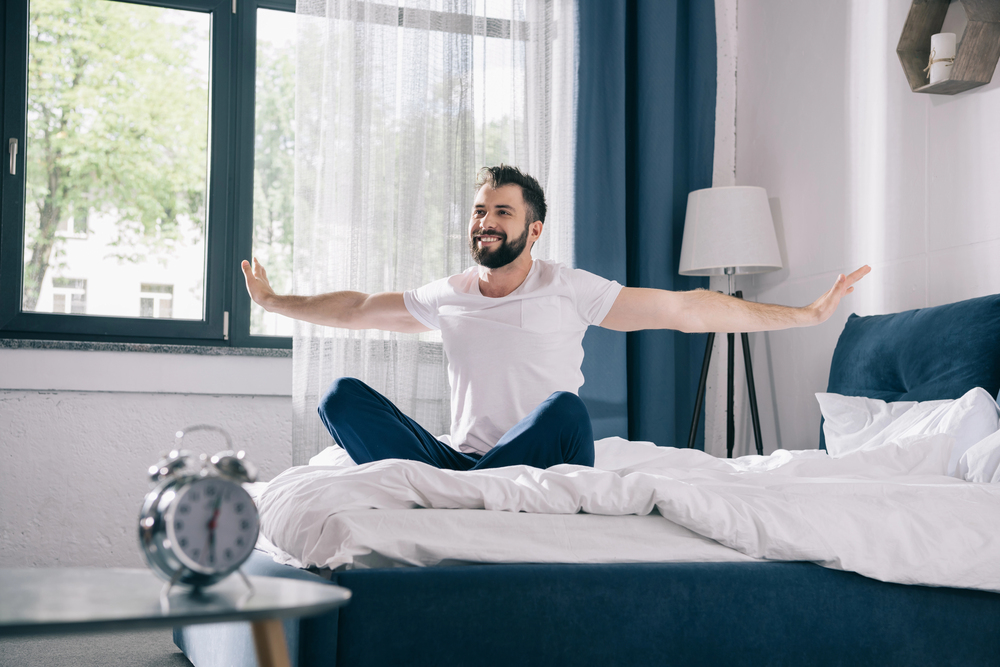
Suggested relaxation methods
Here you need to be alert and ready for the day to come. Relaxation methods that involve a light amount of physical activity to help you focus your energies are best here
Consider Beginning with some light stretching, a short dance routine, or going for a brief walk first thing
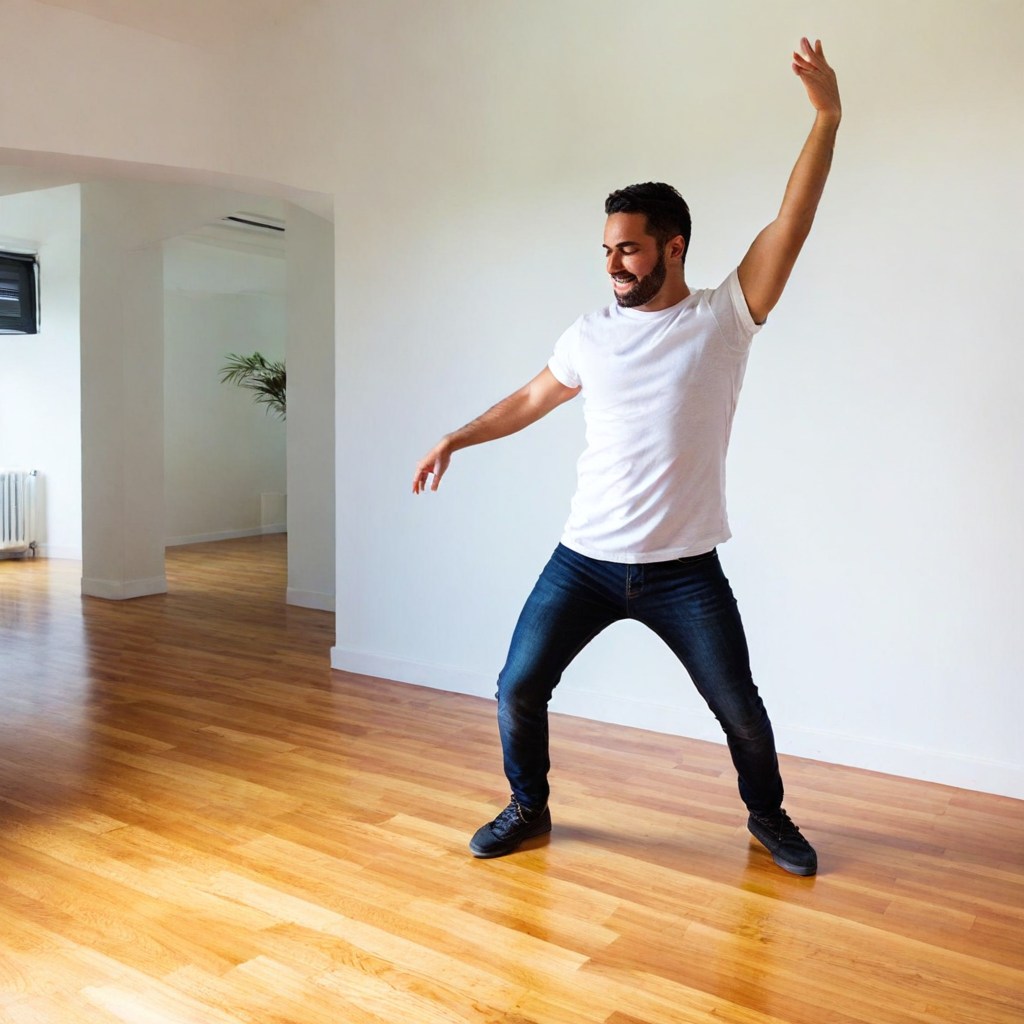
This can help to limber up your body and give you the time and space you need to think clearly, enabling you to get yourself psyched up for the day ahead
Utilize positive self-talk

This will enable you to start your day in a strong frame of mind as you go about making breakfast and set about changing into your interview attire. It will also enable you to provide yourself with positive reinforcement as you go about the rest of your tasks that day, leading all the way up into the interview itself
A brief meditation when you first wake or just before you leave the house, breathing exercises, or listening to calming sounds and music…
…are also all potential methods that you can utilise as you go about your daily routine, all the way up until the time your interview commences
When
Where you have to physically travel to the Interview

Suggested relaxation methods
Before we talk about suggested relaxation methods here, keep in mind that in this circumstance it can also be a highly productive use of your time to focus on some last-minute revision so that the most relevant things are fresh in your mind for the interview
However, if you feel that utilizing relaxation methods would be a better use of your time – or want to instead split your time between the two (relaxation/ revision) on the journey to your interview, the most effective methods are ones that help to keep you calm and composed while preventing last-minute nerves from building up before the interview commences
Such types of recommended relaxation methods go as follows:


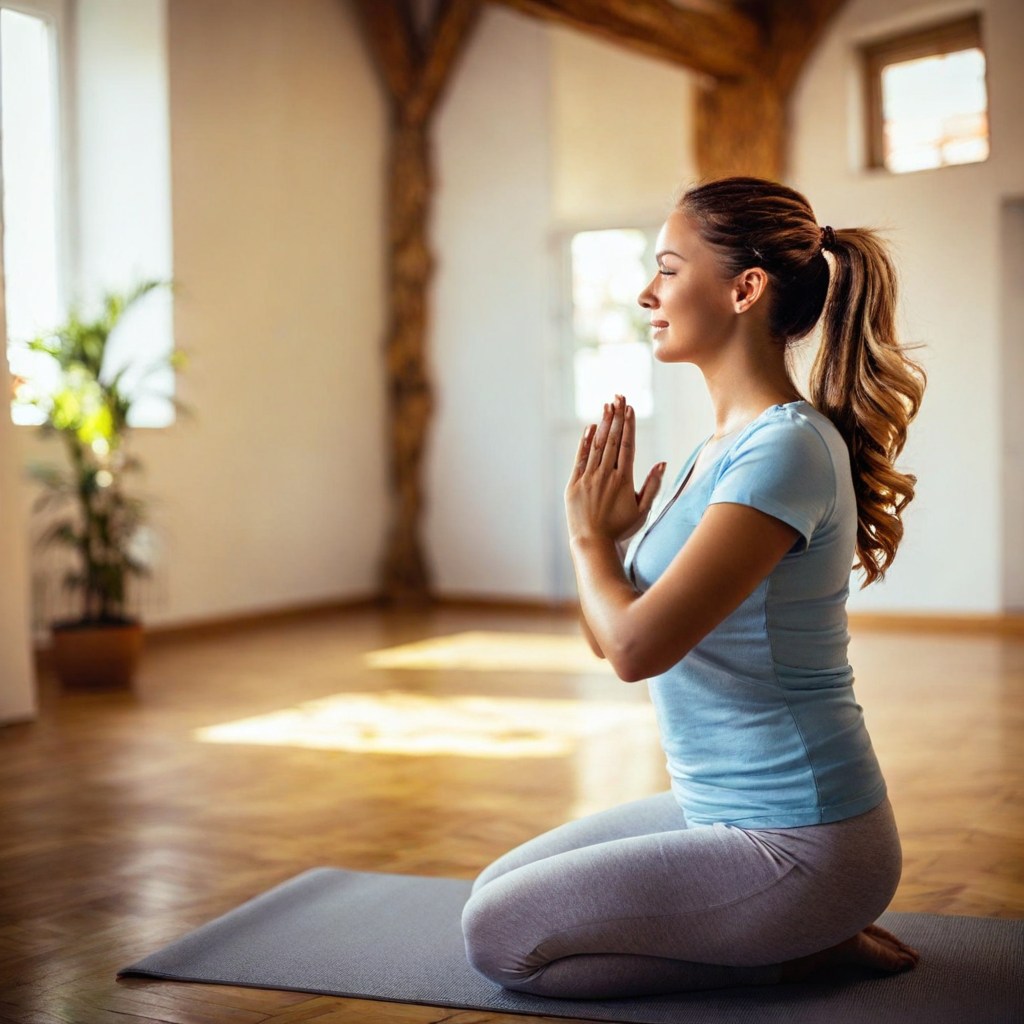
Visualization or Guided Imagery
Deep Breathing Exercises
Listening to calming Music or Soothing Sounds
Positive Self-Talk
Although you will be travelling to your destination, another possible relaxation option is to go for a walk once you get there. However, it’s also important that you are mindful of time, so don’t wander off too far!!! With that being said, even a brief 5min walk around the building can not only help give you a bit of badly needed space that will enable you to calm your nerves and contemplate on what you’re intending to say in the interview to come, but it could also provide a useful talking point when the interview starts too
When
Immediately before the Interview

Suggested relaxation methods
At this point you will be at your destination, and as such your relaxation choices here will be very limited. You also need to stay calm and focused on the task at hand; therefore, any relaxation methods you employ here will need to be internally based or very discrete ones that expend a minimal amount of energy and effort. The situation limits the number of options you have at your disposal here, but in spite of this, there are still a few effective methods that you can utilise
Using grounding techniques, like focusing on physical sensations (e.g., the feeling of your feet touching the floor, or your breath as it flows in and out of you), can be a great way to steady yourself and keep your rising nerves under control as you wait to be called into the interview. Another method that is very similar to this are quick tension-release exercises. (It’s a very basic method where youclench your fists tightly, then release them to relieve physical tension).
Positive (internal) self-talk, and deep breathing exercises are other methods you can also use to help you retain your composure and get your nerves under control just before your interview begins too
When
During the Interview

Suggested relaxation methods
You can also use improvised relaxation methods during the actual interview as well
There is one common method during an interview that is often recommended; it is a very basic but highly effective one that will not only enable you to keep yourself composed when speaking with the interviewer, but will also enable you to buy yourself a bit of extra time when answering their questions too. The technique is simple. Take a deep breath whenever you feel the need to regain a bit of extra composure or need a bit more time to answer one of your interviewer’s questions. This will give you a valuable second or 2 to compose yourself and to think about what your response will be
You can also use grounding methods such as focusing on the sensation of the chair you are sitting on, sounds in the background, or even the rhythm of your own breath. Sometimes positive internal self-talk dialogue at points when the interviewer is speaking such as, ‘you’re doing great!’ can be useful too, but be careful when using this in case you lose your concentration and get distracted from what the interviewer is actually saying to you!’
Apps


Phone and online apps are yet another resource you can use to help you make the most of the methods outlined above. Don’t be afraid to take your stress reduction practices one step further by utilising these resources in the lead up to your interview, or even on the actual day itself!
Meditation and Mindfulness Apps like Headspace, calm, and Insight Time provide guided meditation that will help you get the most from your sessions by facilitating an in the-moment awareness that will enable you to get into exactly the right frame of mind you need for your next upcoming interview – even if you’re out and on the go…!
No matter where you are or what you’re doing at the time, Breathing Exercise Apps like Breathwrk and Breethe will help you to utilise a controlled use of breathing that can help you manage stress, anxiety, and improve focus via a range of different breathing techniques, and there are many other types of mindfulness and Stress reduction apps too in the form of things like Sanvello, Wysa, MyLife and aura…YogaGlo, which are apps focused on Yoga and Movement-Based activities – as well as other apps like muse, which are services focused on Biofeedback through wearable-Integrated technology
Wearable Technology


Note. While wearable technology is another method you could potentially utilise to help keep your nerves in check by setting yourself targets as far as certain biometrics are concerned, use of this method is cautioned not only as it may conflict with your interview attire, but may also cause additional distraction on the day of your interview as well. For that reason if you do decide to use any wearable technology, put it into “Do Not Disturb” mode or turn off notifications completely to ensure you remain fully focused on the day
Biometrics to look for
Heart Rate

A lower resting heart rate indicates better stress resilience, while an increased heart rate is usually associated with higher levels of stress that can lead to nervousness and poorer cognitive function.
When it comes to maintaining great heart function things like a healthy diet, (in the form of the intake of foodstuffs such as the Omega-3 fatty acids found in salmon, flaxseeds, and walnuts) ❗ performing regular cardiovascular exercise, ❗ ensuring you get proper sleep, and taking supplements such as Magnesium. CoQ10, and L-Theanine (where required), are all really helpful for maintaining a healthy heart rate and good blood pressure in general
❗ However, as far as goes interviewing in particular, making effective use of the mindfulness techniques that can empower you to stay calm and focused (outlined above) is the most effective method you have at your disposal where helping you effectively manage a biometric such as your heart rate is concerned
Sleep quality & duration

Good sleep enhances memory, focus, and emotional control, all of which are vital on the day of your interview. For this reason, it is recommended you aim for between 7-9 hours of quality sleep a day, especially on the night before your interview
Blood Oxygen Levels (SpO₂)

Low oxygen levels have been proven to lead to poorer cognitive performance, fatigue, and anxiety. The good news though is that there are plenty of things you can do to increase oxygen levels so that you’re as ready as you can be on the big day
- Utilising Deep Breathing Techniques, as well as any form of basic exercise (like aerobics or Yoga) can help you increase oxygen levels in your body, while at the same time also improving your overall energy and cognitive function too!
- Enhancing the air quality in your environment can help enormously too. This can be done by taking basic steps like opening windows to increase ventilation, using air purifiers to remove pollutants, buying indoor plants that release oxygen, as well as doing everything you can to reduce your exposure to smoke, dust, and other harmful chemicals
- Keeping yourself hydrated helps (because water helps blood carry oxygen around the body more efficiently!)
- Eat well helps too. Eating the right foods can boost oxygen levels. (This includes eating iron-rich foods such as lentils, and red meat. Nitrate-rich foods such as green vegatables, as well as antioxidant foods in the form of berries, nuts, and dark chocolates)
Monitor your cortisol & stress levels

High cortisol (stress hormone) can impair decision-making, memory, and speech fluency. The best way to manage this is to follow the steps outlined here, and in conjunction with optimizing your social activity and emotional wellbeing, get proper rest, exercise, and eat properly
Prayer

This is based on the principle that there is some higher power guiding our actions. While this is almost certain to be true – something did indeed create us, current understandings on what god truly is are likely to be quite incorrect – both at an institutional and a societal level, for a whole plethora of different reasons, a few of which have been outlined below…nevertheless, when it comes to the interview, it can still be a powerful motivational tool indeed
How creation ‘god’ is likely to work
To begin with, the entity that created us is almost certain to be an omnipresent sentient force rather than a single divine deity, almost certain to be quantified by an energy science cannot currently comprehend, permeating not only the physical dimensions that we ourselves exist in, but more importantly, permeating dimensions we do not yet currently have access to – and may never do!

There is clear empirical evidence that it is a practical, methodical, and very ruthless entity, (the fact that almost ALL life consumes other life, be it plant or animal, is a clear indication of this!) on top of which, there are also clear indications that it is not as all powerful as conventional modes of religion tell us it is either, but rather, over time, will face severe challenges to its own existence! As a highly technologically advanced civilization, do we ourselves have complete control over everything we create? The answer is NO. What this advanced theory puts forth is that neither does creation!!! That while still omnipotently powerful as far as any single living being will ever be concerned, what we see when we consider the empirical evidence found in nature is that creation (‘god’) does not have the degree of control it currently wants over key fundamental areas of existence, namely first and foremost in the entities it has created… meaning us – life itself!..And that furthermore, there are 1 or 2 glaringly obvious signs of this in the biology of many different kinds of species…these will be examined in more detail in the complete advanced theory itself…and we can hypothesize it faces other challenges too…such as the degree of control it currently holds over other areas that comprise existence, namely space and time, (dimensions), and these are likely challenges it is currently striving to overcome. (For instance, this might manifest itself in the types of particles that we could see brought into existence over the course of millions or billions of years), and we can theorize that such (as of yet created or undiscovered particles) may well be needed to enable creation to perpetuate its own existence as far throughout time as possible. This leads into an even more fundamental point – the purpose of life itself. Because it is likely that when a proper consensus is formed around the question of what creation ‘god’ truly is, that a new understanding will form based around the fact that creation uses life for a very specific purpose (deriving energy from all living things that it uses to perpetuate its own existence with), leading into answers around how and why evolution occurs at all…!
This makes sense if we (meaning each of our respective lifeforces, assuming we can and ever are able to quantify such a thing) exists as an infinitely smaller constituent part of the greater whole of creation itself…further leading us into the area of longevity and of why extending human lifespan should be the top priority in today’s societies, but that is a discussion for another time…
Derived from Victors Advanced theory on creation…
Superstitions

Leading on from prayer is the concept of superstition
What we think can affect how we feel, and whether they are real or not, adopting some healthy superstitions before an interview can provide a psychological boost that helps us reduce anxiety, increase confidence, and provide a sense of belief in an otherwise tense and sometimes overwhelming situation
Below are some examples of superstitions that it could be very helpful to adopt before an interview
Good-Luck Rituals
Preparation rituals often comprise nothing more than simple gestures, although they can also comprise more elaborate types of structured actions too, and may be performed in a specific order before undertaking a significant activity, task, or event
Examples
Personal superstitions

Adopting a personal superstition such as wearing a specific outfit, colour of clothing, tie, piece of jewellery, or accessory that has previously brought success before…
Good-Luck Charms

Consider carrying a good-luck charm…like a coin, medallion, or other personal item
Self-talk phrases
Say a particular phrase or word before starting the day
Preparation Rituals
Preparation rituals may comprise of both basic and structured actions, often performed in a specific order before undertaking a significant activity, task, or event
Examples
Performing actions in the same place, or performing them with something important

Always rehearsing in the same place, or using something important like a personal diary to note down the most pertinent information to prepare from for your interview can sometimes serve as a source of inspiration before the big day
Sitting down for a Pre-Interview Meal or Drink

Eating or drinking something considered lucky…a particular food (fruit/ meat/ vegetable), or a protein shake or power breakfast you believe fuels confidence, can provide an important psychological boost before your interview too
Positive Energy Superstitions
These are beliefs or practices that people follow to attract good fortune, happiness, and success. These superstitions often rely on symbolic gestures, rituals, or the specific objects used to promote them
Examples
Knocking on Wood
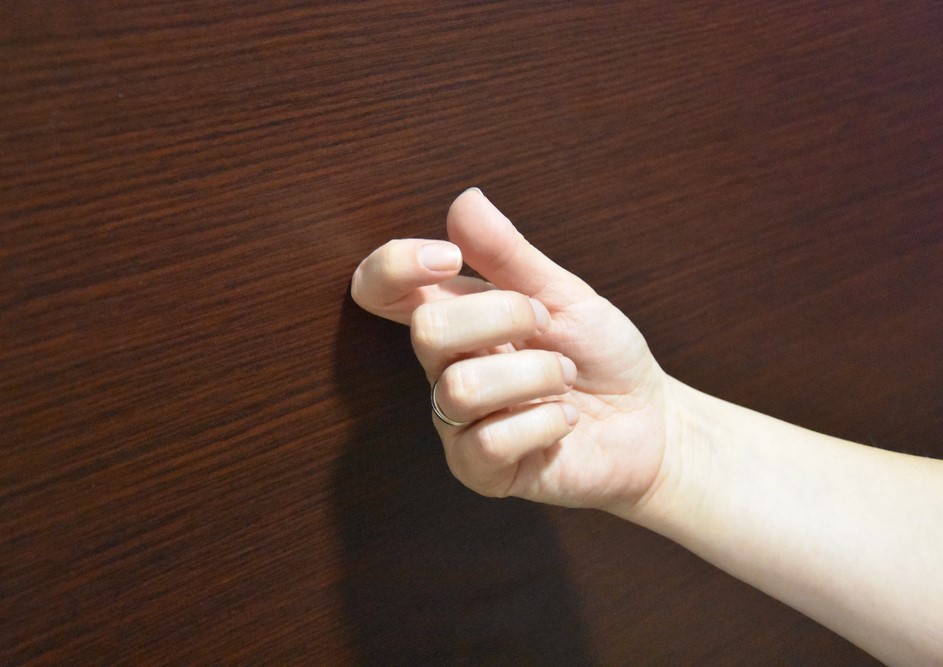
Tapping on wood while saying something motivational or inspiring – For example: “I know this will go well!”
Crossing Fingers

For example, crossing fingers while waiting to connect to your interviewer online, or right before entering the interview room
Throwing coins into a fountain or well

Tossing coins into water is thought to grant wishes, attracting prosperity and positive energy

Overall, superstitions can play a significant role as far as helping you feel more confident, relaxed, and focused goes, both before and during an interview. The key is to choose rituals or objects that feel meaningful and empowering to you!
Use an interview cheat sheet

This is a particularly effective method, especially on the day of the interview itself. That’s because an interview cheat sheet gives you a means to carry out some last-minute revision in the time leading up to your actual interview on the day. As such, lots of people find it can be a great thing to have, especially if you are travelling to your destination on public transport, as it not only provides the perfect means of getting in some last-minute revision so that the really important things you want to remember are fresh in your mind, but in the process, also becomes a great way to take your mind off of last minute interview nerves too
For more information on interview cheat sheets, see our guide to interview cheat sheets here
Arrive early to your destination
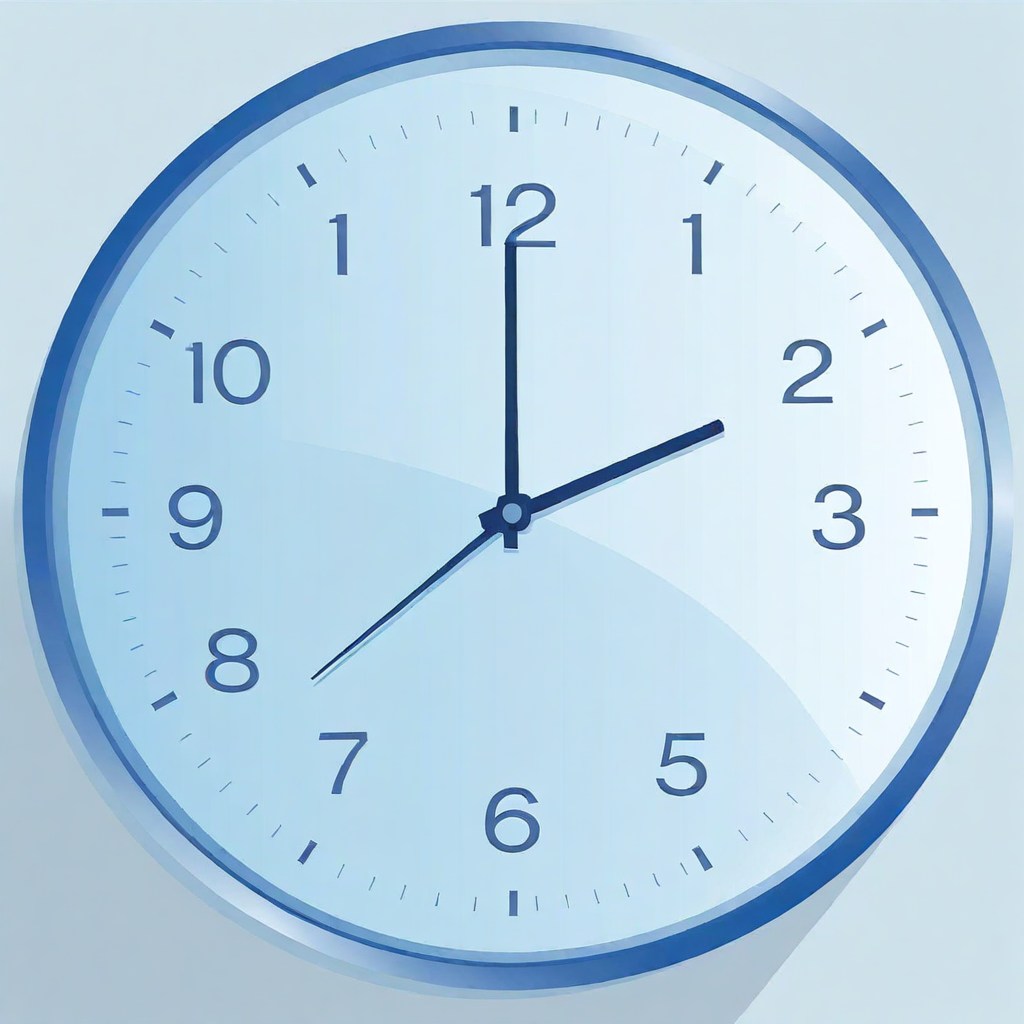
This is important as it not only ensures that you make it to your interview on time, but moreover, that you’re not feeling overly flustered having to rush around to get there before your interview starts either
(Ideally you don’t want to arrive in the interviewing area until around 10-15 minutes before the actual interview is due to commence). However, if you are travelling by car or are arriving by public transport it is important you arrive a bit earlier than this to give yourself time to find the destination and get into the building
Eat properly on the day

While you certainly don’t want to go into an interview feeling bloated, any good interviewing expert will tell you that eating properly on the day is essential to ensure you keep your energy levels high so that your brain is sharp and able to function at its optimal levels
Have other job interviews lined up

Part of the nervousness and anxiety people feel when they go for interview can be attributed to the fact that they have a lot riding on their success. The outcome of an interview can determine incredibly fundamental things in your life, the most obvious of which are things like finances, (which will have a huge effect on the way you live and the type of lifestyle you are able to afford for yourself). It also has huge ramifications when it comes to the prospect of building a career, following on from which (as you go through life) are the chances you’ll have for upward social mobility and career advancement. It can also affect other fundamental things too, like where you end up living, the type of house that you have, and even the types of friends and social circles you’ll get to enjoy too
It’s for reasons like this that as we can appreciate, there’s normally a lot riding on the outcome of an interview. However, it’s also why having other interviews lined up can greatly alleviate the anxiety associated with those concerns. Even if it’s for a job less desirable than the one you are currently interviewing for, in the back of your mind, knowing you have another opportunity to fall back on if you’re unsuccessful can greatly alleviate the stress and worry of an interview, making all the difference when it comes to how you perform on the day
Acknowledge Your Feelings
Turn interview anxiety on its head – sports athletes sometimes use their anxiety to hone their performances, and there is no reason why you can’t do the same for an interview

It’s perfectly normal to feel nervous before an important event like an interview, and by accepting this reality, you can use it to psych yourself up into a heightened state of readiness and confidence
Talk about your feelings

Finding a close friend or family member to talk to and simply telling them how you feel can help you take a huge load off before the big day. Talk about what getting the job could mean for you… talk about the preparation you’ve done leading up to the interview itself… talk about how you are feeling about meeting the challenge of the interview ahead, and about what your biggest fears and concerns are… In turn, you can expect to be rewarded with reassuring words and a constructive reply that might not only help to assuage your concerns, but can also help to ease nervousness, and provide positive reinforcement ahead of the actual interview itself
Research the Company and get in Lots of Practice Beforehand

This is one of the most essential actions you should look to take leading up to the interview itself. By researching the company, it not only means that you’ll know something about it beforehand, but more than that, it also means that you’ll have an important talking point to take into the interview with you too.
This is especially useful because one of the most commonly asked questions in an interview is, ‘What do you know about the company?’

Researching the company then also leads into the broader sphere of preparing for the interview too. If you want to have the best chance of success this is something that it is essential you do, and going into the interview having prepared well beforehand will not only mean that you’ll already have an idea of the types of things you want to say about yourself, but having practised for potentially challenging questions and rehearsed for key responses, it will also give you a huge confidence boost that will go a massive way to alleviating interview nerves knowing that you have prepared for and have pre-rehearsed responses that you can fall back on to help you answer all the unforeseen questions you might encounter
Remember that you are NOT alone

An important fact to keep at the forefront of your mind when it comes to interviewing – is that everyone gets nervous! It’s a completely natural feeling, which is why it’s very helpful to remember that you are not alone there. Even your interviewer will normally experience a degree of nervousness from time to time, (that’s because it’s their job to assess you in certain ways, and that comes with an important responsibility to get these things right on their part) – for more insight into an interviewer’s role, see our section on Assessing Interviewer Mentality). Basically though, the most important takeaway from this is that it’s not getting nervous that matters, it’s how you deal with it that counts! Will you let your nerves get the better of you?…Or will you employ the techniques we’ve outlined in this section and use these feelings to your advantage…
Smile

A simple technique that is surprisingly often overlooked in situations like this. People naturally smile when they are comfortable and feeling at ease. Doing the same when you are nervous and anxious can help you subconsciously alleviate some of the stress and nervousness you may be feeling both before and during the interview…
…Equally important is that smiling generally makes you appear more pleasant, and will help endear you to the interviewer and to anyone else that you meet too
Links
Here are some great links that you may find useful if you want to better understand and utilise some of the relaxation methods that we’ve outlined in this section
www.mindful.org (how to meditate)
www.positivepsychology.com (Effective Visualization Techniques)
www.nhs.uk (self help/ breathing exercises)
Music Lab (Best soundtracks to work too)
Lastly, Be yourself. While this is one of the more generic pieces of advice often given when it comes to interviewing, it is actually also one of the most relevant too. Trying to exude a persona that is at odds with who you are is not only incredibly draining, but moreover, there is also a good chance the interviewer will pick up on this too – and that is almost certainly guaranteed to hurt your chances when it comes time for them to make their hiring decisions
Overall, you’ll find it easier to answer the interviewer’s questions if you act naturally anyway, and you’ll also have an easier time making a good impression, on top of which, you’ll typically have a better experience in the interview overall. Consider the fact that if you feel you have to act like someone you’re not, then you should probably be applying for another type of work anyway…!
So, with that in mind, be proud of yourself and of your achievements, and remember that if you’ve made it as far as the interview, then you’ve already beat out many other candidates anyway, and that should tell you that you’ve got exactly the right type of personality that the organisation needs
For more great things you can do to keep yourself feeling less stressed out and more prepared so you’ll have the best possible chance of success,, see the following sections