STRUCTURING YOUR C.V OR RESUME IF YOU ARE A STUDENT OR HAVE NO WORK EXPERIENCE

The employment history section is typically regarded as the most important area on a C.V or resume. However, if you have no experience to add, then this section will not have the intended effect, and you will have no choice but to compose your C.V or resume in a slightly different way
For students, normally the intended effect will be different when we compare this against someone who is unemployed – and that’s because a student who is studying towards a further qualification has something which holds promise for an organisation and is therefore coveted by employers. However, irrespective of whether you are a student or are unemployed, in both cases the principle behind how this document is structured is still very similar
In both cases, additional emphasis will be placed on the educational section as opposed the employment section, (which is normally the most prevalent area on your C.V or resume)
THE STRUCTURE
Contact Details
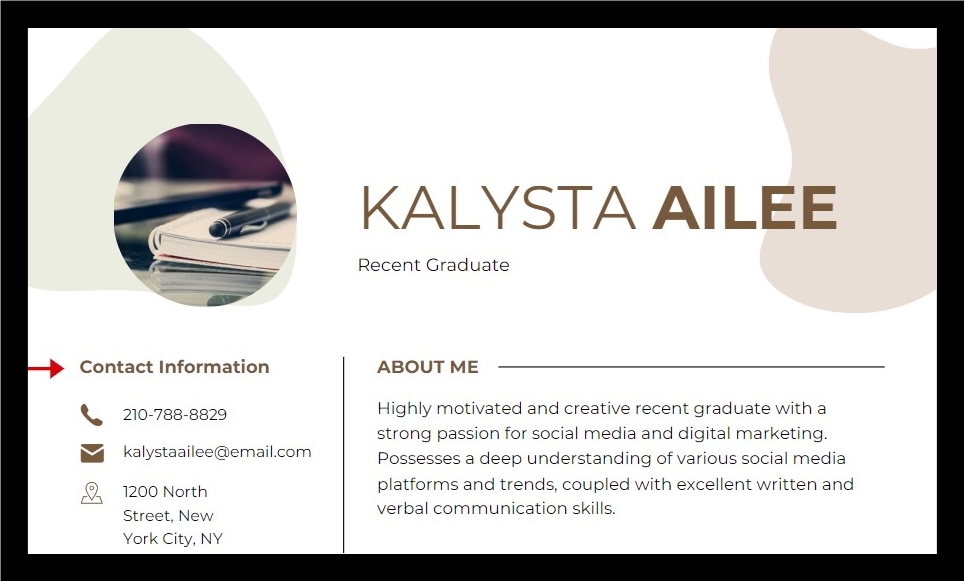
Name
Address
Phone number
Email address
(Optional) Dropdown
(Optional)
Other account profile links such as Linkedin, Twitter, Discord, etc
Profile Statement

It is recommended you go with a personal or resume statement if you’re a student or have little in the way of actual work experience
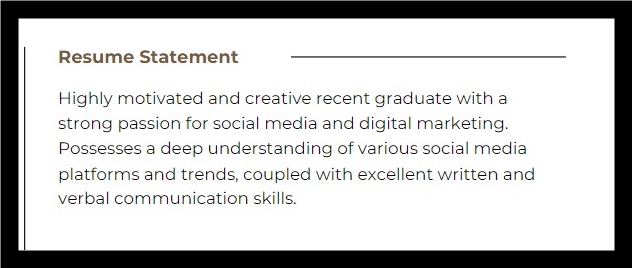
A resume statement in particular tends to be more orientated toward your career aims and will focus more on how your career objectives will align with an employer’s organisational needs, as opposed to a career statement which is focused more on your experience and career accomplishments
If you have any work experience
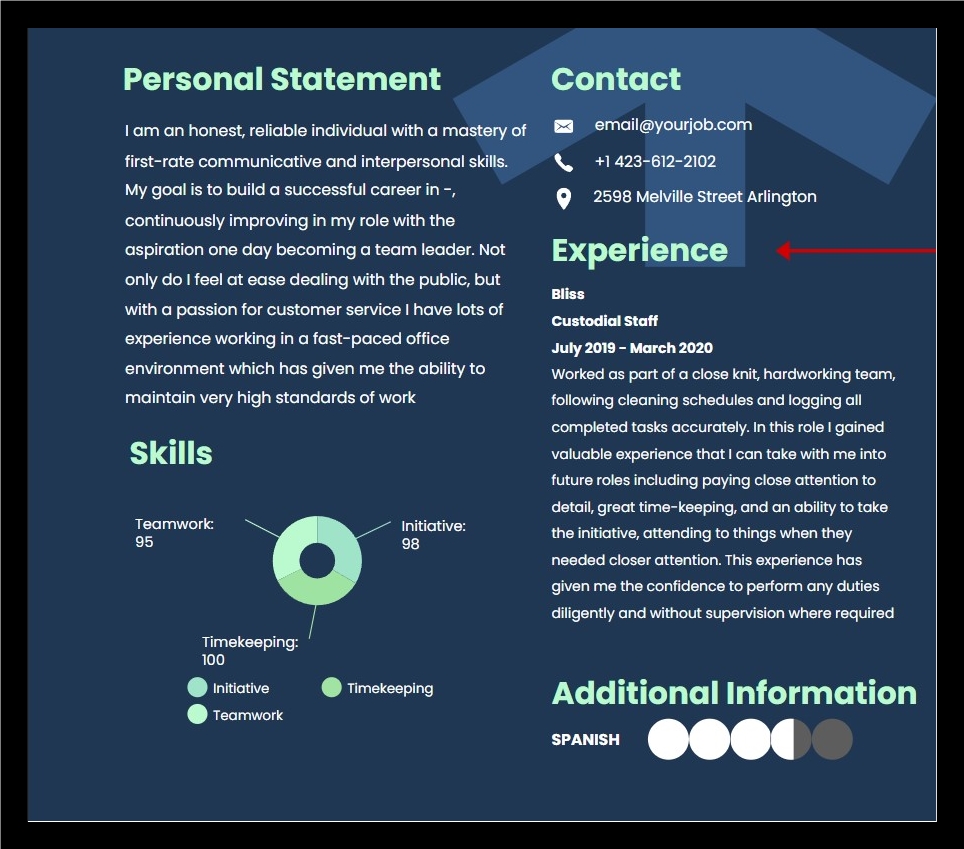
When you’re compiling a C.V or resume as a student or an unemployed person, if you have any work experience whatsoever, even if it’s not related to the role in question, interviewing experts would advise that you create an employment history section and include it, no matter how relevant the experience on it is to the role in question
This will show an employer that you have experience of performing in a workplace environment, that you can follow a schedule, and that you can collaborate with others as part of a team within the workplace itself, making any educational background much more appealing when considered on top of everything else
If you have no/ limited work experience
See the following sections for guidance on how to compose your profile
Educational Section
This section is your crown jewel
Whether your education is still ongoing or has been recently completed, when writing an educational section as a student or person with little or no work experience, you are looking for your this to be the standout area on your C.V or resume, replacing the employment section as the premier section on this document
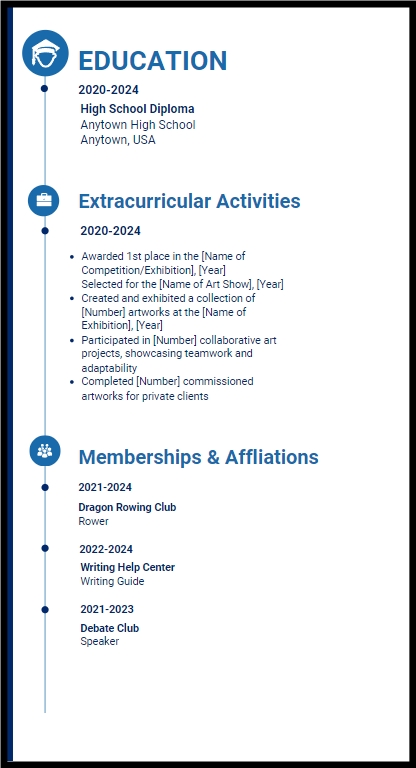
As it’s going to be taking the place of the of the Employment History section, it needs to be placed near the top where the Employment History section would’ve otherwise been. The strategy here if you are a student or someone with no work experience whatsoever is to try and stretch this section out as much as possible, and you can do this by adding as much detail as you can to it in the form additional sections (which can either be added inside the education section as subsections), or placed directly below the education section in their own dedicated sections, in this way acting as extenuations of your actual educational section itself. The types of things you should look to add should be sections like the following:
Relevant Coursework, Academic Excellence Awards, Athletic or Extracurricular Achievements, Conferences, Dean’s List, Departmental Awards, Essay or Writing Competitions, Graduation Honors, Society Memberships, Research or Thesis Awards/ Publications, Scholarships…are all amongst the most effective sections to include here
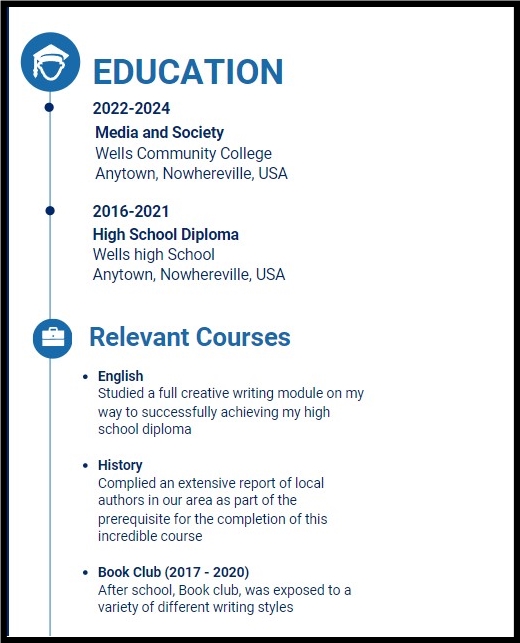
When it comes to things like relevant coursework, even if your grades have been distinctly average and you don’t feel have anything noteworthy to expand on, just remember that there are bound to have been courses you’ve taken, whether in high school or in furthering education that are sure to be relevant to the job you are applying for – that’s why highlighting these in a relevant courses subsection is typically a great practice for a student or person lacking in any solid employment experience. On top of this, almost everyone, whether in high school or in furthering education, will have participated in some form of extracurricular activity at some point in their lives, (whether it’s playing on a sports team, participating in a book club, contributing to a local journal, holding a membership, or belonging to any other type of club or society). These are all great things to add in a C.V or resume and can be included in optional sections such as Athletic or Extracurricular Achievements, Essay or Writing Competitions, and Activities, Memberships, and Professional Affiliations sections
Relevant experience section
After the education section comes the relevant experience section. While similar in name to the relevant courses section, it is an altogether different type of section that gives you the opportunity to expand on anything else you might have in the way of life experience that could be relevant to the role in question. While this type of section is usually not included in a standard C.V or resume, when writing as a student or person with little or no work experience, it’s highly recommended you include it because of its usefulness as far as helping to add depth to your background is concerned. A relevant experience section will give you the chance to highlight your suitability for the role in a meaningful way by enabling you to highlight relevant experience which you can use in place of an employment history to show the employer just how good a fit you are for the role
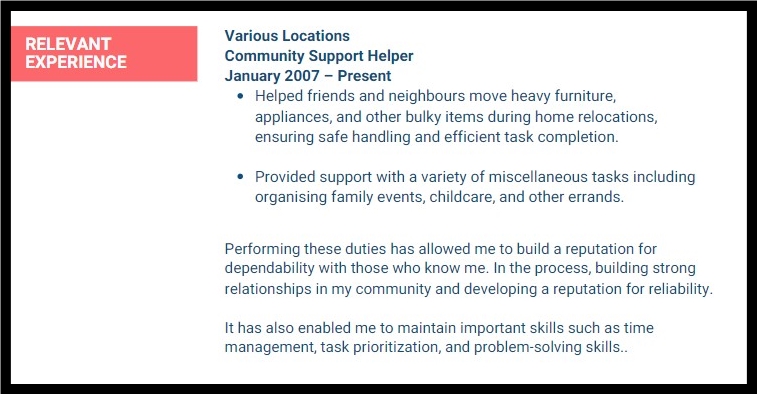
In this example listing we have given the heading a generic title and stated the location as various as there is not an actual employer or formal job listing. Although there are no set rules on how to compose your listings, the best advice is to follow the guidance under the Employment History section where possible
There are many other examples that you can use for a relevant experience listing in circumstances where you lack little or no formal workplace experience. Examples for someone who is unemployed could be things like:
Joining webinars, virtual conferences, and local networking events
Engaging in gig work through platforms like Uber, TaskRabbit, or Upwork
Assisting neighbours and family with moving, childcare, or other crucial tasks. (This could also include home improvement tasks such as painting, decorating, and gardening that have enabled you to gain important things like time management, task prioritization, and teambuilding skills)
Starting blogs on platforms like Facebook or Twitter, providing help and advice to people looking to get into the (name of industry), while at the same time maintaining and improving your skills in the process
Starting a gaming channel on platforms like YouTube or Twitch, which you can use to provide insights and gaming tips to members in a fun and engaging atmosphere
Creating a portfolio that showcases your work and accomplishments
Maintaining your health and well-being through regular exercise which can reduce stress and increase your overall fitness levels, (an upshot of which might mean you are very rarely absent at work), and can also increase your personal productivity levels too
Taking free online courses to keep your existing skills up to date and help you learn new ones
(This can be done through platforms like Coursera or Udemy)
Reaching out to former colleagues/ joining professional associations such as (name of association). In the process expanding your range of contacts and gaining insider knowledge of the (name of industry). Both of which are things that can help you do your job more effectively and help you to excel in your chosen career
Volunteering
By engaging in these tasks, you not only keep yourself productive, but can also maintain and develop a myriad of new skills and experiences that could be invaluable to your future employer

Examples for students could be things like:
Conducting independent/ group research for class assignments and group projects, enabling you to enhance your knowledge of the (name of the industry), and allowing you to utilise important skills and competencies such as teamwork, task management, and time prioritization in the process
Participating in social clubs, or leading student meetings/ organizations. This could allow you to develop key interpersonal, communicative, teamworking, collaborative, organizational, time management, project management, and problem-solving skills
Competing/ participating in sports teams, enabling you to enhance your discipline, teamworking, and leadership skills
Providing tutoring services to peers and younger students, not only allowing you to utilise and enhance your communicative, active listening, and leadership skills, but also allowing you to build up expertise and harness your knowledge to help others
Performing administrative work in your campus office/ student organization. This could enable you to maintain and develop important organizational, clerical, time management, and task prioritisation skills
Gain crucial industry experience while working as an intern, enabling you to enhance industry-specific skills such as (name of skill), and in the process gain valuable insider knowledge, developing contacts in the industry that will set you up for future success
Observing and supporting professionals in the (name of industry), shadowing their day-to-day duties, and gaining a valuable insight into the challenges and opportunities involved with this type of industry (industry name)
Helping to organize events for school clubs/ charities/ local community organizations, enabling you to develop a fantastic reputation within the local community, as well as gaining and enhancing crucial industry skills such as (name of skill)
Acting as a mentor to other students, offering guidance and support in academic or extracurricular areas, allowing you to utilise and enhance your communicative, active listening, and leadership skills. In doing so, allowing you to harness your knowledge and expertise to help others
Serving as a liaison between students and faculty members, allowing you to utilise important communicative, leadership, and organisational skills
Leading teams on a specific project (name of project). Enabling you to demonstrate your leadership, organizational, co-ordination, and problem-solving abilities. Also allowing you to utilise other important core competencies too such as; decision-making and judgement, delegation, and facilitating groups
Participating in study abroad programs. In the process allowing you to develop interpersonal skills, cross-cultural communicative skills, networking and relationship-building skills, all the while enhancing your cultural awareness and global perspective too
Skills

A skills area is considered a standard section, and as such, is one of the most common sections you’ll find on any C.V or resume. That’s because whether you realise it or not, even if you don’t have much in the way of actual employment experience, everyone has skills or qualities they can leverage to make themselves more appealing to employers, which is why having this section on your C.V or resume is so important, as it will you give you the chance to showcase them to anyone who sees this document
Try to add job specific, hard, or soft skills in the first instance, but if you’re lacking these, anything else you can think of in the way of transferrable skills that has relevance here will work just fine
Anywhere from 4 – 12 skills is a good amount, ideally blended between soft skills, hard skills, and computer knowledge and/ or technical skills
The great thing about a skills section is that when writing as a student or someone with little or no experience, often times there will be more space on your C.V or resume at your disposal. That’s why there’s no reason not to go all out and present a section like this with a layout that’s both as flamboyant and eye catching as possible
Adding Optional Sections
The goal with a C.V or resume is to showcase any strengths and experience you have in the most effective way possible. As a student or someone with little or no experience, if you find yourself running out of things to add, the advice is to worry less about relevance, and try to be more liberal with the information you include
The additional sections we’ve already discussed in this section will be the other tool you’ll have at your disposal to do this with. When it comes to composing a really great C.V or resume that is sure to WoW any recruiter or employer the first time they see it, additional sections are the one thing that can make all the difference!
Here is another overview of the additional sections you can choose from:
Activities, Memberships, and Professional Affiliations

Activities, memberships, and affiliations are important because they give you the chance to showcase the things you have done in a personal capacity that may be relevant to the role in question. This can be compiled as one single section or as individual sections on your C.V or resume, depending on what you feel is more effective. Again, when writing as a student or as someone with little or no experience, if you start finding it difficult to come up with relevant information to include, don’t be afraid to be more liberal with what you put in this section instead
For example, almost everyone has participated in activities at one point or another, whether in high school or in their furthering education, and this is definitely information worthwhile including in a section like this, especially where writing as a student or someone with little or no work experience. On top this, many people involved in further or higher education will be engaged in things like student bodies or other types of committees like student panels, and you should not hesitate to include this kind of information in a section like this too
Certifications and Qualifications

Many people acquire certifications and qualifications over the course their lifetimes, both students and people with little to no actual work experience alike! However, in these circumstances, unlike other sections where you can take more liberties with the things you include, only add this section and include listings here if they have some relevance to the role itself
Conferences

Conferences are something else that students and people with little or no work experience will often have the opportunity to attend throughout the course of their lifetimes, regardless of their employment status. Students in particular will often attend conferences and seminars both in person and online that are highly relevant to the qualifications they are studying for, and in these circumstances, it’s a great idea to make a section and list them here. However, as conferences tend to be industry specific as far as employers are concerned, the same advice as with certifications and qualifications applies here too. Only include listings in this section if they are relevant to the role you are applying for…
Hobbies and Interests

As an optional section, hobbies and interests is one of the most common sections found on a C.V or resume today. Not only can it be a lot of fun to compose, but it also plays the important function of telling an employer a bit more about who you are. The great thing about it is that as a section it can be just as effective whether you are a seasoned professional with tons of experience, or are someone who has little or no work experience whatsoever, making it a highly worthwhile section to have on your C.V or resume when applying for many different types of roles
When including information in a hobbies and interests section, you should be honest, as the interviewer may want to talk about some of the things listed on there if you make it to the interview stages. However, at the same time, it’s also important to try and select interests that are relevant to the role too so as to make yourself as relatable as possible to the people who read it
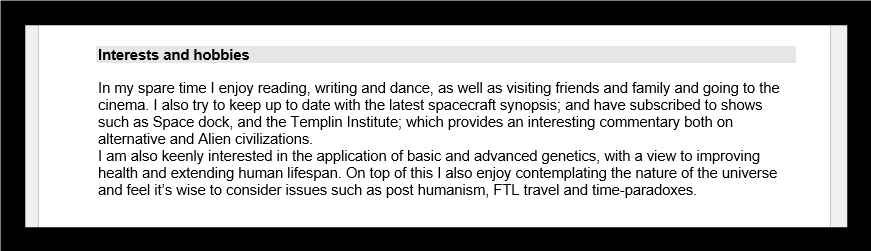
It is advisable to provide a descriptive passage rather than using something like an icon format – simply because by describing your interests it will allow you to connect more with your reader. Listing multitudes of different hobbies can also be counterproductive too, that’s why between 3 to 6 interests or hobbies is recommend as the optimal number
Languages
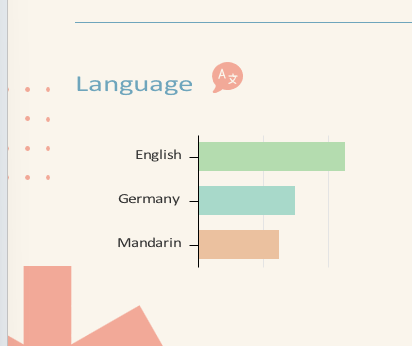
While an organisation will normally only require a specific language (or languages) for any given role, if the knowledge of another language is a skill you possess, it can certainly be worthwhile making a language section on your C.V or resume and putting it on there. Don’t worry if you’re not 100% fluent; listing this can still have a big impact on your chances, and will help show an employer not only how cultured you are, but how ready and able you are to learn new things, (which is another angle its usually very worthwhile to take) especially in a situation where you lack much in the way of an actual solid work history background
Publications

While people who have been involved publications usually don’t fall into the category of students or those without work experience, this may not always be true. So if you find yourself in a situation, especially as a student, where you’ve had the opportunity to make your own publications, theses, or have contributed to standalone articles that have been published in things like college newsletters or other types of journals, be sure to make full use of this section on your C.V or resume
Training Courses
Training courses are another great way to make up for a lack of verifiable work experience. This is particularly true for those with little or no further education or employment history background. The great thing with a training courses section is that nowadays there are many institutions who run training schemes to help get people back into work. These can be found as early on as high school in the form of things like job shadowing days, as well as later on in life through other charitable organisations and government funded help into work schemes. As such, it means that those without a solid work background still have an excellent means to input experience in a work-related capacity onto their C.V’s and resumes in the form of a training courses section that lists any training courses they might have participated in

(If you’re fortunate enough to have participated in any training courses in the past, a tactic that is particularly effective, especially if you lack actual work experience, is to stretch this section out as much as possible. For example, even if the training course was not relevant to the role in question, by doing things like making a subheading under a relevant training class heading, (although the overall course may not have been relevant), if some of the classes that comprised the training were, they could still be listed in this subsection individually)
Projects


A projects section is another section that can be used under a wide-ranging number of circumstances. While on a standard C.V or resume you would only typically include projects that are directly relevant to the role in question, as a student or someone lacking much in the way of a verifiable work experience, it pays to be much more liberal with what you include
The great thing about a section like this is that almost everyone has participated in a project at some point in their lives, whether they realise it or not! Whether it was a science project in high school, or some other type of project later on down the line during further education, whatever it was, a project section can oftentimes be a highly impactful thing to have on your C.V or resume in these types of circumstances – the more relevant the project, the better…
Choosing an appropriate layout
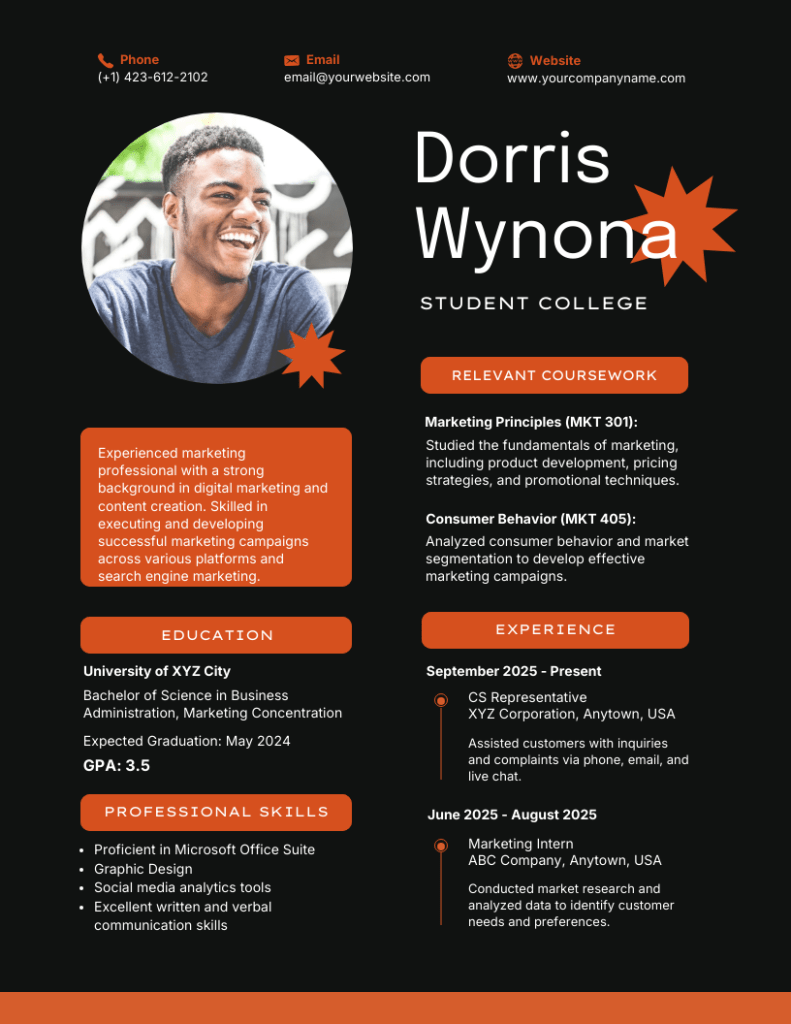
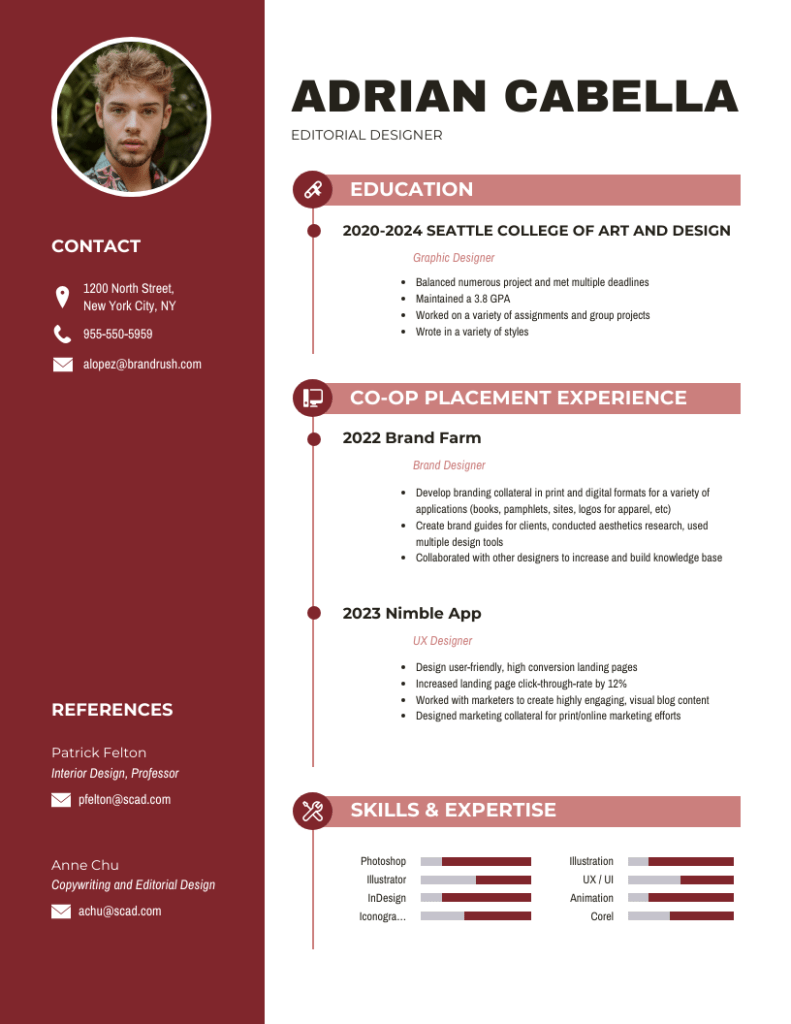

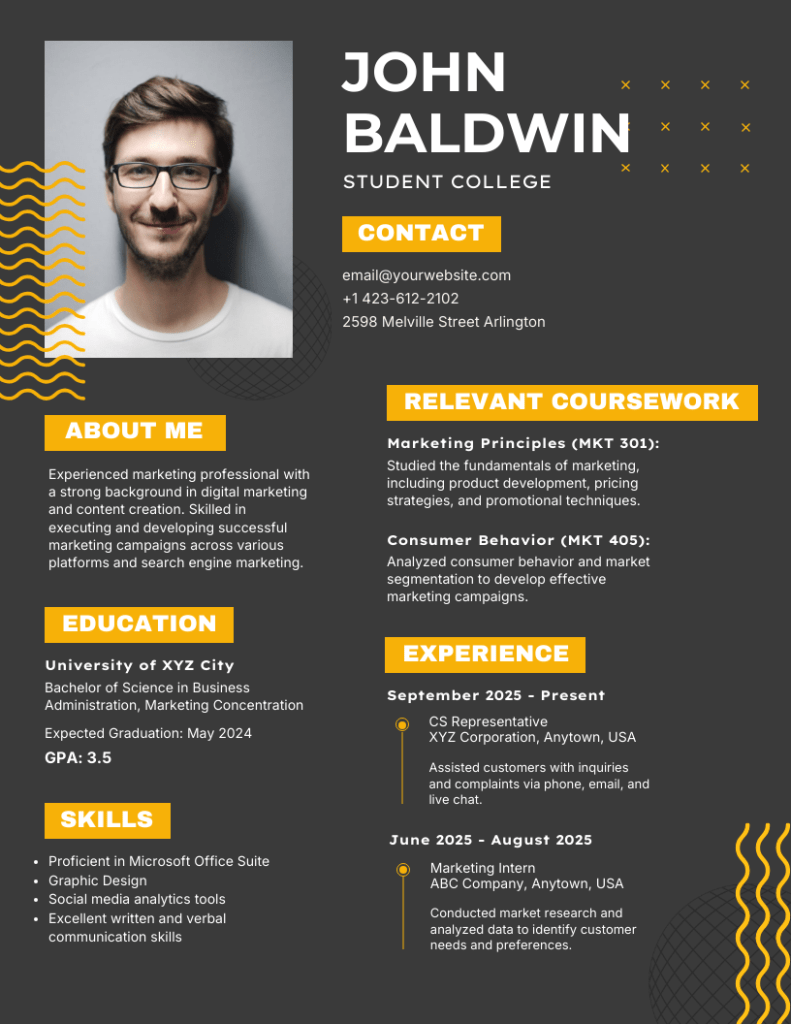
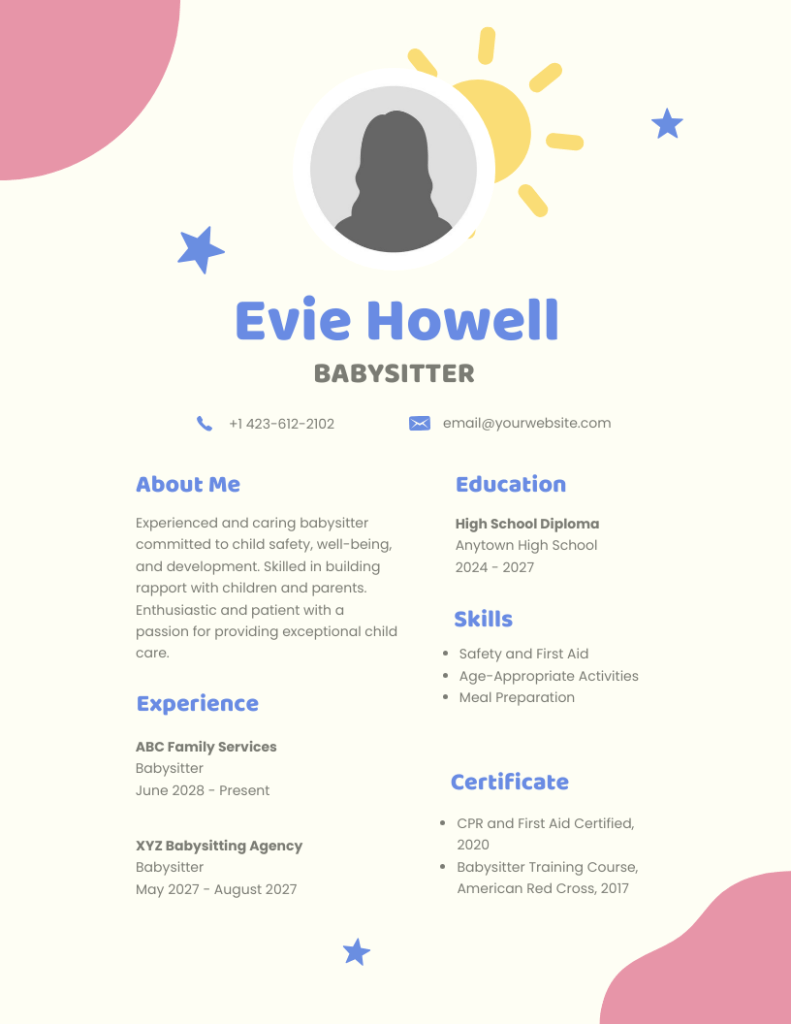
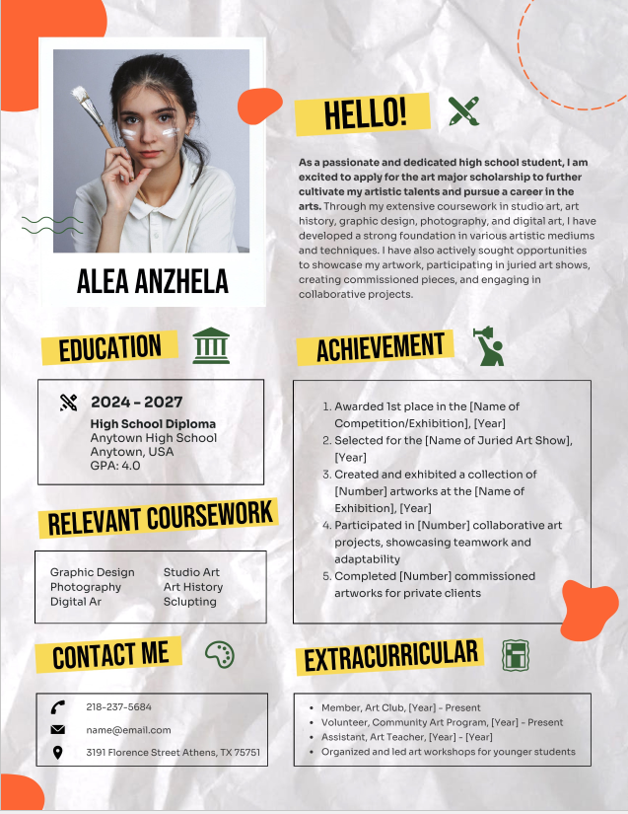


As a student or someone with little in the way of actual employment experience, carefully selecting the layout of your C.V or resume is a tactical choice that can make all the difference when it comes to making it onto the next stage of the candidate selection process
For starters, compiling your document as a resume rather than a C.V is probably a smarter option because ,in most cases, you will have less to add to it. Nowadays there are plenty of resume designs to choose from, so if you’re short on experience and having a challenging time coming up with relevant information to include, finding a layout that has lots of large icons and a big design element to it will not only help fill up more space, but will also help to make it that much more visually appealing to any prospective employers who read it!
Whether you are writing it a student, as someone with little or no work history, or even if you are writing it as an accomplished professional, remember that C.V’s and resumes are always vital when it comes to landing the roles you want most!
That’s because employers will use these documents to gain an initial impression of your overall skills and suitability for the particular role in question. These are lifelong documents, chronologicaling your experience, background, and qualifications, as well as outlining your most relevant skills and accomplishments. When writing one, remember the employer wants to know what type of person you are, what experience and skills you have, and how you can add value to their organisation. Try to give them the best insight that you can in this regard. Do this through by using goal orientated keywords…do this by being honest about what you include…and most of all, do this by following one of the cardinal rules of interviewing – keep everything upbeat and positive