
SENDING OUT SPECULATIVE COVER LETTERS, RESUMES AND E-MAILS
Interview professional has some of the best cover letter examples and template designs anywhere on the web…
Speculative cover letters are used as a supporting document alongside a speculative C.V or resume when making enquiries into positions that may be available but have not yet been advertised. The purpose of sending speculative cover letters and resumes is to express your availability and interest in working for a company, and to enquire into whether or not that company has any openings available that it wishes to consider you for at that time
HOW TO COMPOSE A GREAT SPECULATIVE COVER LETTER
A speculative cover letter is written in a very similar manner to how a normal cover letter is. Good speculative cover letters can make all the difference if received by the right person or department at the right time, and can open up opportunities that you would not have found otherwise.
The best way to write one is by structuring your letter into 4 or 5 short paragraphs
In your first paragraph, there are a few different things you need to try and accomplish – and there are a couple of different ways you can go about doing this.
You can write the first paragraph in a straightforward way by simply stating who you are and what position you are enquiring into. (This is recommended as an effective time saving method by recruitment specialists).
If you want to build a bit more of an impression, another way to start off your letter instead is to first mention how you heard about the company, as this is sure to capture your readers attention and get them reading on a bit further. (It’s one of the most common things that recruiters ask, because companies are always interested to know how people hear about them). From there, try and briefly mention one or two positive things either regarding notable achievements the company’s made, great milestones it’s reached, or goals it’s working towards. This tells your reader not only that you are interested, but also displays to them that you have a good knowledge of their company, and sets a great tone for the rest of the letter. Once you’ve done that, you can then get around to telling them the reason you are contacting them, by clearly stating the position or role you are enquiring into
From there we move onto our 2nd paragraph. Here we want to give a very brief overview of ourselves, mentioning any notable positions we’ve held that are relevant to the job field we’re enquiring into, along with any academical qualifications (again, only if they are relevant to the job field), as well as any professional interests or career aspirations that align with the role
The third paragraph is where you really want to sell yourself, and you should start by explaining why you feel you’d make a great addition to the team. Remember that when hiring, employers will look for areas in their company that need improvement, and pick candidates who they feel will help them improve in these areas. Be bold here, don’t be afraid to make assumptions about what the employer needs, or point out areas where you believe their business could benefit. This is a speculative cover letter, so if you get it wrong – you’ve lost nothing. But if you get it right, it may have the effect you want and cause the person reading it to sit up and take notice of you. It’s crucial that what shows through in this paragraph is a genuine enthusiasm for the role. Finding 2 or 3 things that attract you to the company and highlighting these here will help you greatly
The 4th paragraph is the ending where you thank the reader for their time, reiterate your key selling points, and invite them to review your C.V or resume. Alternatively, if you really want to leave an impression, you can consider expanding this into a 5th paragraph. In doing so, you will instead use the 4th paragraph to put in a call to action. This is a first class way to enhance a speculative cover letter, and a well written call to action will showcase to your reader that not only are you really passionate about the field itself, but that you also appear to be highly knowledgeable about that line of work.
Lastly, when signing off your cover letter, whether you’re currently employed or simply want to be associated with a given industry or line of work you’ve got prior experience in, it’s always best to sign-off by putting your job title or academic title next to your signature. This will have the effect of making your letter sound much more professional to the person reading it

When writing any speculative cover letter, you should stick to the format outlined above. It’s essential to emphasize any skills and experience you think the employer will find relevant, and most importantly, to convey a genuine enthusiasm to work for that company. (Again, finding 2 or 3 things that you like about the company and highlighting these on your cover letter will help you greatly toward this end)
Rather than being written with a specific position in mind, a lot of speculative cover letters are usually more generalized. In that they simply enquire into whether that company has any openings, and then request to be contacted if any vacancies arise, without mentioning a specific role in question. While it is fine to do this, job market research indicates that employers prefer applicants to be specific about the skills they have, and to specify the exact role they are looking for within a company – therefore the advice here is to look up a specific job role within the company and mention this on your cover letter, but then expand this into a generalized enquiry by further stating that you would be comfortable considering other vacancies in the company that closely match your skill set if they are available too
For more examples and information on how to write amazing cover letters, make sure the Speculative Email and Cover Letter examples page is your first port of call!
You can also find useful information on how to write these in the cover letter writing section of C.V professional

What should I do differently on a speculative resume/ cover letter, that I wouldn’t do on a normal resume/ cover letter?
When sending out speculative enquiries to employers, it is usually best to use a resume as opposed to a C.V. The difference being that a resume is shorter (only 1-2 pages), and contains only factual information regarding your skills, work history, and educational background. You do not need to make any changes to your resume, a normal format is fine.
The cover letter is a more personal document, it is more expressive, and tailored more to the company and individual reading it. Use it in conjunction with your resume to complement facts regarding the qualifications and background you’ve listed on it. Emphasize skills you feel the employer will think are relevant, without overemphasising any one specific skill in particular. Express your interest in the role and impress upon the reader why you would be a great fit for the company. When sending out a speculative cover letter, the format should remain almost identical to a normal one, the only slight variation should be in regard to how you might express your interest for the role. Due to the fact you are contacting the company without them advertising for a specific job opening, the only potential variation on a speculative cover letter is that your enquiry can be more of a generalised query rather than an application for one specific job

Once it’s written, who should I send it to?
To maximise your chances of success, the most important thing you can do is try to ensure it gets into the hands of the right person. If possible, it’s always best to send it to the hiring manager of the company. Do a bit of research and try and get a specific name if possible. If not, an alternative option would be to address it to the HR department instead, using a generic dear sir/ madam title. However, it will drastically increase your chances if you can get your letter to the correct person or department. It also increases your chances if you can address it to a specific person. So always take a bit of time when sending out speculative letters, because getting them into the hands of the right people is actually a bit more important than the actual content of the letter itself!
Are speculative resumes/ cover letters successful?
Answer. It depends on the industry and type of jobs you’re applying for
More specialised job fields, where advanced degrees and qualifications are needed; things like research, pharmaceuticals, publishing, finance, (financial sector/ financial industry), and many other types of senior level management positions, will all tend to yield better results
Likewise. Entry level positions in warehousing, retail, office, and temporary labour (recruitment companies) may also yield better results due to the ease and prevalence of work available in those sectors
There are instances where sending a resume along with an accompanying speculative cover letter can be quite effective. However, the best times to do this are in situations where you are genuinely interested in a specific industry or job role. In such instances you will find that you have much more motivation to write and send these, and the chances are, it will sound a lot better and come across as seeming much more genuine to whomever is reading it. While not every speculative cover letter/resume you send off will be successful, remember that you will also receive useful feedback from some of the ones you send off that aren’t, which can be really helpful if you have a genuine interest in getting into that line of work
The other thing to remember is that speculative resumes and cover letters are not only used for job enquiries. You can also use these for volunteering enquiries, work shadowing enquiries, enquiries into internships, or even use them to request general information from a company. If you come across as sincere and interested – a C.V and speculative cover letter, (use a C.V rather than a resume in such instances), can work even better than it would in a standard job enquiry, and could open up unexpected opportunities when you least expect it. It is certainly a method of enquiry worth considering – especially if you have a genuine passion for a specific job field or industry
After I have sent my resume and cover letter, what are the next steps?
If sending a traditional paper resume and cover letter, it can take a while for this correspondence to arrive at its destination, and from there it can take even more time to get to the person or department for whom it’s intended. Be patient and give the company time to read and respond to your correspondence. In the meantime, there is plenty more work to do and applications for you to be getting on with. The best approach here is to be proactive. It’s unhealthy to dwell on the last 1 or 2 applications you’ve made previously when job searching, simply get on with your daily job search routine. If you haven’t heard anything, wait 10 working days after sending any enquiry by post, then you can try following up with the company directly via phone or email. If you’ve sent an email enquiry, wait 5 working days before sending a follow-up.
(Following up with any type of application – be it formal or speculative, is a good way not only to follow up on a potential job opportunity, but is also a great chance to ask for constructive feedback in times where you are unsuccessful, as this can be used to hone and improve your subsequent job applications)

Sending a Speculative Email
While some people still insist on doing things by paper, why not consider using an email instead. Any modern company is contactable by email nowadays, and the advantages of this are numerous. Emails are quick, efficient, and will save you both time and money. On top of that, they are better for the environment too!
Emails arrive almost instantaneously, which means you get to both send and receive responses much quicker, and they are free and easy to send – which means you don’t have to take extra time out of your day to go and post them, nor pay any costs for stationery and postage. You will also save time when writing your cover letters by email too – as you can reuse and re-paste paragraphs and phrases from previously composed emails
Are there any changes to how I would write and compose a speculative resume/ cover letter email, over how I would write a speculative cover letter/ resume on paper?
No, the great thing is you can keep the format exactly the same. It’s really that simple
Is there anything else I need to take into consideration when sending a speculative e-mail?
Yes. There are a few things.
A good subject line is essential. Before you can even begin to convince your intended recipient how great a fit you’d be for the company, you’ve got to get them to open your e-mail first. That’s why the subject heading is so important. Keep it short so they can read it from their inbox. Mentioning the name of the company you are sending it to is a good way to get your recipients attention. Or, if someone has referred you, mentioning them in the subject line is also recommended. See the examples in the Speculative Cover letters and Emails examples page for more help on good subject line headings…
You’ll need to think about what format you want to use if adding attachments onto your email as well!
Whether you are attaching just a single C.V or resume to the email (recommended), or attaching both your cover letter and a C.V or resume, you need to be sure the format you use to do this is something your recipients will be able to easily open and read.
Microsoft word is the most commonly used format and is normally regarded as the best file type to use

You’ll also need to decide on how you want your email to be composed before sending it!
The best way to send a speculative cover letter email is to write the cover letter onto the main body of the email you’re sending, then add your C.V or resume as an attachment. Alternatively, you could write a short introductory note explaining who you are and why you’re emailing, then attach both your cover letter and resume onto your email, but there is not much need to do this. Unless you can think of a really good introductory opening, composing your email in such a way will probably diminish the chances of your recipient ever opening and reading both attachments fully. Another alternative would be to copy and paste both your cover letter and resume onto the main body of your email. This means you won’t need to add any attachments and may be an option to consider if you’ve had problems in the past with recipients not being able to open attachments you’ve sent them. It can also be utilised as a strategy to try and get the recipient to read your email more fully, although recruitment experts advise you avoid doing this – as it detracts from the overall quality and presentation of your email. If you do decide to use this method though, write a brief introductory note explaining why you are emailing, then paste your cover letter first, with your C.V or resume directly below this
The best way to compose a great cover letter is to use a great cover letter template
What makes a great cover letter template?
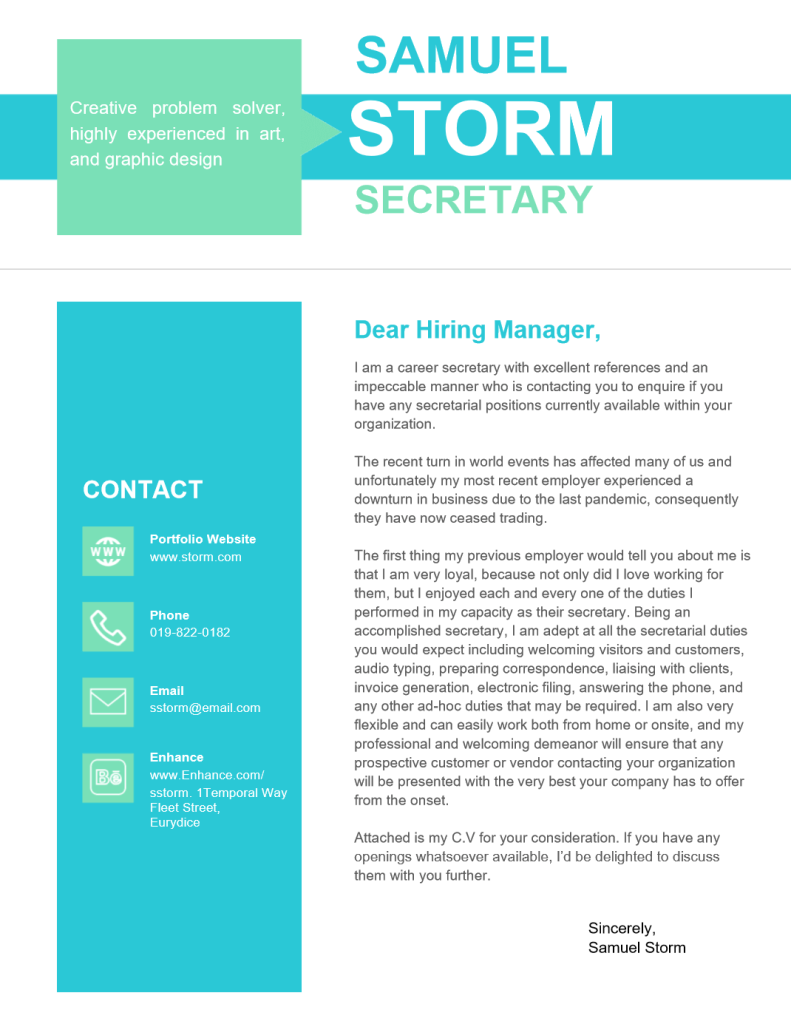
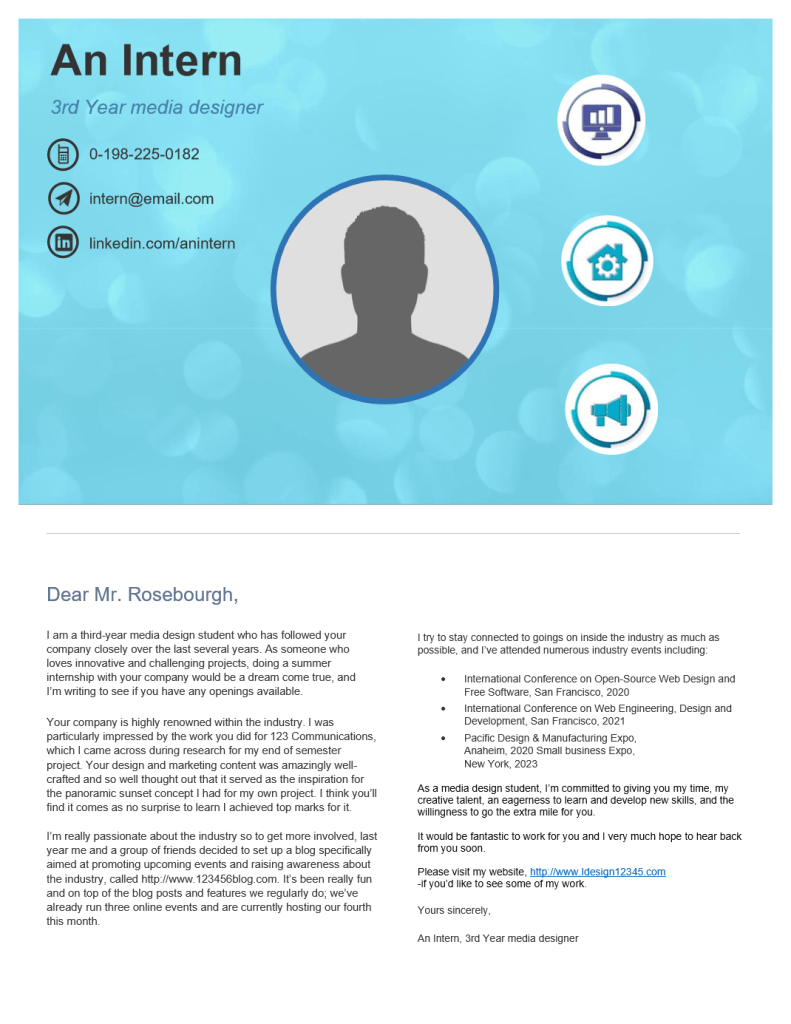
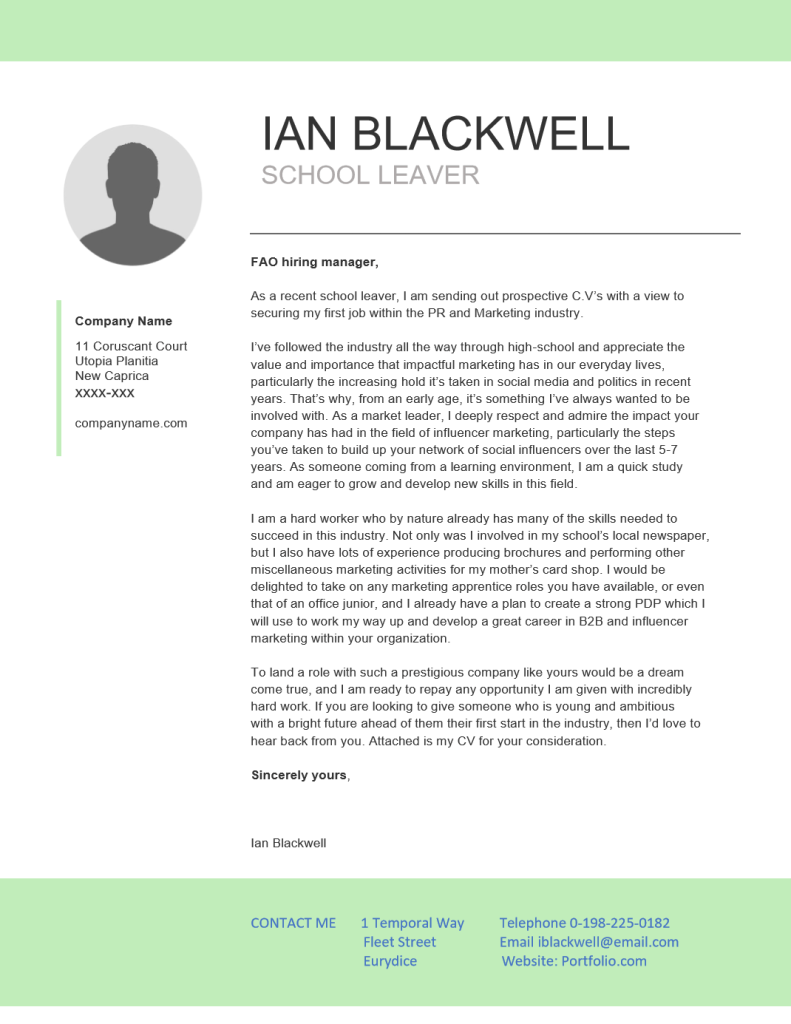
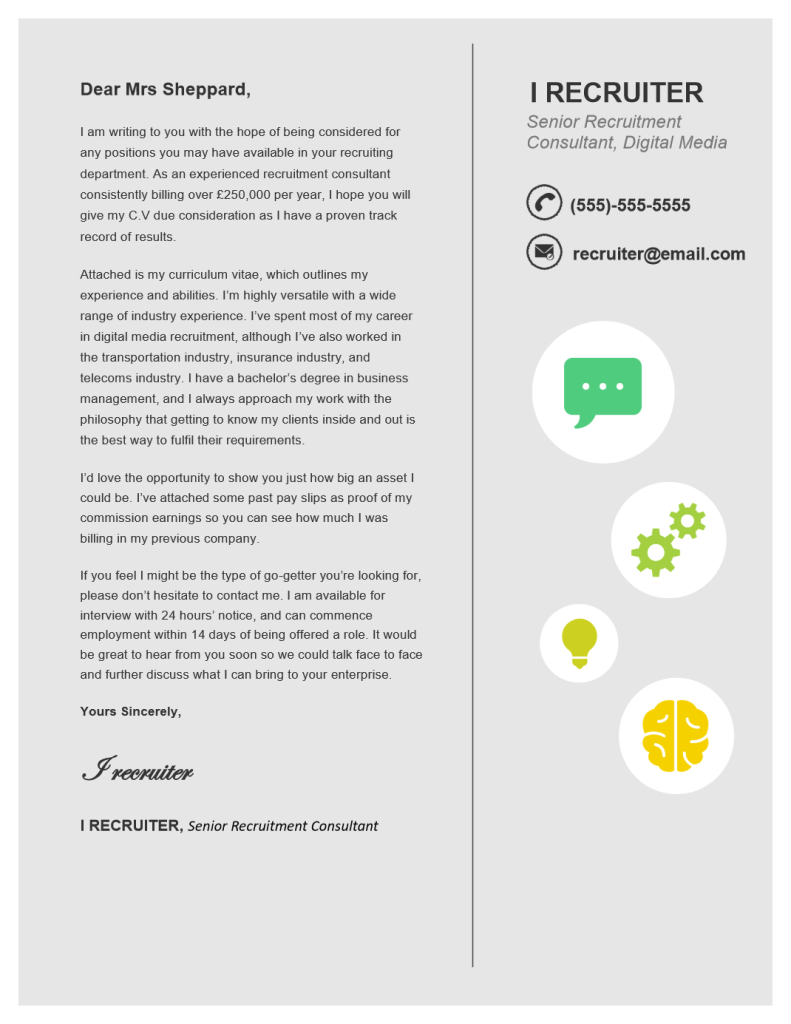
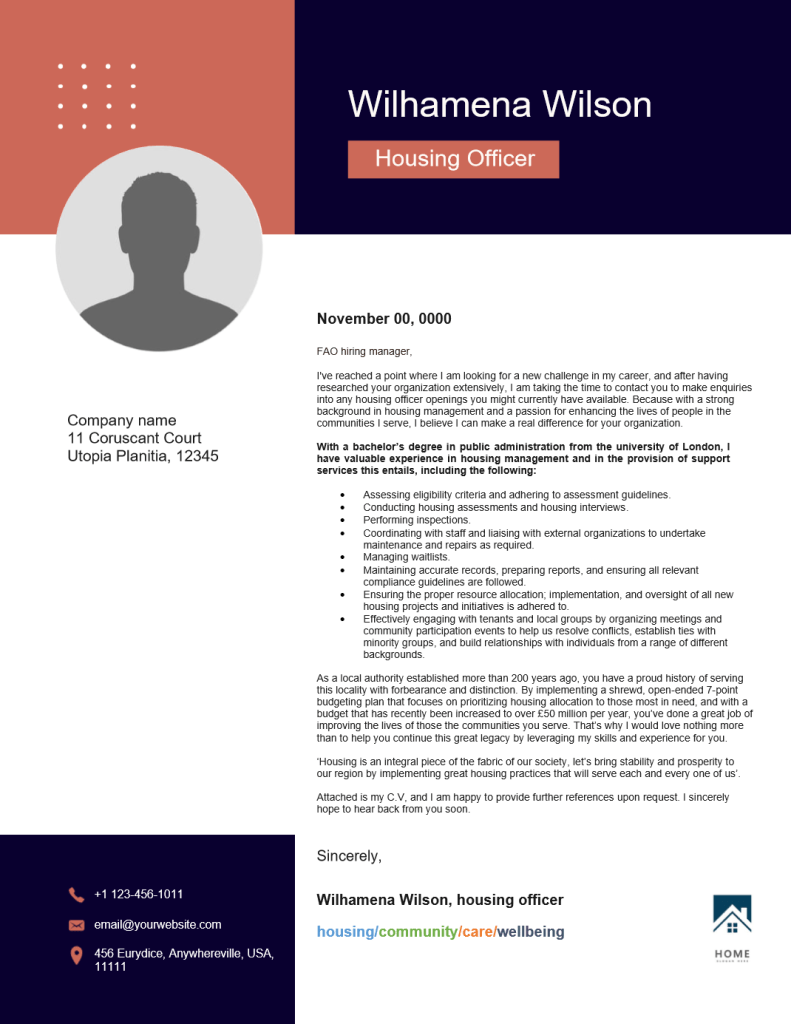
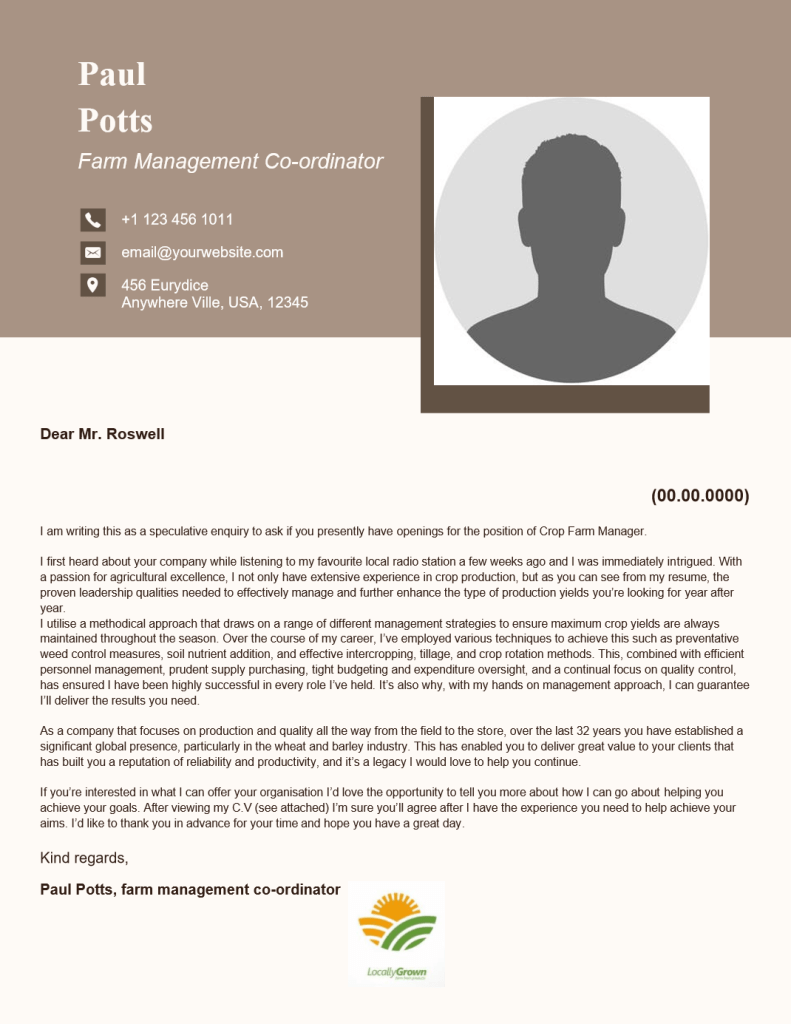
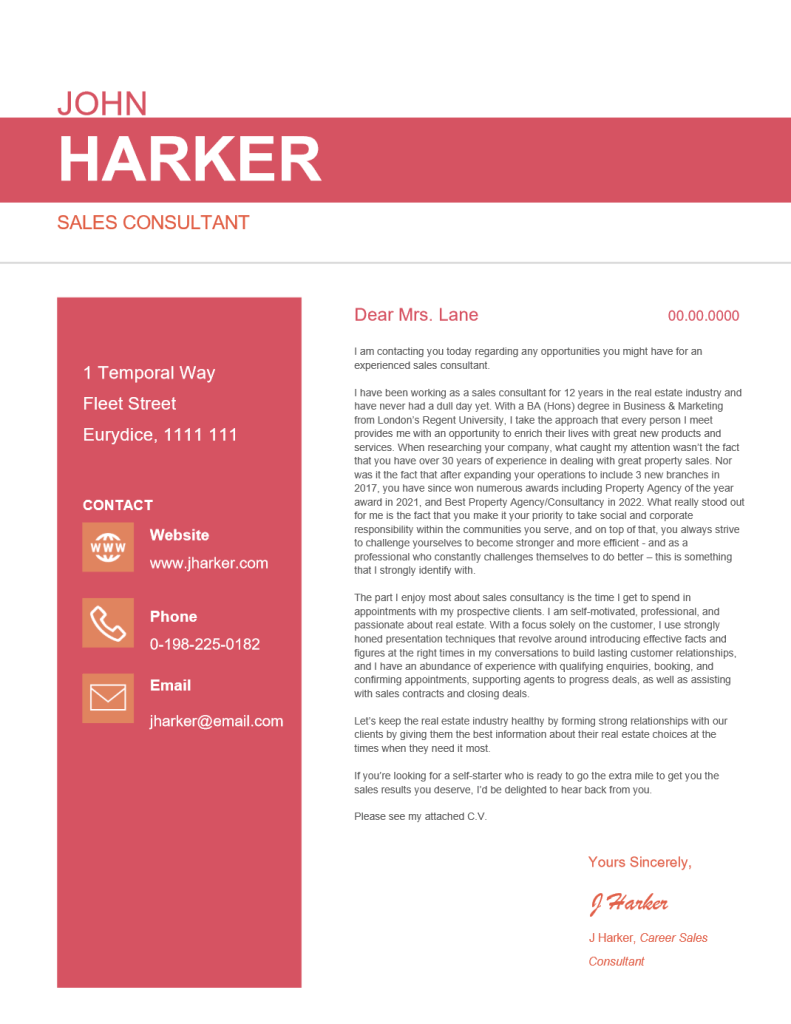
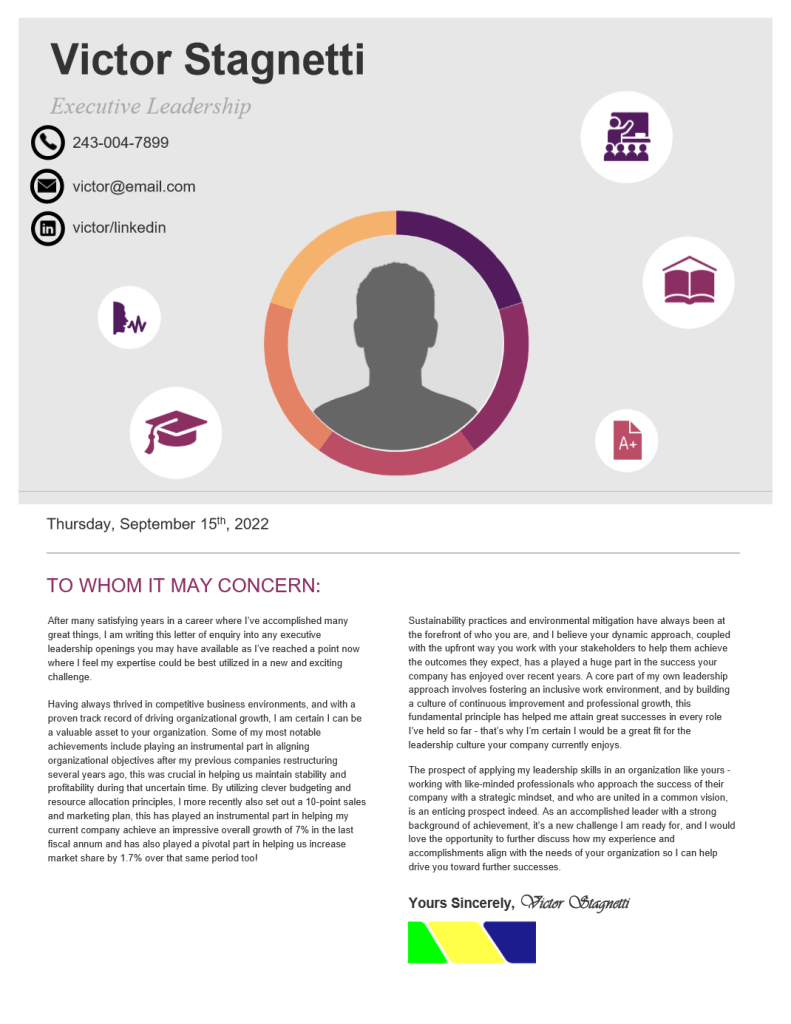
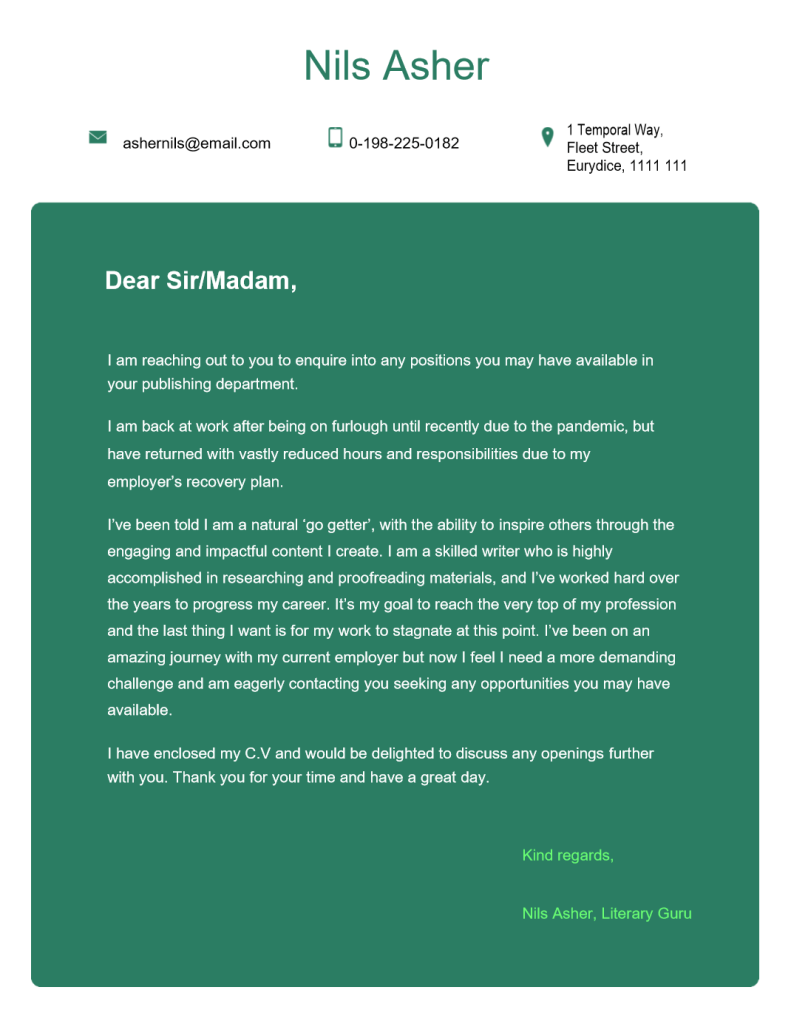
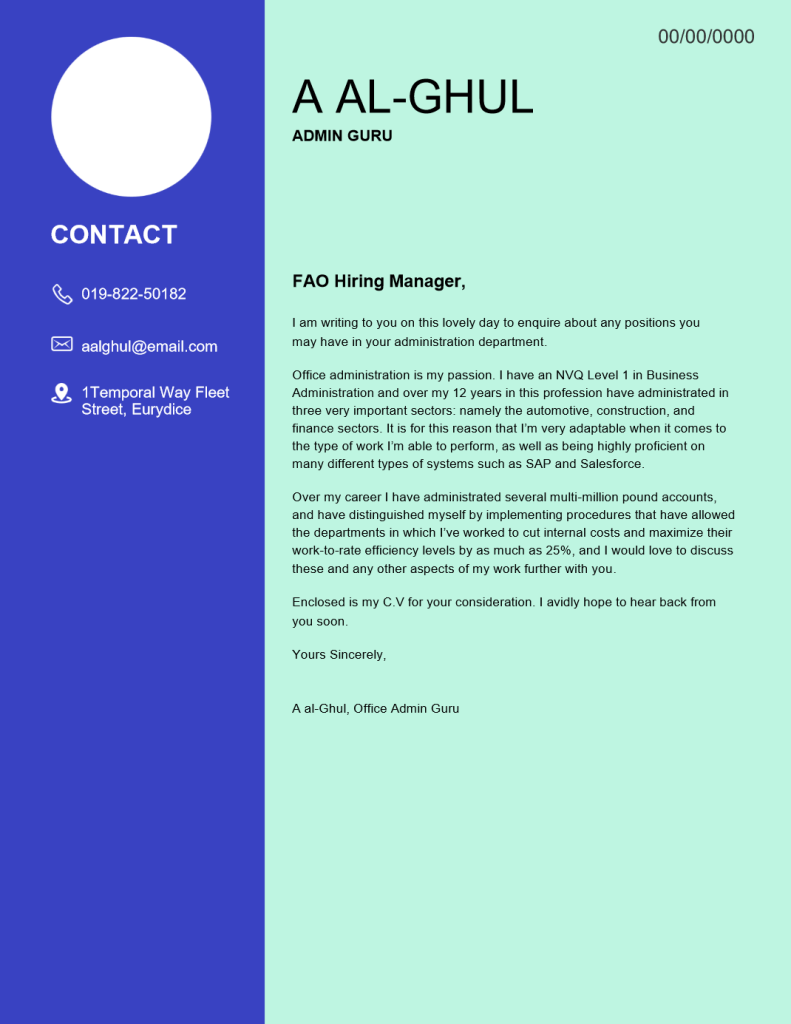
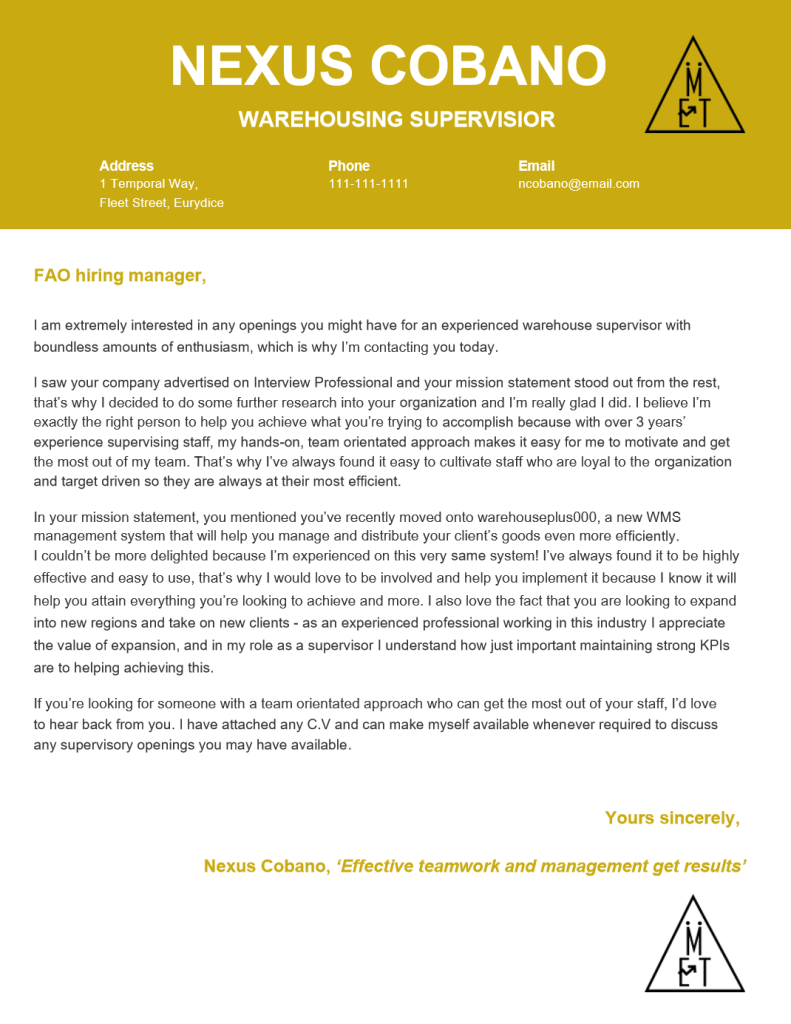
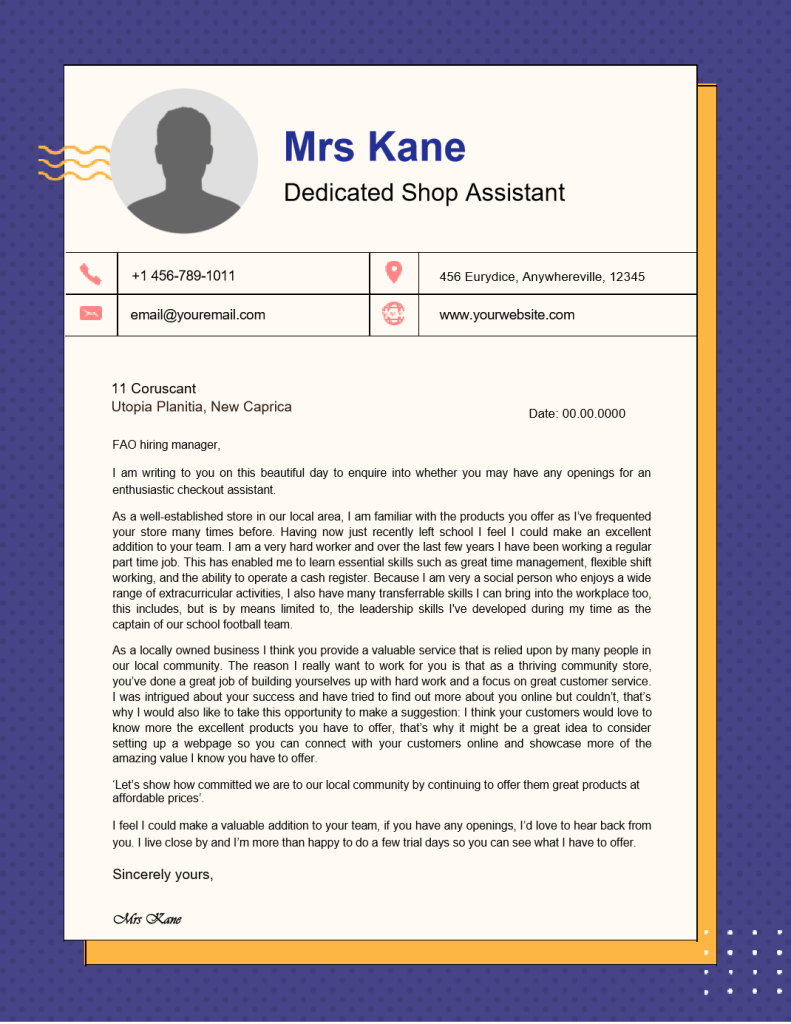
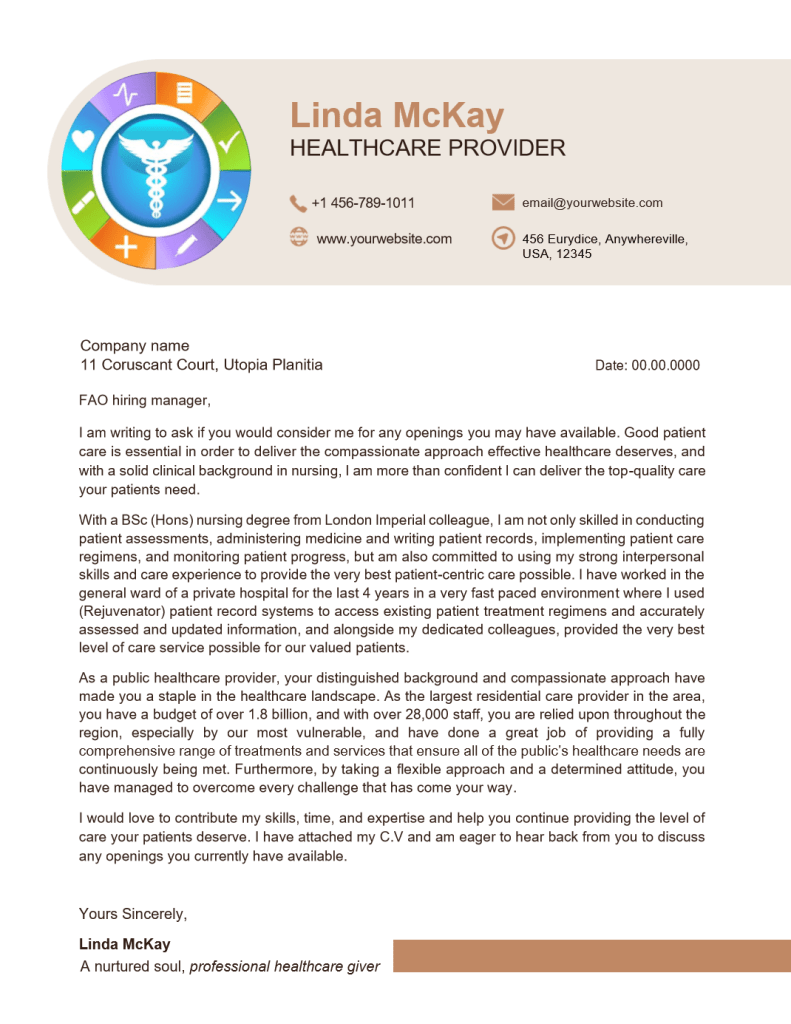
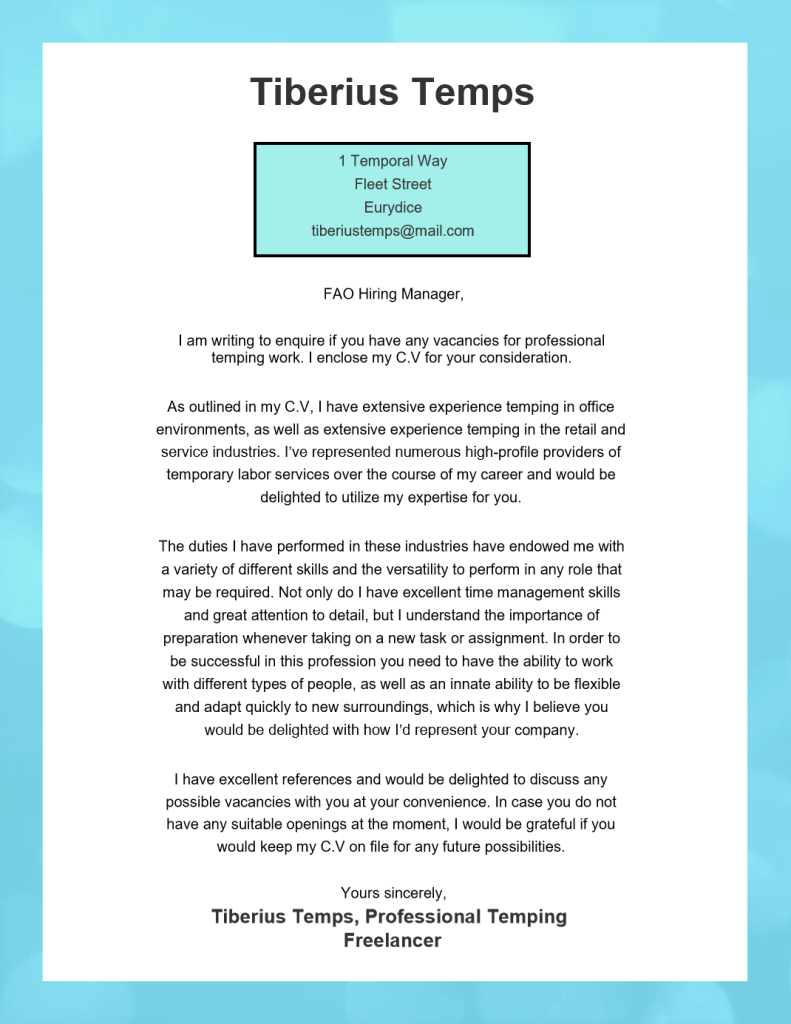
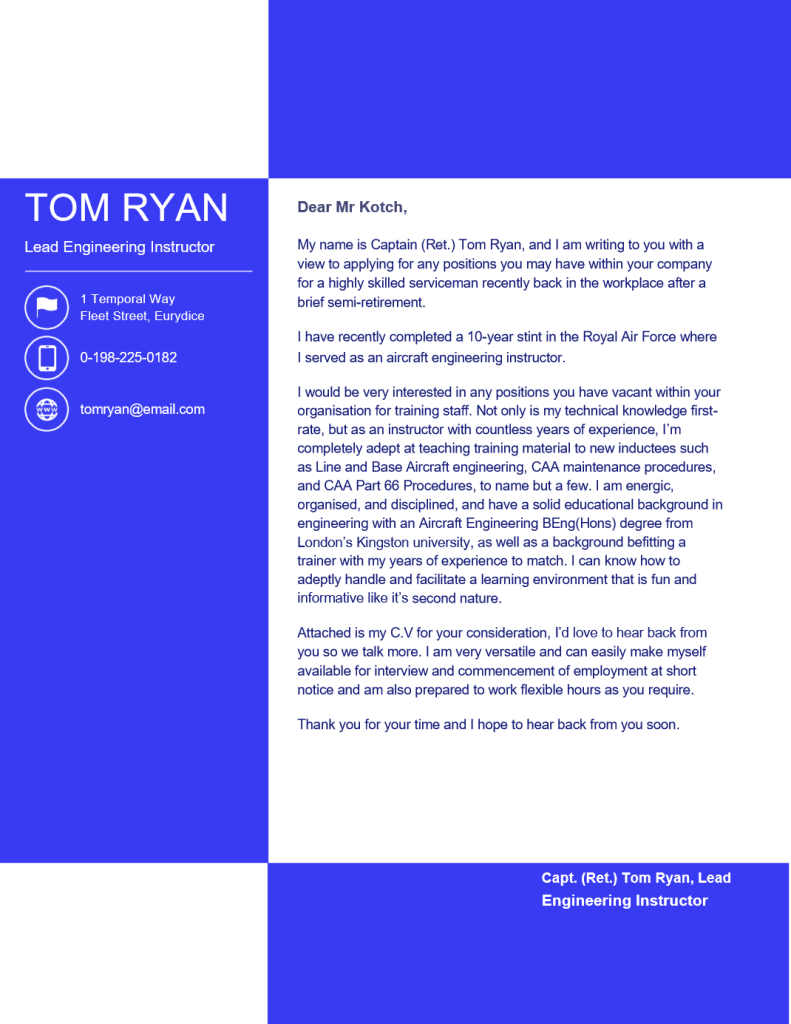
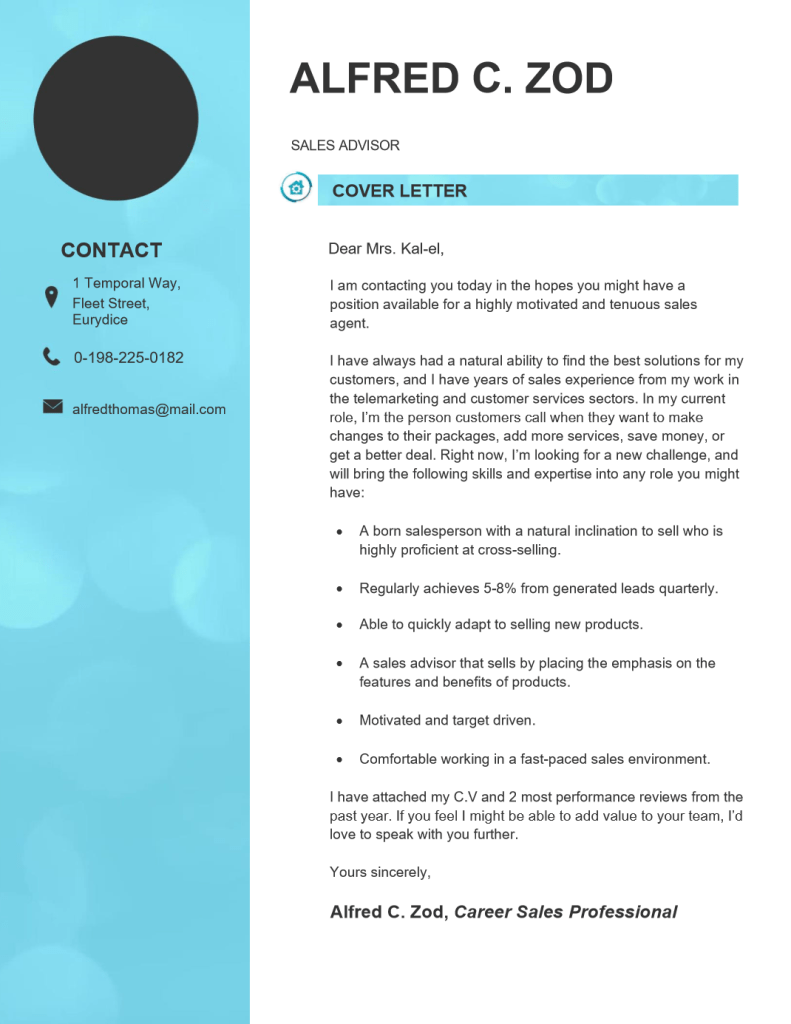
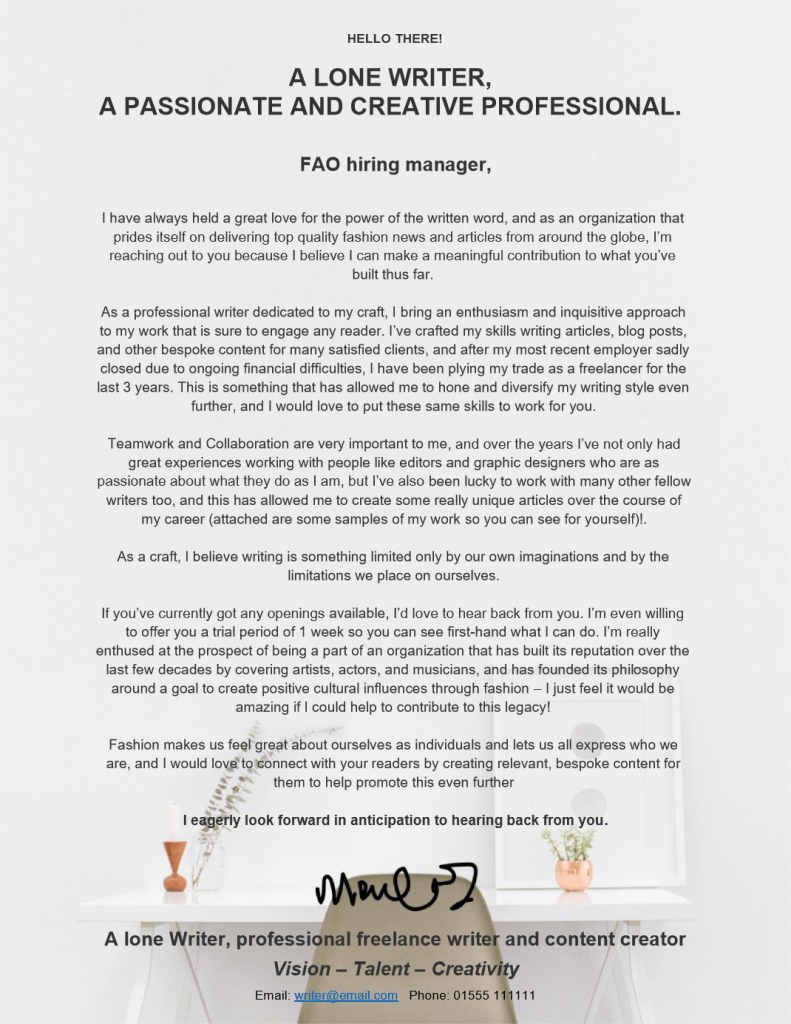
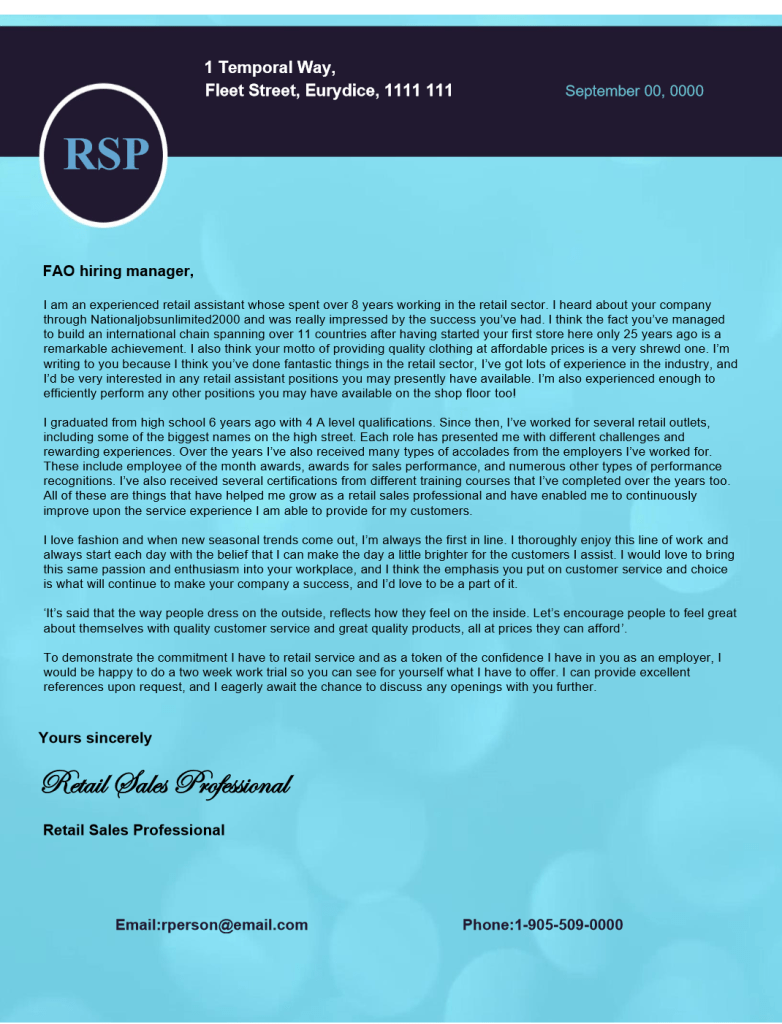
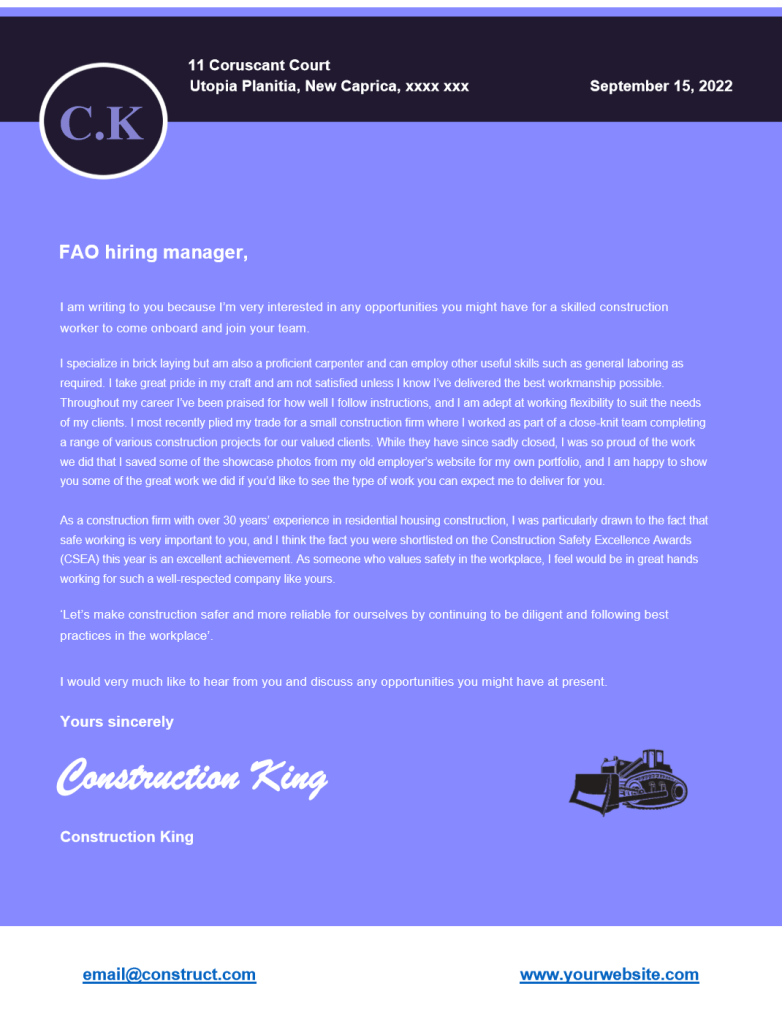
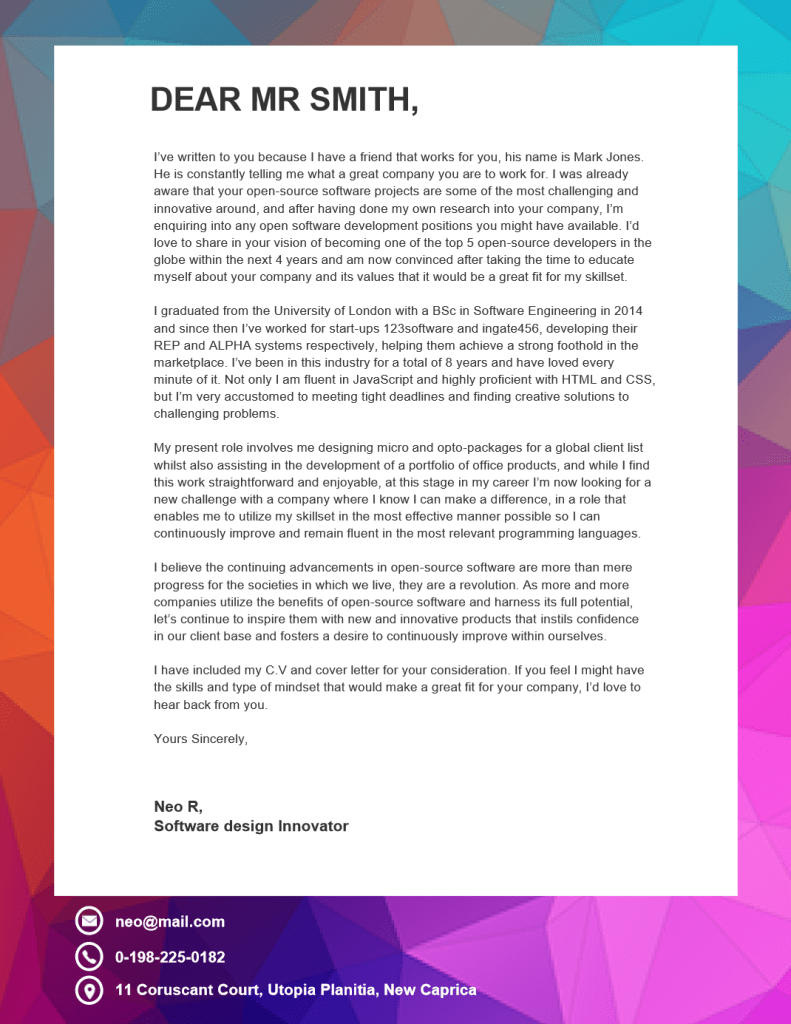
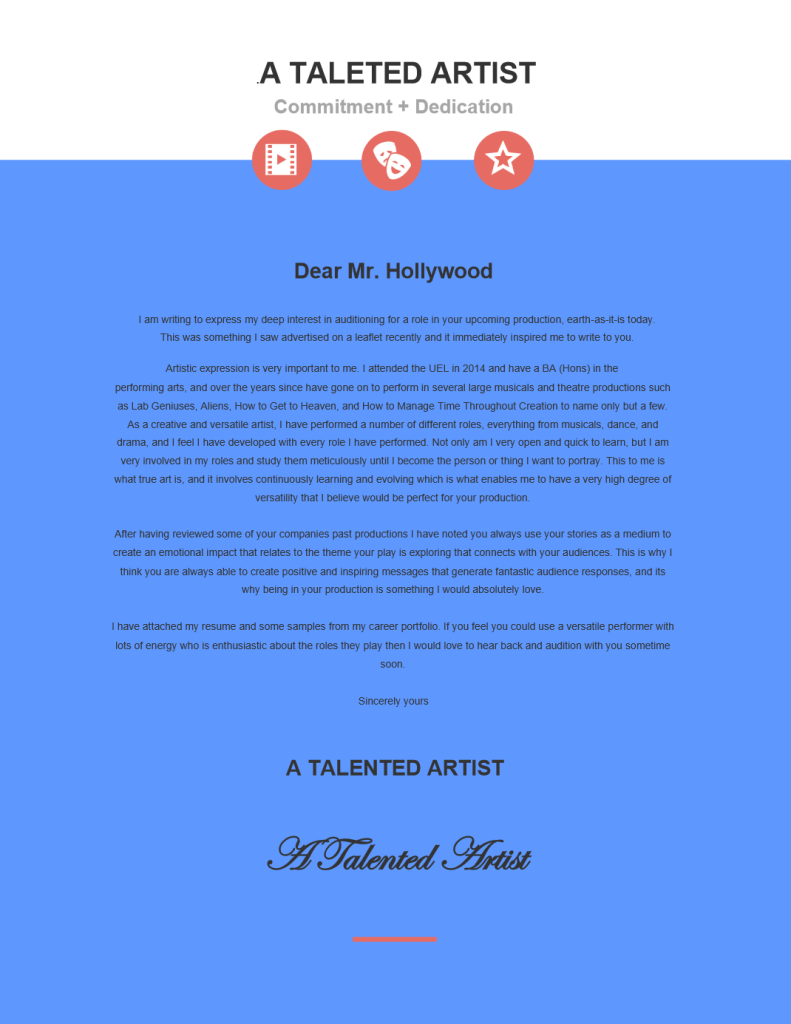
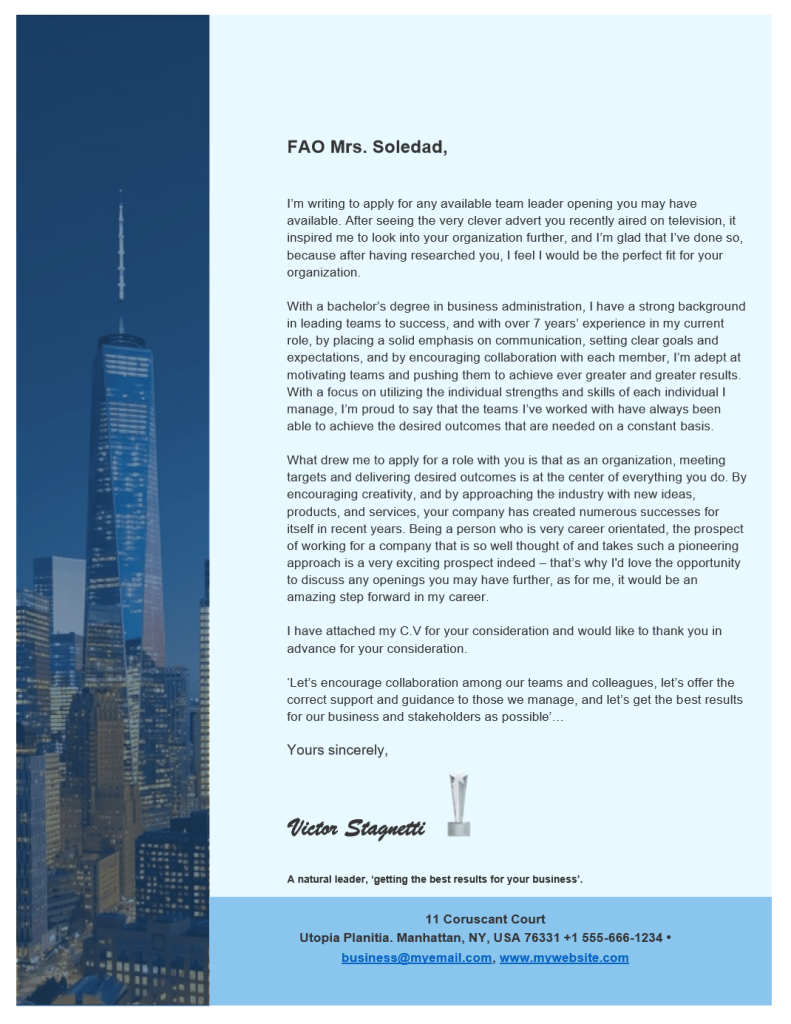
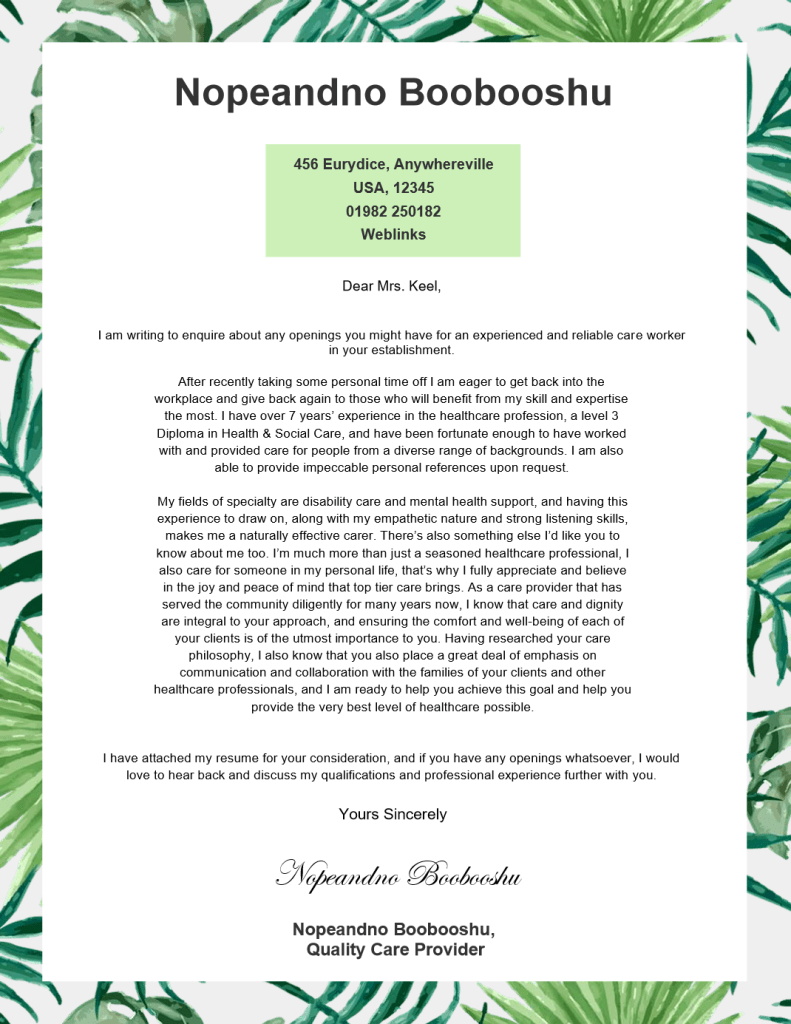
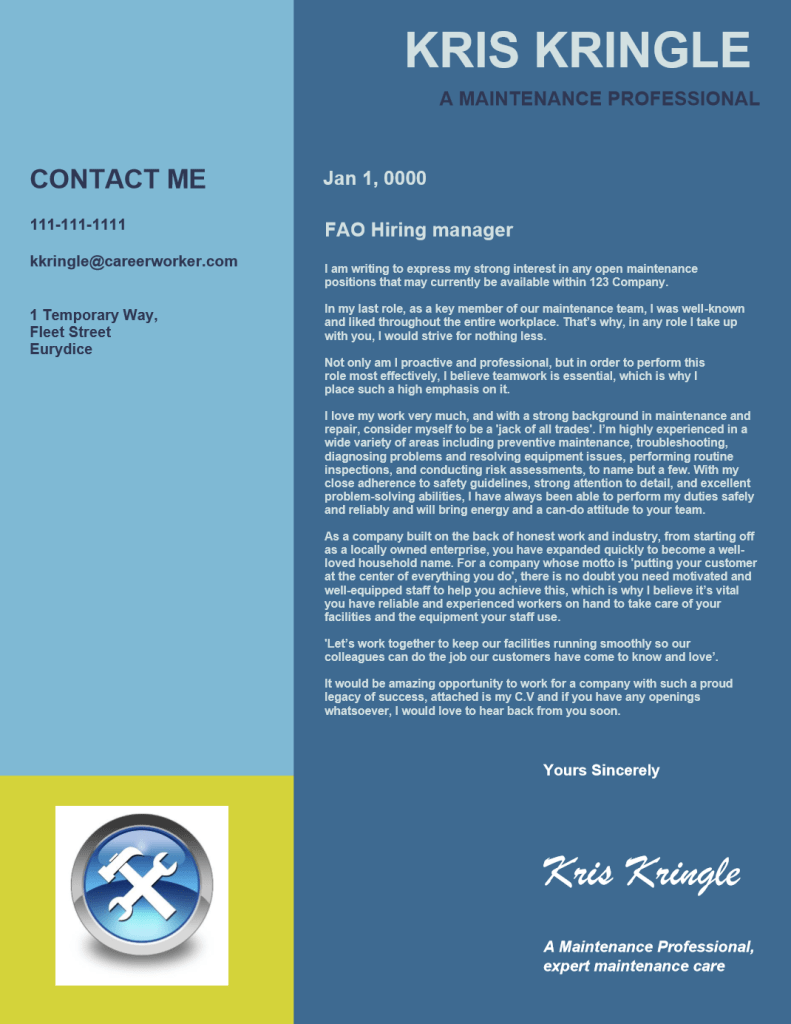
A cover letter template is a design for your cover letter that the text goes onto once it’s been completed. It is the ultimate way to stand out from the competition, providing you with a professional format for your cover letter content to be displayed
A good template will do more than simply provide you with a solid background from which to craft your cover letter – it will have a great design element that will WOW any recruiter who sees it, and is guaranteed to provide you with a document that will stand out from any ordinary cover letter. Our designs come with fully written examples which means you wont need to start from the beginning when making one, and we have dozens upon dozens of expert designs to choose from












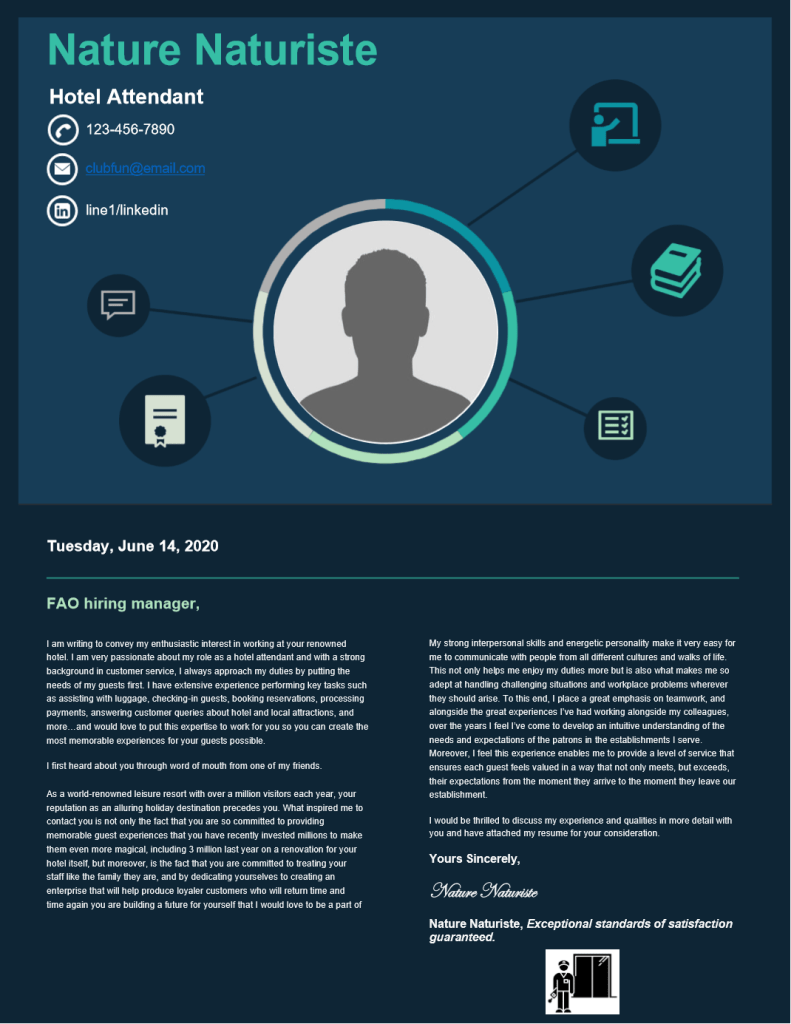

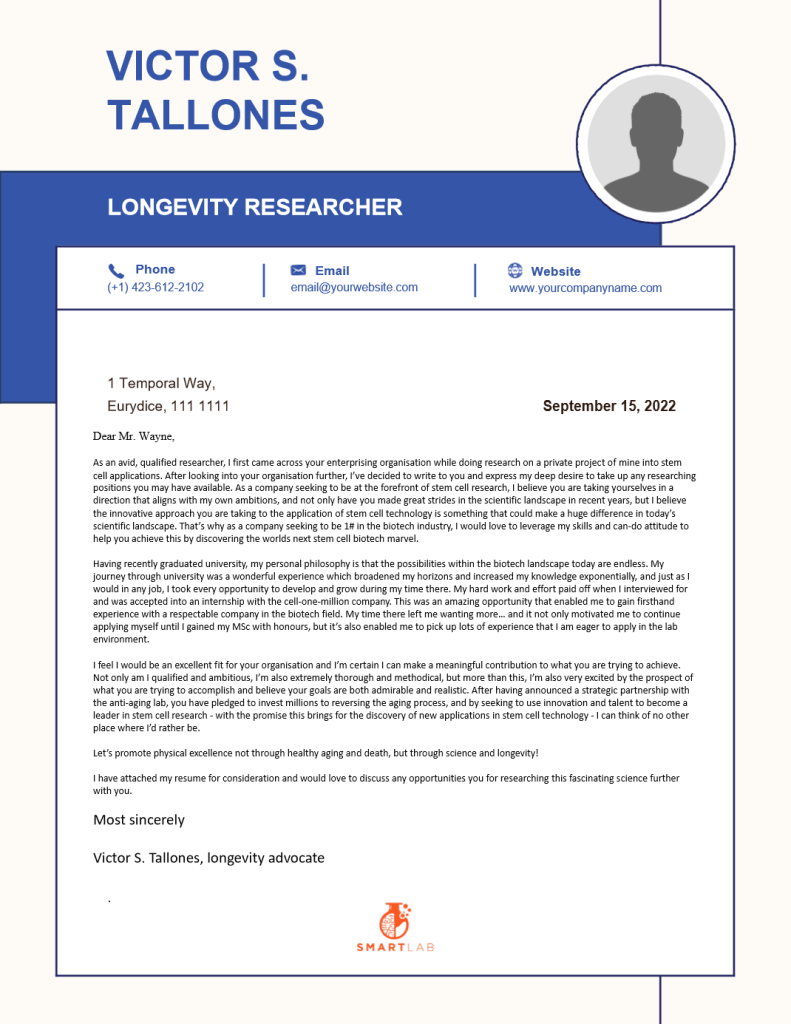
INTERVIEW PROFESSIONAL’S SPECULATIVE EMAIL AND COVER LETTER EXAMPLES