
Psychometric Testing
Psychometric Testing
In order to ensure they make the right hires, it’s one of the first objectives of any employer to learn as much about candidates during the selection process as they can, and in the fast-paced modern job markets of today, employers are turning to increasingly diverse methods to do this, with psychometric testing being one of these means they have at their disposal
Employers and recruiters are well aware that during the interview stages candidates can all too often just tell them what they want to hear, and this puts an obstacle in the way of gaining a true insight into a candidates professional bearing and character. Psychometric testing offers a great way to solve this problem, because it gives employers a practical means to assess both a candidate’s personality and intelligence in an impartial and objective way. Such tests are usually held in very high esteem by the employers that use them, and they are regarded as highly accurate both in terms of personality predictors and indicators of intelligence and cognitive abilities

Psychometric testing is increasingly common with many medium to large sized companies, and where encountered, will normally come in two forms – personality tests and aptitude tests. These are normally used during the preliminary screening stages of the candidate selection process, with the tests themselves either being administered online or onsite at the company premises. The tests themselves are very important, because they will be used in conjunction with standardized interviewing formats later on in the candidate selection process, which means if you do not pass them, you won’t be invited to move forward onto the interview stages that happen next
Psychometric personality tests
Personality tests are designed to give an employer insight into your personality and character. They are constructed by experts in the fields of behaviour and psychology to enable an employer to predict how good a ‘fit’ you might be for a role by examining important aspects of your personality such as your emotional outlook and individual qualities. Such tests are used by employers to try and predict key sought after traits like patience, empathy, positive thinking, and leadership ability, as well as to look for signs of other potentially important traits such as extrovertedness or introvertedness. The good thing about these tests is that oftentimes, especially where administered online, they will be untimed, which means you’ll usually have more than enough time to complete them. The personality tests you’ll encounter will usually come in the form of dozens of multiple-choice questions, and these are usually cleverly designed so that the questions themselves won’t always seem to have an obvious answer. This is why a common mistake people often make when taking these tests is to try and predict what they think the employer wants to hear, instead of applying their common sense and answering these questions based on their own natural intuition
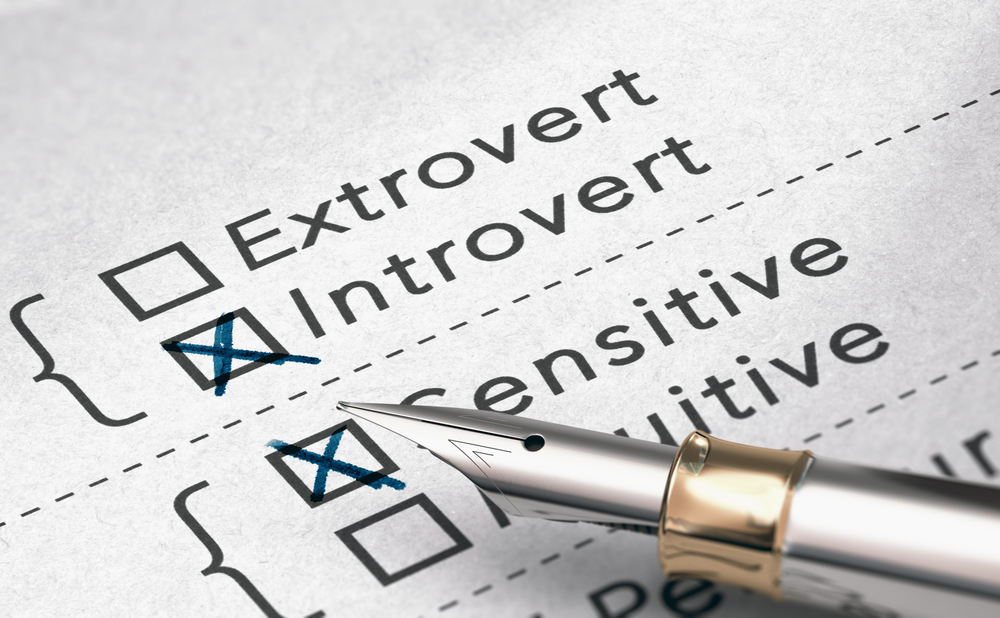
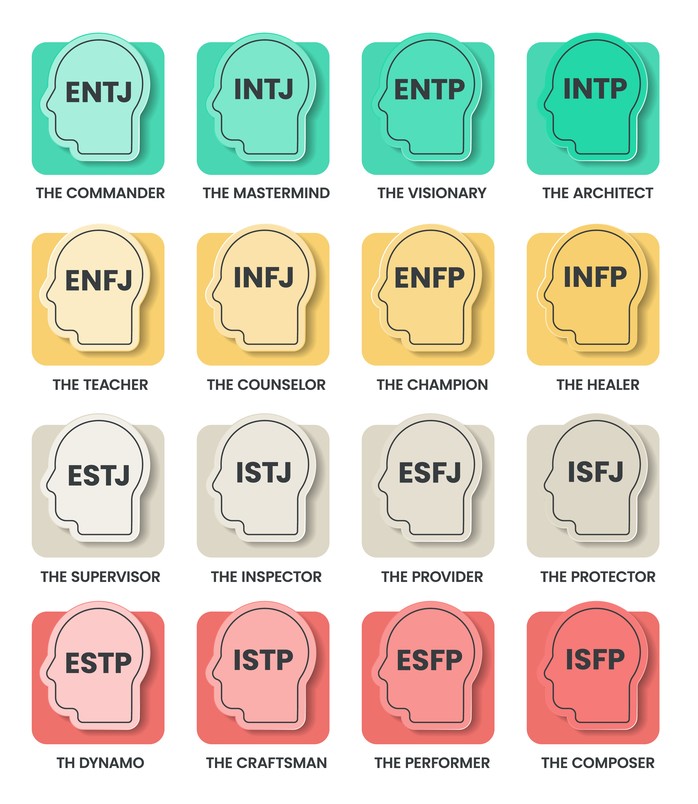
As stated above, the purpose of these tests is to gauge key aspects of your personality, and this is done by placing you in distinct personality groups based on your responses. How the employer chooses to use your test results can vary, which is where answering these questions intuitively becomes quite important. Your test responses will be filed away, and if you make it onto the interview stages, the interviewer will sometimes refer back to those responses by asking you why you chose to answer in the way you did. It’s hard to really pass or fail a personality test, rather, an employer will use the results of these tests to give them an indicator as to your type of personality. For that reason, its often said there are no right or wrong answers in a personality test, and much of the time you’ll find the employer will be more interested in why you chose to respond in the way you did rather than the actual responses themselves
Personality tests explore your interests, values, and motivations, analysing how your character fits with the role and organisation. They analyse your emotions, behaviours, and relationships in a variety of situations. The good thing about them is that they often don’t include a time limit, this helps participants to answer honestly as they’re not pressed for time and having to rush through the test, and if administered online, you can often go back and complete them over multiple sessions. Personality tests cannot be studied for, which means the answers you give should be based on your common sense and intuition

The best thing you can do when taking a personality test is to read each question thoroughly. This will not only help you answer the questions intuitively, but will also help ensure you answer each question on the test without missing any out. Familiarity with the job description can also be helpful when answering questions on a personality test too! Lastly, it is imperative you answer all questions on the test, there are normally a lot of questions to go through so it can be easy to miss one or two out, and while some tests will tell you if you’ve missed questions, others won’t, and will try to catch you out, which is why stopping to read each question carefully will help ensure you complete the test in its entirety
In a personality test, you will be presented with a statement, and then and on a scale of 1 to five, be asked how much you agree or disagree with it. As shown in this example here
Sample questions
On a scale of 1 to 5, indicate how much you agree or disagree with the following statements
1. Practices that encourage sales and growth should be prioritised over those that promote service and customer satisfaction
1 2 3 4 5
2. You often feel that the customers you speak with be more polite to you
1 2 3 4 5
3. You enjoy interactions with clients even if you’ve not been able to achieve the desired outcome they were looking for
1 2 3 4 5
Let’s Review
The most important thing when taking a personality test is that you read each question thoroughly, and that you try to answer each question intuitively, ensuring you answer all questions on the test, as it will count heavily against you if you miss any out.
Good familiarity with the job description will also help when it comes to answering these questions, and remember that ultimately, there are no right or wrong answers in a personality test as such, but rather, as we explained above, it can be really beneficial to know why you’ve selected the responses you did, as this might be revisited if you progress onto the interview stage of the candidate selection process
Aptitude tests
Aptitude tests are a completely different form of psychometric testing altogether
Where a personality test gives an employer an insight into your personality by trying to interpret your most important traits and qualities, meaning that as such, it can be difficult to give any right or wrong answers, an aptitude test centers on your practical and cognitive abilities, and there is a definite pass or fail threshold with them. Aptitude tests are comprised of challenging, technically orientated questions, these are normally strictly timed, and will usually all need to be taken in one go. Where an employer has chosen to employ psychometric testing as part of their candidate selection process, many times you’ll find one or two different types of aptitude tests will be administered alongside a personality test. While it’s difficult to outright fail a personality test, the same cannot be said with an aptitude test. Aptitude tests come in many different shapes and forms, and wherever used, are always considered a very important means of determining whether or not you have the right abilities in terms of intelligence and cognitive skills necessary to perform in that role, that’s why if you don’t pass on an aptitude test, you won’t progress onto the next round of the interview stage

Doing well in an aptitude test
Nowadays, aptitude tests are mostly administered online. For that reason, when you take the test, you want to ensure you are in a comfortable environment with minimal distractions, so turn your phone off, alarm, TV, and anything else that could possibly cause a distraction. Make sure you read the instructions carefully before you start the test, and be aware of how much time you have – a clock is often provided in such circumstances, but if not, it’s best to have something close by you can use to time yourself with just in case
You should also minimize all unnecessary programs running in the background on your computer, this will reduce the risk of any possible program conflicts while you’re doing the test, and will while having the added benefit of maximising your connection speed
As stated above, aptitude tests come in many different shapes and forms
For this reason, before you start the test itself, it’s important to ensure you have the right equipment to hand before you start. The test will usually specify what equipment you’ll need, such as notepad, pens, a calculator, etc.
(The calculator is a particularly important piece of equipment in many of the aptitude tests you’ll encounter, that’s why a good practice is to choose one that you’ve used before and are familiar with. This will save you time on parts of the test where calculations are required, and will give you a much better chance of getting your answers right!)

Aptitude tests are usually timed, so you’ll need to balance expediency with thoroughness, and find an effective medium between the two that will enable you to work your way through the test in an efficient manner while answering each question as accurately as possible
There are numerous types of different of aptitude tests you might face such as:
Abstract reasoning tests
With these tests you will need to apply a set of rules to a given situation, and then based on those rules, make a decision that will help you determine the outcome in that situation and then explain what that outcome is
Critical thinking tests
Involves you deriving a specific conclusion when presented with a given body of information. This involves you using logic, reasoning, and deduction to determine certain characteristics from the information you are presented with, this will in turn enable you to determine certain underlying factors you will be questioned on in a critical thinking test such as; is the information trustworthy, is it relevant, and does it cover the necessary points it needs to address
Deductive reasoning tests
Deductive reasoning tests measure your ability to deduce facts and draw conclusions from information and datasets. You are most likely to encounter these tests in areas such as I.T, finance, and engineering
Error checking tests
Reviewing information and correcting it for errors is another test you might sometimes be required to perform. This will involve you identifying patterns in information, identifying groups in information, and applying logic to determine which information is correct from that which isn’t
Inductive reasoning tests

An inductive reasoning test is used to assess logical problem-solving ability. In simple terms, any test that measures your abilities to draw conclusions from relevant data sets – these most commonly take the form of testing your ability to spot patterns in sequences and abstract shapes and lines
Logical reasoning tests

Logical reasoning tests require candidates to apply rules to shapes and identify patterns as means of evaluating their problem-solving ability. These are typically found where applying for jobs in fields like Aerospace and Engineering
Mechanical reasoning tests

Mechanical reasoning tests are used to evaluate a candidate’s ability to apply mechanical concepts to information. As such, this is a test often found in highly skilled mechanical roles, and other roles that required a high degree of technical specialization
Numerical reasoning tests

One of the most common aptitude tests you’ll encounter during pre-screening, these tests look at your mathematical competency in areas such as your ability to make accurate calculations with numbers, rations, and percentages, as well as your ability to interpret data from bar charts, tables, and graphs
Situational judgement tests

Situational judgement tests present a ‘what if’ scenario, in that a circumstance is put to you, and you have to say how you would respond in that instance. Like a personality test, they are another way to give the employer an indication of how you might react in certain types situations. The questions asked in this these tests are almost identical to ones you’ll encounter in interview scenarios, but instead, with a situational judgement test, your response options will be presented in a multiple-choice format.
See our section on Situational Based Interview Questions for more advice on how to answer situational based interview questions
Spatial reasoning tests

Spatial reasoning involves the application and manipulation of different 2d and 3d shapes and objects. Such tests are administered to deduce your reasoning and creativity skills
Verbal reasoning tests

Another of the most commonly encountered forms of aptitude test, verbal reasoning tests evaluate you on your ability to interpret and identify relevant data from written information. The questions in these tests are usually quite vague and will require heavy interpretation on your part as a candidate. You will be presented with a body of information and then be presented with statements that you will need to confirm the validity of. These will usually take the form of choices ranging from True, False or Cannot Say responses

Psychometric tests are highly valued by the employers and organisations that use them, and are regarded as providing an objective way to assess a candidates abilities and personality traits free from interviewer biases. They allow employers to screen eligible applicant pools and filter them down even further ahead of the interview stages, ensuring that an interviewer’s time is only spent with those candidates most likely to have the skills and character the employer is looking for
There are thousands of different psychometric tests in use throughout the recruitment industry today, and while it’s possible to practice for them beforehand as there are test providers that offer this service, due to the variety of psychometric tests available, the chances are that any questions you practice for will probably end up being completely different from those you take on the actual test itself. These tests will vary in length, normally ranging from anywhere between 15mins – 45mins depending on the type of test in question, and while most aptitude tests will work on a points-based system that requires you to achieve a minimal passing percentage score, others, like the Situational judgement test, will use a different type of assessment matrix where your responses are instead ascribed to a personality grouping, designed to give the employer further insight into your individual qualities and character traits
When doing most psychometric tests, you need to be both thorough and expedient at the same time. Take the time to read each question properly, but be mindful of any time limits set and try to balance out the time you spend answering each question accordingly. It’s a good practice to try and leave time for a quick review of your answers at the end of each test too. The great thing about many roles where psychometric testing is used is that if you fail, after a certain amount of time, (normally a period of months), if the company is still hiring, you will be able to reapply and sit the test again, and having the perseverance to do so can often pay dividends as you’ll normally find the process much easier the second time around.
Like any exam, you’ll find some questions will be harder to answer than others, and while it’s natural to experience a degree of anxiety as you go through these tests, the thing to remember is that if you have the right qualities for the role, this will show through in the end results once you’ve submitted your answers, that’s why going in with the belief you have what it takes to pass the test will play a big part in your success where any psychometric testing is involved