
Professional Rapport Building
Anyone can attempt to build rapport. But how do we go about doing this in a manner that is consistently competent and effective?
The first thing we need to know is that there is no one thing we can say that will make the interviewer simply hand us the job. So, now that’s established, what does professional rapport building involve? And what secrets does the job industry hold that can help us build a great rapport in our next interview?
Go into your interview ready to match your tone and demeanor to that of your interviewer
Its commonly lauded that rapport building is the most important aspect of any interview, and while this is true, it can mean different things depending on who your interviewer is.
Some interviewers are very interested in getting to know you as a person, and they tend to make decisions based on their instincts and feelings. These types of interviewers will generally be very receptive to someone with whom they feel they can naturally talk to and get along with.
Other interviewers are much more professional in their orientation. This type of interviewer bases their decisions around a strict assessment of the criteria set out by the employer based on the answers you provide. To them, rapport has a different degree of relevance, and they tend to have a more detached and formal approach to their conversation with you.
From this, you should be able to derive that every interviewer has a different approach, and it’s for this very reason that when it comes to great rapport building, interview coaches will always tell you that the best way to approach this is to match your tone and demeanor with that of your interviewer
Humans, as a generalization, are very social beings. As such, individuals who exhibit outgoing and extrovertive traits always tend to do better than their shyer and more introverted peers. That’s not a secret as much as it is an observation, and as such it’s certainly something to keep in mind as you go into your next interview

Be Yourself
Being yourself is often regarded as a cliché in the instances where you’re told it’s needed, but it nevertheless holds a high degree of relevance in an interviewing scenario. If being yourself sounds a bit contractionary here, that’s because it probably is. The truth is that there are certain standards you have to adhere to if you want to do well in an interview. That includes certain actions you should take (outlined here and in other sections) that will help you stand out, as well as certain areas you need to satisfy regarding interviewing etiquette
It’s always easiest to approach a challenging situation in a manner that’s in keeping with our own character. That’s why when we talk about being ourselves, we’re really talking about getting into a mindset that’ll help us perform better in the interview. If we can get into a frame of mind where we’re relaxed and comfortable, it can be immensely helpful and we’ll worry less, feel more confident, and we’ll be able to build rapport more effectively during the interview. Quite simply, consciously trying to be someone we’re not can make things much more difficult and stressful
Ultimately, you do need your conversation and the answers you give to go smoothly over the course of your interview. If you have the ability to do that naturally, then great, you can go into the interview being yourself without any difficulty. If you don’t have this ability, or struggle in some of the areas outlined in these various sections, then you’ll have to work at it, and you might need to step out of your comfort zone in order to do so. To some extent, ‘being yourself’ is a psychological concept rather than a solid action. It can mean different things to different people. Insofar as that even if you’re not completely being yourself, it can be beneficial and help you to perform much better if you at least feel like you are. Sometimes this simply means telling yourself that you’re being you, sometimes it means believing you’re a more sophisticated and charismatic version of yourself to help you get into the right frame of mind. Although disregarding preparation advice could well be counter-productive to your overall chances, sometimes being yourself can mean disregarding everything you’ve learned about interviewing techniques entirely so you can focus on being you – it really just depends on what it takes to get you into the right frame of mind…
Be Talkative
People tend to feel more comfortable and will gravitate towards personalities that are talkative and outgoing. To this end, charisma goes a long way. Not only does this fit with the type of candidate interviewers are instructed to go for, but interviewers, like people in general, naturally tend to gravitate towards candidates that seem like they are able to take charge. It’s why candidates who are outgoing will always tend to do better than their shyer peers, because it’s exactly the kind of personality trait that reassures an interviewer. Infact, many candidates in today’s job market understand this, indeed, surveys show it’s one of the things that’s most complained about by interviewees. Not everyone is naturally talkative and outgoing, and many candidates who feel overlooked after interviews will tell you this does not reflect on their true skills or merits – which is normally always true. Lots of people have great ability and natural talent, but it’s an employer’s job market, and because there’s intense competition for every job it’s the employer who has all the cards, so they can be as choosey as they like about selecting whomever they feel will be right for the role. And it’s a simple fact that outgoing candidates tend to fit an employer’s criteria a lot better than those with socially receding traits. Remember that the interviewer isn’t just looking to assess your skills and qualifications, they’re looking to get to know you so they can be satisfied with you as a hire on a personal level. It’s true that there is a genericism, even a fickleness, in the job hiring process, but for better or worse, that’s the way the job market is today
So when you consider just how intense the competition for each job opening can be, and how limited the number of ways to stand out really is, if you’re not naturally outgoing or talkative, it may be a good time to consider stepping out of your comfort zone and indulging you’re conversational side more when you go for your next interview

Keep Everything Positive
Keeping what you say positive is a very important rule when interviewing
Once you begin, you need to make a good first impression and keep the momentum going throughout the course of the interview so that by the end of it your interviewer has built up a great overall impression of you. Any good interview coach will tell you it’s what makes the difference between you getting the job – or someone else of equal talent and experience being chosen over you instead
Some people go into the interview with the wrong frame of mind. They may possess the skills and experience required for the role, but interviewing can be such a fickle and generic process that not everyone can be bothered to play along with it, and they feel the interviewer should simply accept them as they are. As such, they’ll go into the interview quite prepared to be as honest as they possibly can, but with minimal regard for how what they say will come across. In an interview that can be a big mistake.

We’ve already established that interviewing can be a very generic process, but the best way to deal with that is to simply accept it and play along as best you can. There is usually intense competition for each job opening, and in order to give yourself a realistic chance you’ll need to stand out amongst the other candidates. While the interviewer is looking for you to be honest, they are also looking for their ideal candidate to answer their questions in a positive manner that fits with what they are assessing at the time. As was also discussed in previous sections, interviewers are instructed on what criteria to assess candidates on by the employer beforehand. As such, they are looking to hear specific things in the answers you give that will justify any decision they make to hire you. The interviewer is trained to learn as much about you as they can. If you introduce a negative topic into the conversation, it’s the interviewer’s job to ask follow-up questions about it to get a better understanding of you. Simply put, it’s almost always counterproductive to introduce negative facts into an interview, you’ll simply be moving the course of the conversation in a negative direction. That’s the reason why you’re heavily advised to keep everything in the interview as positive and upbeat as possible.
(Remember that in many interviews you’re normally asked a question like, ‘tell me about one of your weaknesses’, or, ‘tell me about a time when you did something you could’ve done better’, which gives you the chance to discuss a negative aspect about yourself anyway. While the interviewer asks this to see how open you can be, even here, what you say shouldn’t be blatantly negative, you should always take care to word it in a constructive way that ends with a lesson learned).
While you should always be honest, it’s normally a shrewd tactic to omit any negative areas unless directly asked, or unless such disclosure is legally required. Even then, always do your best to put this across as constructively as possible to give yourself the best chance over other candidates. As a rule, never bring up anything negative in an interview unless it’s absolutely essential
Simply put, having a positive conversation with your interviewer will not only be easier and less stressful for yourself, but it will also leave them with a much better impression of you, and will enable you to cover more beneficial and self-promoting aspects throughout the overall course of the interview itself
For more insight into interviewer mentality review:
How to ACE the interview
Assessing Interview Mentality
What An Interviewer Wants To Hear
These will give you further insights into what the interviewer does and the things they will listen for in your next interview

Reassuring Body Language
It’s a proven fact that people normally respond better to someone who has a pleasant and upbeat demeanor. When we consider our own body language, it’s a big area that we can focus on to manifest ourselves positively throughout our interview
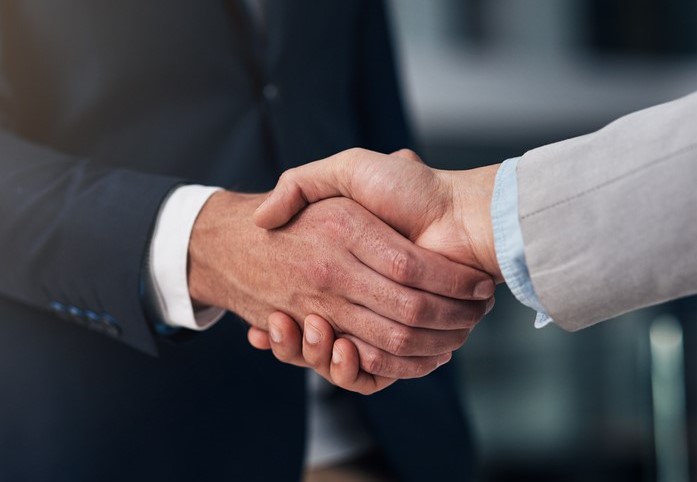
Mannerisms and expressions also play a big part in our body language, and these can be conveyed through things like a warm and genuine smile (people smile with their eyes), a pleasant tone and confident, upbeat body language. They are also manifested in other things such as a firm handshake, good eye contact, and using the interviewer’s name when responding to their questions. As well as generally confident mannerisms and gestations overall
When all things are considered, this really is a subjective area that is specific to each of us as individuals. Although a pleasant demeanor has been proven to be effective in interviewing surveys, we also need to consider that there is no right or wrong way to approach this, as each interviewer will respond to an individual’s body language and demeanor differently. While it’s true some interviewers will respond better to friendlier, more pleasant types of demeanor, others might easily respond better to someone who comes across as less friendly and more serious, it really just depends on the interviewer and on the job role in question. (For example, going for a customer service position is much different than interviewing for a role as a debt collector)
Everyone uses mannerisms and body language differently, so the best advice here is to be yourself and use the body language and gestures you are most comfortable with. With that being said, there’s nothing stopping you from enhancing and improving on these over time as your interviewing technique improves with experience
Rapport Building Methods – The Conclusion
Outlined here are all of the most relevant steps we should take when building a great rapport in our next interview. Ultimately, there are no secrets when it comes to rapport building, but by taking a professional approach it can enable us to build rapport in the most straightforward and effective way possible. The interviewer will always go with whomever they feel the best choice overall is. To this end, establishing rapport throughout the course of our interview can be invaluable. Essentially, what we can take from this is that there is no one specific thing we can say that will just make an interviewer hand us the job. However, by taking simple, common-sense steps, we can greatly improve our chances of success by focusing on the various aspects of our interviewing techniques that will enable us to build a genuine and lasting rapport in any interview we attend