Interview Cheat Sheets
A great interview cheat sheet can make all the difference when going into your next interview
The big day has finally arrived.
You’ll get up, get dressed, and begin to make your way to the interview. All the while you will be wondering how it’s going to go, what questions you’ll be asked, and how you will do overall. You may also think about the candidates you’re up against, as well as the implications of what landing the job, or failing to do so, will mean for you.
Here’s where the advantage of the interview cheat sheet is two-fold…
Not only does it give you a means to get in some last-minute revision of the most relevant things so that they are fresh in your mind on the day, but it is also a great way to keep yourself focused and composed in the last few hours leading up to the interview itself. While other candidates will normally spend their last few hours before the big event worrying about the looming interview ahead, having a cheat sheet to hand means you’ll have a valuable tool that will allow you to remain focused so that the most important things are all fresh in your head before the interview begins, and this is what makes the cheat sheet such an effective tool to have at your disposal

Everyone will experience nervousness before an interview, which is why if you’re travelling on public transport, having to wait for awhile before you leave in the morning for your destination, or having to stop off for lunch before your interview, then having an interview cheat sheet to hand is a great way to get some last-minute revision in so that key information is fresh in your mind on the day. By doing so, instead of worrying about the looming interview ahead, it will help keep your focus where it should be. In this way, you’ll maximise your chances of giving strong, competent answers, and you will be much better prepared to answer any unforeseen questions the interviewer might have for you, not to mention that you will usually perform better overall as you’ll feel more confident and ready going into the interview
A cheat sheet is comprised of a single side of an A4 sheet of paper.
It is used to write down the most important and relevant bits of information that may come up during an interview. Cheat sheets can be composed in many different ways, that’s why when it comes to composing a great one, it simply comes down to finding the right format that works best for you
The most important thing to have on your cheat sheet in most instances is a personal statement. This will provide you with a good focal point for organizing your thoughts, making it easier to give structure to other things you might want to say, as well as providing a good starting point for your conversation; the interview does center around you after all! The other thing it is advisable to have on the cheat sheet are questions for the interviewer – because it’s almost guaranteed you will get to use those questions at the end of the interview. The rest of what you put on there is up to you, your strengths and weakness, information about the company, and bullet points from competency based examples are all things that are commonly used (It’s really anything you think might be useful or important, but keep in mind that a standard cheat sheet only comprises of one side of A4 paper, so space will be limited). Ultimately, a cheat sheet is there to give you short term revision on the day of the interview. Having this can significantly reduce anxiety levels, giving you something else to focus your attention on besides the nervousness you’ll feel on the day. That’s what makes it a great thing to give yourself the edge you need as you into the interview room…
…There are other terrific things you can put on an interview cheat sheet too.
Things like success stories where you’ve made a valuable contribution in the workplace or achieved an important personal goal. A shortlist of 2 or 3 of your biggest accomplishments, or one or two different conversational openers if you so choose. You can also list the answers to obscure or challenging questions that commonly come up such as what your biggest weakness is, or list things that you can work into the conversation regardless of whether they come up as a question or not, such as why the company should hire you, or why you want the job
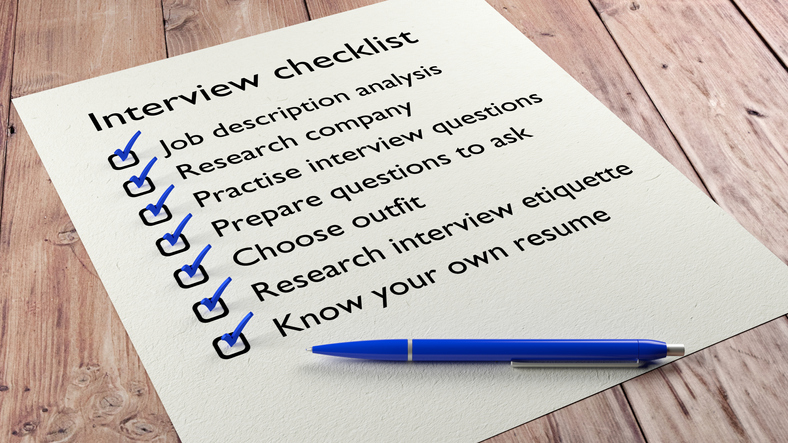

(If you’re considering using conversational openers, keep in mind that they may have the unintended consequence of making your opening words sound wooden and tense; conversation openers are best utilized when you want to open up a conversation with a person or persons you’d otherwise have no reason to be talking to. This is not the case with your interviewer – even if you are wondering how the conversation will go and what you might say, remember that you are purposely there to meet with the interviewer, and that it is the interviewer’s job to learn what they can about you; so you should find when you get there that making conversation is easier than you think. Remember that it’s as much about your demeanour and the tone you use to convey your words than it is about what you say!)
If listing any negative points on your cheat sheet, such as reasons you left your last job, or any weaknesses, the golden rule is that these must always be conveyed in a constructive manner. i.e. (this y happened, but I learned x and z from the experience. Furthermore – I then incorporated x and z into how I approach my duties at work, and its helped me overcome a challenging situation as a result)

Keep in mind the interview centers all around you. Ultimately, your cheat sheet is there to help you compose your thoughts and hone your presentation technique before you head into your interview
While it’s fine to revise this on the day in conjunction with your C.V, it’s really important that your cheat sheet is only compromised one side of A4 paper. This is really important. Any more than this and your cheat sheet will begin to lose its effectiveness
Taking a cheat sheet with you can be one of the smartest things that you do in preparation for your interview, that’s why most interview experts recommend using one. The great thing about cheat sheets is that not only will they provide you with last minute revision to keep you sharp on the day, but they are a great way to calm nerves and stay focused on the task at hand
The best advice is, if you have something you feel that’s important to you, and you feel you’ll be able to revise it, add it, no matter how trivial it might seem…
Our templates are cleverly designed to be intuitive and easy to use, and we have some great ones to choose from, download our selection below:

FULL CHEAT SHEET TEMPLATES
Interview Cheat Sheet Template 1
Interview Cheat Sheet Template 2
Interview Cheat Sheet Template 3
Interview Cheat Sheet Template 4
Interview Cheat Sheet Template 5
BLANK CHEAT SHEET TEMPLATES
Interview Cheat Sheet Template 1
Interview Cheat Sheet Template 2
Interview Cheat Sheet Template 3
Interview Cheat Sheet Template 4
Interview Cheat Sheet Template 5
SIMPLIFIED CHEAT SHEET TEMPLATES
Interview Cheat Sheet Template 1
Interview Cheat Sheet Template 2
Interview Cheat Sheet Template 3
Interview Cheat Sheet Template 4
Interview Cheat Sheet Template 5