Education
STANDARD SECTION
EDUCATION


What is Higher education?
Any education consisting of an undergraduate or graduate degree
What is Further education?
Any other education that does not fall into the category of higher education.
This includes diplomas and any other courses or continued learning after high school that isn’t specifically part of an undergraduate or graduate degree

Listing items in your education section
The recommended way to make an educational heading on a C.V or resume is shown here, although you may find slight variations on this depending on the design and layout of the document in question. That’s because while its common practice to list the qualification first, sometimes other things like the institution will be listed there instead as you will see in the following examples
- List the qualification first
- Then put the name of high school, college, or university. (Often times region and country are included, but this is down to individual preference)
- Finally, either put the month and year you started and the month and the year you ended your studies, or just the month and year of your graduation. (Sometimes only years are listed depending on the style and layout of the document. Again, this is down to individual preference)
Educational headings are typically included in reverse chronological order, with the oldest educational heading going at the bottom of the list. However, keep in mind that C.V’s and resumes are bespoke documents, and there is no rule to say you cannot construct your education section using a functional based layout – using the subheadings of say, for example, relevant education and other education categories
(There are instances where you may decide it is more appropriate to list your most relevant educational accomplishments first, and in that instance a functional based layout can sometimes be a more effective option, as shown below)
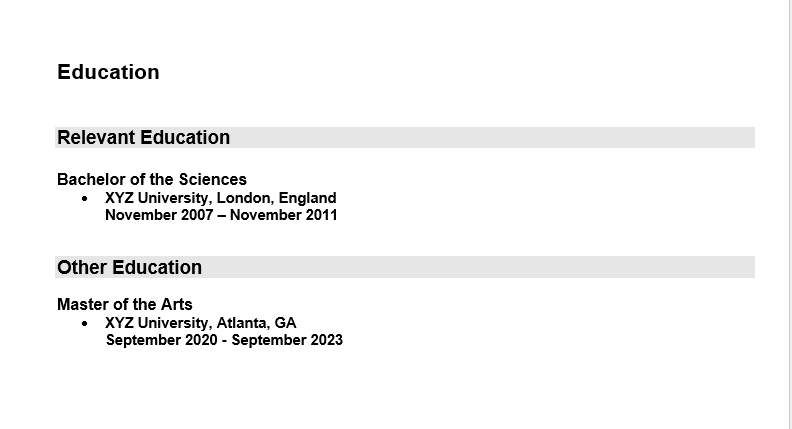
What you’ll see in an education section can depend on many different things – namely the type of role you are applying for and the extent of your educational background itself. That’s why you’ll find that educational sections are often composed differently depending on the background of the person compiling it
For instance, those without undergraduate or graduate degrees will usually list their high school accomplishments alongside any further educational achievements they have achieved. Conversely – it follows that the types of roles those candidates will usually apply for will be ones where employers will look at high school grades as part of the vetting process – because degrees are not required for those roles
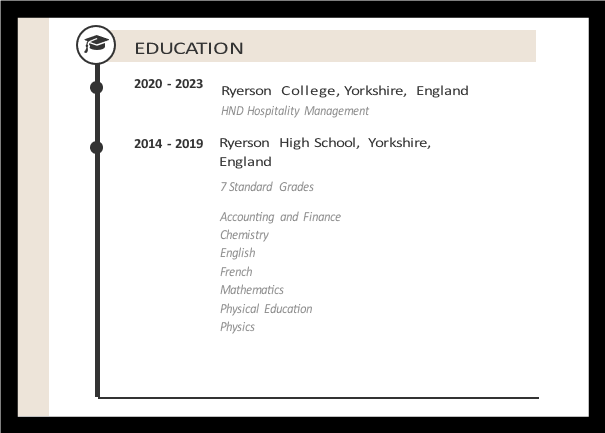
Those who have graduate or undergraduate degrees on the other hand will normally list their degrees, but will often times omit high school education from this section altogether. That’s because high school qualifications are not relevant for the types of roles they’re applying for, and employers are usually less concerned (sometimes outright disregarding) such qualifications altogether
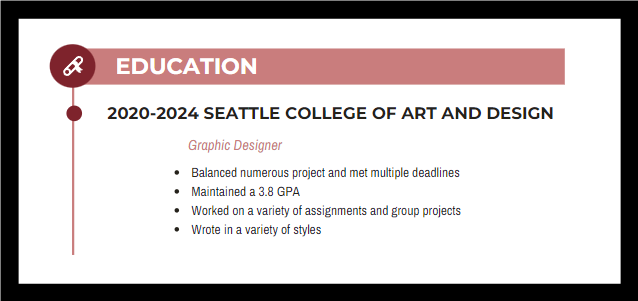
There are several factors to take into account when it comes to deciding on whether or not to list high school qualifications in your education section
In addition to the points mentioned above, ask yourself if including high school grades is going to add anything to your C.V or resume? If you have high grades it may do, but when composing a C.V or resume – keep in mind that the advice most interviewing experts will give is that if it’s not relevant to the role or industry you are applying for, then listing it will detract from the overall C.V or resume itself
How to arrange College and University listings in an educational section
The standard way to list university degrees and college qualifications is in a chronological based order, with the most recent qualification listed first and the oldest listed at the end
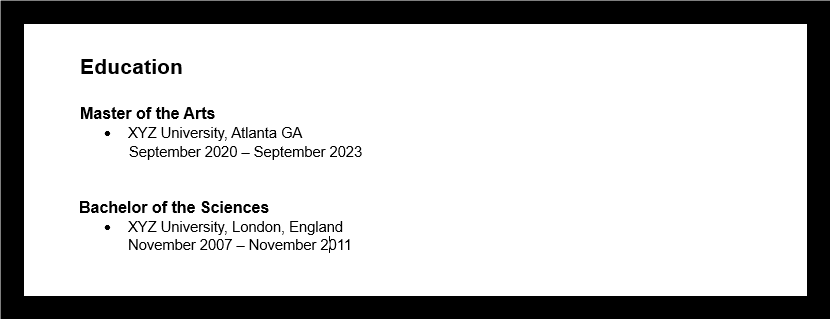
However, there is nothing stopping you from make listings in a functional based format if you feel it is more appropriate
For example, in the rare instance where you have some type of qualification that comes after the completion of a university degree, choosing a functional based layout and listing your university degree first may be a better option
Where you have 2 or more university degrees, listing these in a functional format may also be more effective if the older qualification is more relevant than the most recent one. This can be seen in the example below

How to arrange High School listings in an educational section
If you do decide to list high school qualifications, you should arrange these either alphabetically, or by relevance to the role for which you’re applying

How to arrange Other Informational listings in an educational section
In the same way that it is standard to list educational qualifications in a chronological based order, in the first instance, you should do the same with any additional subsections you choose to include in the educational section too…
…However, when it comes to these listings, remember there is nothing stopping you from adding them in a functional based format if you feel it is more appropriate to do so
RELEVANT COURSES
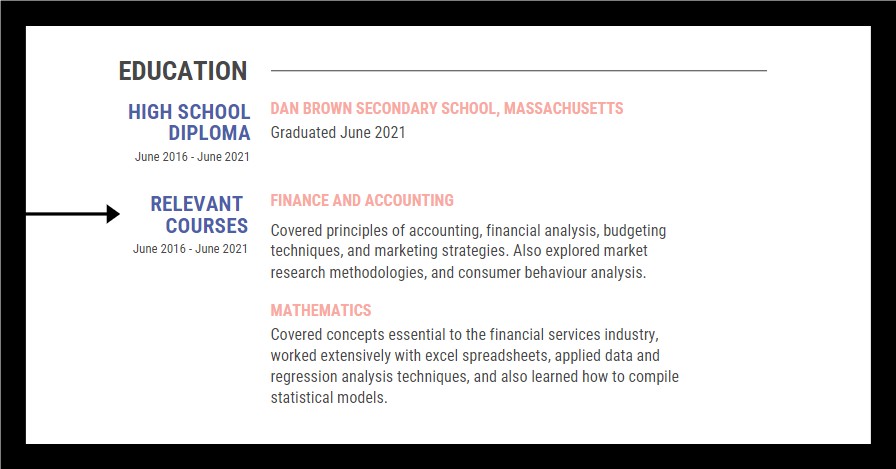
Another heading that is often useful to include is a relevant courses subsection. This can be included as a SUBSECTION within the education section itself, which is what we will be discussing here. Or it can be included as an OPTIONAL SUBSECTION within the overall layout of the C.V or resume, which will be discussed in the relevant courses optional subsection (found in the main index menu). However you choose to include this, adding a relevant courses area can be invaluable when trying to tailor your C.V or resume to specific types of industries or roles. You can create a relevant courses section for any high school, college, or university education listing. Just list the most relevant courses you’ve taken and give a brief overview of the skills and experience you’ve gained from each. You can also do this for any other qualificational or certificational heading you’ve included on your C.V or resume too (where that qualification or certification has required you to take different types of classes or courses to obtain it)
Note
While placing relevant courses as a subheading within your education section usually makes more sense, if you think it will be more effective and want to emphasise any relevant courses you’ve taken over your actual education itself, you can make a separate heading on your C.V or resume for a relevant courses section outside of the education section area
HONORS AND AWARDS
If you have any honors or awards that are relevant to your education normally the best place to list them is within the educational section itself. Depending on the type of Honor or Award, you can do this beside each educational listings itself, (as shown in the example here)
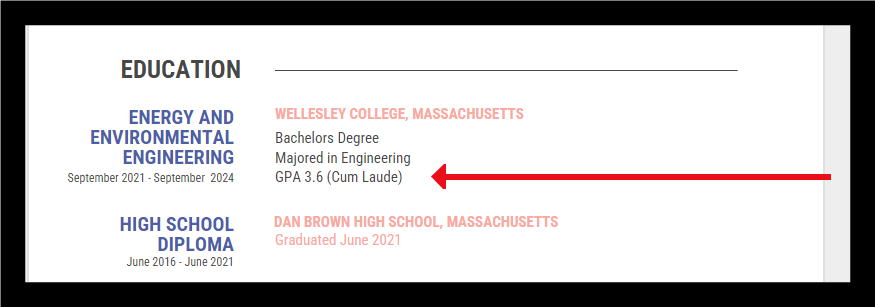
(If you have several different types of Honors or Awards, you could instead elect to create a separate subsection within the education itself. Alternatively, you could even create a separate honors and awards section on your C.V or resume to list them which we look at in the Honors and Awards section)
ONGOING EDUCATION
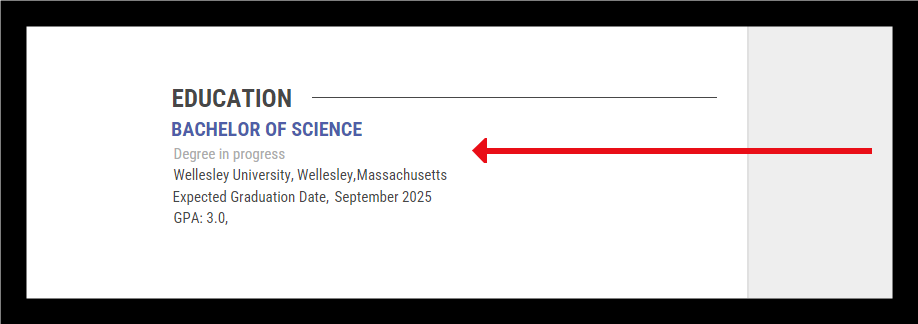
If you are studying for a degree or other qualification but have not attained it yet, you can still list it in the education section. (Simply put ‘in progress’ beside your listing, along with the expected graduation date). In the case of a degree, if you have a high GPA it’s normally advantageous to include it beside the listing too. (This normally means anything currently at 3.0 and above U.S, or on track for a First-Class Honours score U.K)
Can you still add a relevant courses section if your education is ongoing?
Yes!
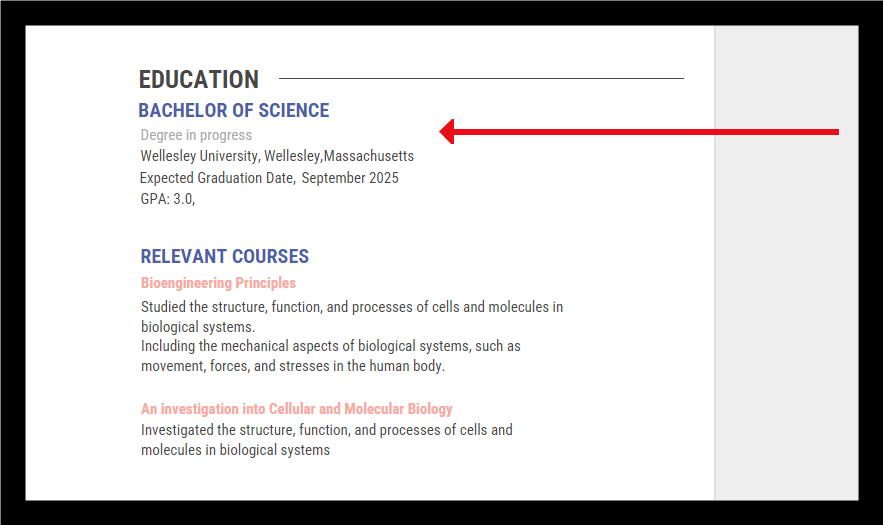
Whether your education is still ongoing or whether its already been fully completed, remember that adding a relevant courses section can still be used to draw inference to your current skillset if its relevant to the role in question. (As is shown in the example here)
Can you still add an Honors and Awards section if your education is ongoing?
Yes!
Whether your education is still ongoing or whether it has been fully completed, you should still add any Honors or Awards you currently hold in the same way you would if your education was fully completed. (As shown in the example below)

Where should I include this section?
If you are a student, school leaver, or person with no employment experience, the best place to put the educational section is just the below the profile section on your C.V.
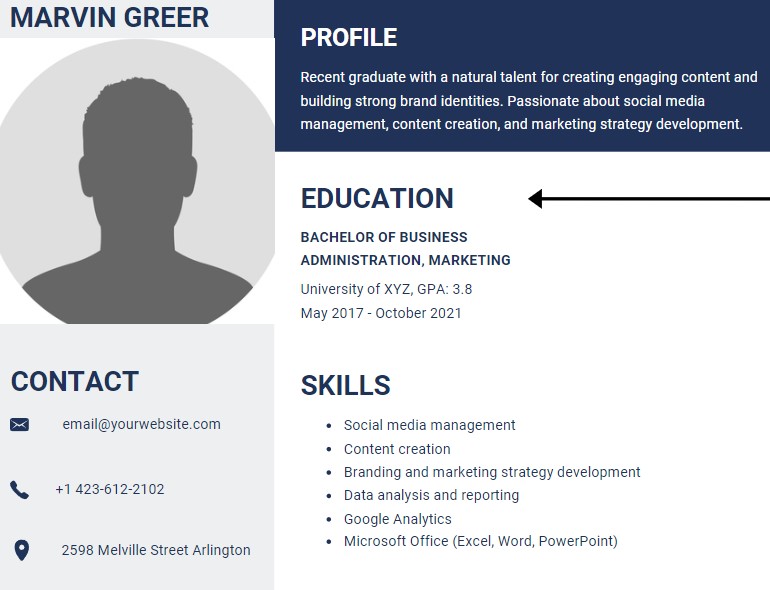
Where should I include the Education section in this circumstance?
Contact Details
Profile statement – Career statement, personal statement, or resume objective
Education
Skills

If you do have anything in the way of employment experience, list your education section just below the employment history area, as indicated here
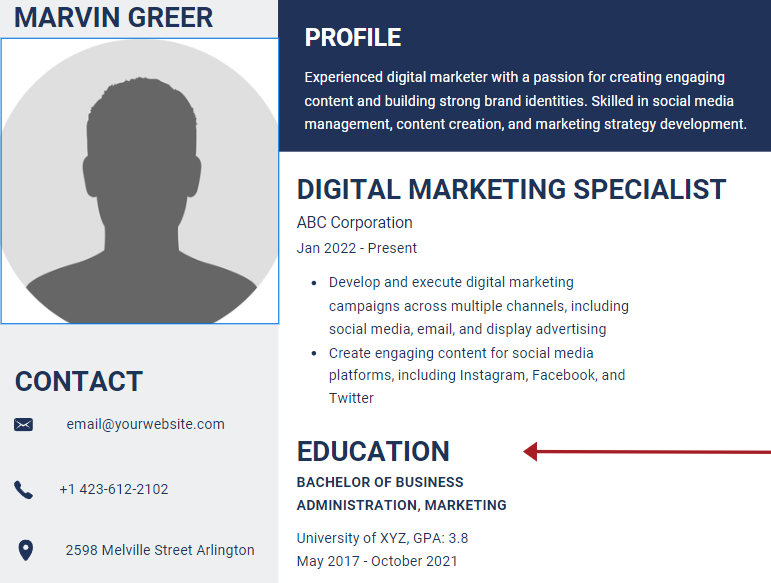
Where should I include the Education section in this circumstance?
Contact Details
Profile statement – Career statement, personal statement, or resume objective
Employment History
Education
Skills